
Reliable access to clean and (call 0723763173) dependable water is essential for homes, farms, businesses, schools, institutions, industries and commercial developments in Nthiwa. Where conventional water supplies are unreliable, expensive or unavailable, a properly designed borehole can provide an independent groundwater source.
Professional borehole development involves much more than simply drilling a hole into the ground. A successful project requires proper site assessment, groundwater exploration, drilling, casing, gravel packing, borehole development, testing, water-quality analysis, pump selection, installation and an appropriate water-distribution system.
This comprehensive guide explains borehole drilling services in Nthiwa, from the initial groundwater investigation to the final installation of a functioning water supply system.
BOREHOLE DRILLING IN NTHIWA
Borehole drilling in Nthiwa can provide a dependable groundwater source for different applications, including:
- Residential homes
- Apartments
- Schools
- Hospitals and health facilities
- Hotels
- Restaurants
- Farms
- Greenhouses
- Irrigation projects
- Livestock farms
- Commercial buildings
- Construction sites
- Industrial facilities
- Institutions
- Churches
- Community projects
- Water storage systems
- Rural properties
- Property developments
The actual groundwater conditions differ from one location to another. Two properties that are relatively close to each other may encounter different geological formations, groundwater depths and borehole yields. For this reason, a professional groundwater assessment should be undertaken before drilling.
PROFESSIONAL BOREHOLE SITE ASSESSMENT IN NTHIWA
The first stage of a borehole project is determining whether the proposed site has a reasonable groundwater prospect.
A professional site investigation can examine geological information, groundwater conditions, terrain, drainage, existing wells and boreholes, surrounding land use and other available information.
Depending on the project, geophysical surveying may also be undertaken.
The objective is not to guarantee a particular depth or water yield. Instead, the investigation helps identify locations and geological conditions that may have better groundwater potential.
WHY SITE SURVEY IS IMPORTANT
Skipping the investigation stage can expose a property owner to unnecessary drilling risks.
A site survey can help with:
- Selecting a suitable drilling location
- Understanding the local geological structure
- Identifying potential groundwater-bearing formations
- Estimating possible drilling conditions
- Planning drilling equipment
- Identifying potential risks
- Planning casing requirements
- Planning the expected borehole construction
- Supporting pump-selection decisions
Groundwater is a natural resource and cannot be accurately guaranteed simply by looking at the surface.
GEOPHYSICAL SURVEY FOR BOREHOLE DRILLING
Where appropriate, geophysical methods can be used to investigate subsurface conditions.
A geophysical survey may help identify formations associated with groundwater occurrence and provide information that can guide the drilling location.
The results should be interpreted together with geological and hydrogeological information rather than treated as an absolute guarantee of water.
A professional approach considers several factors before drilling.
BOREHOLE DRILLING PROCESS IN NTHIWA
Once the drilling location has been selected and the project has been planned, drilling equipment can be mobilized to the site.
The drilling method depends on:
- Geological formation
- Expected borehole depth
- Ground conditions
- Required borehole diameter
- Available drilling equipment
- Project requirements
- Environmental conditions
Drilling continues through the identified formations until the planned depth or suitable groundwater-bearing formations are reached.
During drilling, the drilling team observes the geological materials encountered.
These may include:
- Soil
- Clay
- Weathered rock
- Sand
- Gravel
- Hard rock
- Fractured rock
- Other geological formations
Recording the formations encountered during drilling helps in designing the final borehole construction.
BOREHOLE CASING INSTALLATION
Casing is an important component of a properly constructed borehole.
The casing provides structural support and helps prevent the borehole from collapsing in unstable formations.
Depending on the geological conditions, different casing arrangements may be required.
The final casing design depends on:
- Borehole depth
- Geological formation
- Borehole diameter
- Water-bearing formations
- Formation stability
- Screen requirements
- Pump installation requirements
A borehole should not simply be drilled and left unsupported where the geological formation requires casing.
BOREHOLE SCREEN INSTALLATION
In formations where groundwater enters through unconsolidated materials, screens may be installed at selected water-bearing intervals.
The screen allows groundwater to enter the borehole while helping reduce the movement of formation particles into the well.
Screen design should consider:
- Formation characteristics
- Grain-size distribution
- Expected groundwater flow
- Borehole diameter
- Pumping requirements
- Expected yield
Correct screen placement is important for borehole performance.
GRAVEL PACKING
Gravel packing may be installed around selected screened sections.
The gravel pack acts as a filter between the surrounding formation and the borehole screen.
Proper gravel selection and placement can help reduce the amount of fine material entering the borehole during pumping.
The design should be based on the geological formation encountered during drilling.
BOREHOLE DEVELOPMENT
After drilling and construction, the borehole normally needs to be developed.
Development removes drilling fluids, loose materials and fine particles from the borehole and surrounding formation.
Different development methods can be used depending on the borehole design and geological conditions.
Proper development can improve:
- Water clarity
- Borehole efficiency
- Pump performance
- Well stability
- Sustainable groundwater production
A newly drilled borehole should not automatically be considered ready for permanent pumping immediately after drilling.
BOREHOLE PUMP TESTING IN NTHIWA
Pump testing is an important stage of borehole development.
Testing provides information about how the borehole behaves when water is pumped.
A pump test can help determine:
- Pumping rate
- Static water level
- Dynamic water level
- Drawdown
- Recovery
- Borehole performance
- Aquifer response
- Appropriate pumping conditions
This information is useful when selecting a permanent pump.
STATIC WATER LEVEL
The static water level is the groundwater level in the borehole when it is not being pumped and has had sufficient time to recover.
It provides an important reference point for assessing groundwater conditions.
DYNAMIC WATER LEVEL
The dynamic water level is measured while the borehole is being pumped.
The difference between static and pumping levels contributes to the understanding of drawdown.
DRAWDOWN
Drawdown refers to the reduction in water level caused by pumping.
A borehole with excessive drawdown under a particular pumping rate may require careful pump selection and operating controls.
The objective is not simply to install the biggest pump available.
The pumping system should be matched to the borehole's characteristics.
WATER QUALITY TESTING IN NTHIWA
Finding groundwater does not automatically mean the water is suitable for drinking.
Water quality should be tested before using borehole water for domestic consumption or other sensitive applications.
Testing can assess various physical, chemical and microbiological characteristics.
Depending on the intended use, testing may include parameters such as:
- pH
- Electrical conductivity
- Total dissolved solids
- Turbidity
- Hardness
- Iron
- Manganese
- Fluoride
- Chloride
- Nitrate
- Sulphate
- Other chemical parameters
- Microbiological parameters
The appropriate laboratory testing package depends on the intended use and applicable requirements.
BOREHOLE WATER FOR DOMESTIC USE
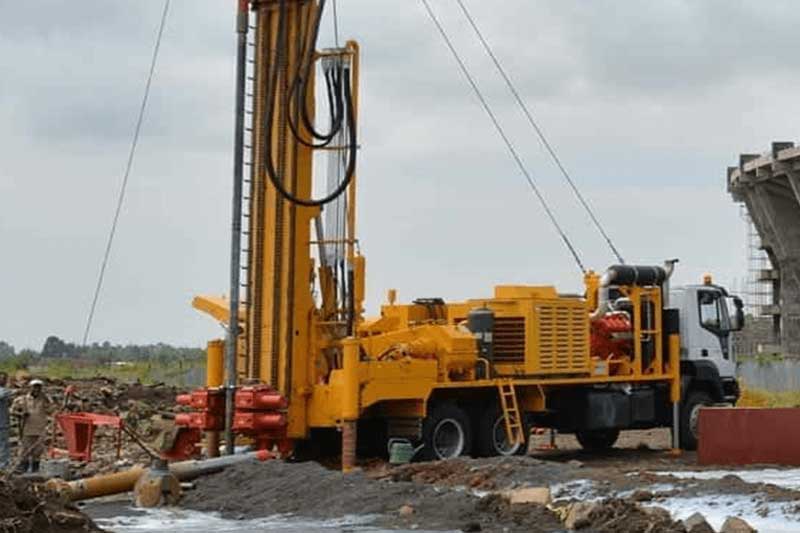
A borehole can provide water for residential applications such as:
- Bathrooms
- Toilets
- Laundry
- Cleaning
- Kitchen use
- Gardening
- Car washing
- General household activities
Where borehole water is intended for drinking or cooking, appropriate water-quality testing and, where necessary, treatment should be considered.
BOREHOLE WATER FOR IRRIGATION IN NTHIWA
Agriculture is one of the major applications for groundwater.
A properly designed borehole can support irrigation systems for:
- Vegetables
- Fruits
- Greenhouses
- Flowers
- Fodder
- Tree nurseries
- Horticultural crops
- Other agricultural activities
However, irrigation requirements can be significantly higher than domestic requirements.
Therefore, irrigation projects require careful consideration of:
- Borehole yield
- Crop water requirements
- Irrigation method
- Storage capacity
- Pumping schedule
- Water quality
- Seasonal groundwater variation
A borehole should not be pumped continuously beyond its sustainable capacity simply because a large amount of water is required.
BOREHOLE PUMP INSTALLATION
After testing, an appropriate pumping system can be selected.
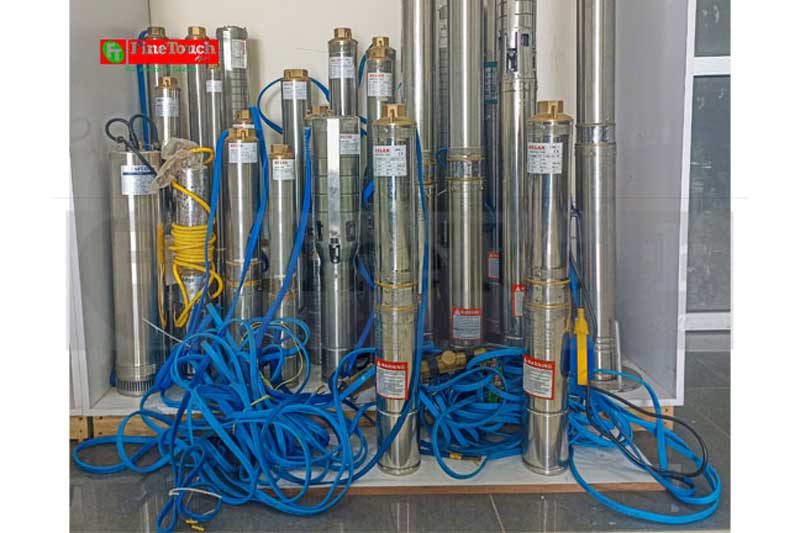
Submersible pumps are commonly used in borehole applications because they operate below the water level and push water to the surface.
Pump selection should consider:
- Borehole depth
- Water level
- Required flow rate
- Total dynamic head
- Pipe size
- Storage-tank height
- Electrical supply
- Pump efficiency
- Intended application
Installing an oversized pump can create unnecessary energy consumption and excessive drawdown.
Installing an undersized pump may fail to meet the property's water requirements.
Therefore, pump sizing should be based on actual project requirements and borehole test information.
SUBMERSIBLE PUMP INSTALLATION IN NTHIWA
A submersible pump installation may include:
- Pump unit
- Rising main
- Electrical cable
- Pump protection
- Control panel
- Non-return valve
- Level protection
- Water-level monitoring
- Surface pipework
- Storage tank connection
Proper installation protects the pump and helps maintain reliable operation.
BOREHOLE CONTROL PANEL
The electrical control system can provide protection and control for the pumping equipment.
Depending on the installation, controls may include:
- Overload protection
- Short-circuit protection
- Dry-run protection
- Phase protection
- Voltage protection
- Pump start/stop controls
- Level controls
- Automatic operation
For larger systems, additional automation may be appropriate.
BOREHOLE STORAGE TANK INSTALLATION
Water storage can improve the reliability of a borehole water system.
Instead of relying on the borehole pump to supply every point of use directly, water can be pumped into a storage tank.
The stored water can then be distributed through the property.
Storage capacity depends on:
- Daily water consumption
- Borehole yield
- Pump capacity
- Number of users
- Irrigation requirements
- Property size
- Available space
BOREHOLE WATER TOWER INSTALLATION
For properties requiring gravity-fed distribution, a raised water tank may be used.
A water tower can provide pressure through elevation.
This can be useful for:
- Homes
- Farms
- Schools
- Commercial buildings
- Irrigation systems
- Rural properties
The structure must be properly designed to support the weight of the tank and stored water.
BOREHOLE PIPEWORK
A complete borehole system requires appropriate pipework from the borehole to the storage and distribution points.
Pipework selection depends on:
- Flow requirements
- Pressure
- Distance
- Pump characteristics
- Installation environment
- Pipe material
Properly designed pipework helps reduce pressure losses and improves system efficiency.
BOREHOLE IRRIGATION SYSTEMS IN NTHIWA
For agricultural properties, the borehole can become the foundation of a complete irrigation system.
Possible irrigation configurations include:
- Drip irrigation
- Sprinkler irrigation
- Micro-irrigation
- Greenhouse irrigation
- Surface irrigation
- Automated irrigation
Drip irrigation can be particularly useful for crops where controlled water delivery is required.
An irrigation design should match the available water supply with crop requirements.
BOREHOLE DRILLING FOR HOMES IN NTHIWA
Homeowners may consider borehole drilling when:
- Municipal supply is unreliable
- Water bills are high
- The property requires additional water
- The property is outside reliable piped-water networks
- Irrigation is required
- A new development needs an independent water source
Before drilling, the property owner should consider access for drilling equipment.
The drilling location should also allow sufficient space for:
- Drilling machinery
- Borehole construction
- Pump installation
- Electrical connections
- Pipework
- Maintenance access
BOREHOLE DRILLING FOR FARMS
Farms can benefit from properly developed groundwater systems.
A farm borehole may support:
- Crop irrigation
- Livestock watering
- Greenhouses
- Cleaning
- Domestic use
- Farm operations
For large farms, groundwater development should be planned around the total water demand.
BOREHOLE DRILLING FOR SCHOOLS
Schools require dependable water for:
- Drinking
- Toilets
- Handwashing
- Cleaning
- Kitchens
- Landscaping
- Agriculture
- Boarding facilities
A school borehole project should therefore consider both daily demand and peak demand.
Storage tanks can help manage variations in consumption.
BOREHOLE DRILLING FOR HOTELS
Hotels and hospitality facilities can have significant water requirements.
Water may be needed for:
- Guest rooms
- Bathrooms
- Kitchens
- Laundry
- Swimming pools
- Landscaping
- Cleaning
- Staff facilities
A properly designed groundwater system can supplement other water sources where permitted and suitable.
BOREHOLE DRILLING FOR COMMERCIAL PROPERTIES
Commercial properties can use groundwater for various non-potable and potable applications depending on water quality and applicable requirements.
Applications can include:
- Cleaning
- Sanitation
- Landscaping
- Construction
- Processing
- General commercial use
Water treatment may be required depending on the quality and intended use.
BOREHOLE DRILLING FOR CONSTRUCTION SITES
Construction projects may require significant quantities of water.
Water can be used for:
- Concrete work
- Masonry
- Dust suppression
- Cleaning
- Worker facilities
- General construction activities
A temporary or permanent borehole solution can be considered depending on the project.
BOREHOLE REHABILITATION IN NTHIWA
Existing boreholes can experience declining performance.
Possible symptoms include:
- Reduced water flow
- Increased sand production
- Increased turbidity
- Pump problems
- Falling water levels
- Reduced recovery
- Increased electricity consumption
- Blocked screens
- Mineral deposits
Borehole rehabilitation can involve investigation, cleaning, redevelopment and pump assessment.
A declining borehole does not necessarily mean that it has permanently failed.
The cause should be investigated before deciding whether a new borehole is required.
BOREHOLE CLEANING AND MAINTENANCE
Routine maintenance can help identify problems before they become major failures.
Maintenance may include:
- Pump inspection
- Electrical inspection
- Water-level measurements
- Flow monitoring
- Pressure checks
- Control-panel inspection
- Pipework inspection
- Water-quality monitoring
- Tank inspection
The appropriate maintenance frequency depends on the installation and operating conditions.
BOREHOLE PUMP REPAIR
Common pump-related problems can include:
- Pump not starting
- Low water output
- Excessive electrical current
- Frequent tripping
- Pump overheating
- Electrical cable faults
- Control-panel faults
- Mechanical wear
- Low pressure
Diagnosis should be carried out systematically rather than replacing components without testing.
BOREHOLE ELECTRICAL SYSTEMS
The borehole pump depends on reliable electrical infrastructure.
Electrical installations may include:
- Main isolator
- Circuit protection
- Contactor
- Overload protection
- Control panel
- Pump cable
- Level controls
- Surge protection
- Voltage monitoring
Electrical work should be performed by appropriately qualified personnel.
SOLAR-POWERED BOREHOLE SYSTEMS
Where electricity supply is limited or solar energy is preferred, a borehole can potentially be powered using a solar pumping system.
A solar borehole system may include:
- Solar panels
- Solar pump
- Pump controller
- Electrical protection
- Water storage tank
- Pipework
- Water-level controls
Solar pumping is particularly relevant for remote farms and properties where grid electricity is unavailable or unreliable.
The solar array and pump should be sized according to actual water requirements and available solar resource.
BOREHOLE DRILLING FOR LIVESTOCK
Livestock operations require dependable water supplies.
A borehole can provide water for:
- Cattle
- Goats
- Sheep
- Poultry
- Other livestock
Water demand increases as the number of animals increases.
Storage tanks and trough systems can help distribute water efficiently around a farm.
BOREHOLE WATER STORAGE SOLUTIONS
A complete borehole project can include different storage configurations.
These may include:
- Plastic water tanks
- Steel tanks
- Elevated tanks
- Ground-level tanks
- Underground reservoirs
- Pressurized storage systems
Storage design should consider expected consumption and available borehole production.
BOREHOLE DRILLING COST IN NTHIWA
The total cost of drilling a borehole cannot be accurately determined from location alone.
The project cost can depend on:
- Drilling depth
- Geological formation
- Borehole diameter
- Casing requirements
- Screen requirements
- Drilling method
- Mobilization
- Gravel packing
- Development
- Pump testing
- Water-quality testing
- Pump capacity
- Electrical installation
- Solar requirements
- Storage tanks
- Pipework
- Water treatment
- Site accessibility
A proper quotation should therefore be based on the actual project requirements rather than a generic price.
FACTORS AFFECTING BOREHOLE DEPTH
Borehole depth varies considerably.
Factors include:
- Local geology
- Aquifer depth
- Terrain
- Groundwater conditions
- Fracture zones
- Weathered formations
- Existing groundwater information
It is therefore inappropriate to promise that every borehole in Nthiwa will reach water at exactly the same depth.
CAN A BOREHOLE RUN DRY?
Groundwater resources are not unlimited.
A borehole can experience declining water levels if pumping exceeds the sustainable capacity of the groundwater system.
Seasonal changes can also influence groundwater levels.
Good borehole management therefore involves:
- Monitoring water levels
- Monitoring pumping rates
- Avoiding unnecessary continuous pumping
- Using storage tanks
- Matching pump capacity to the borehole
- Monitoring long-term performance
BOREHOLE YIELD
Borehole yield refers to the rate at which water can be pumped from the borehole under defined conditions.
A high-yield borehole is not necessarily required for every property.
A household may need considerably less water than a large irrigation farm.
The important consideration is whether the borehole can sustainably meet the actual water demand.
BOREHOLE DRILLING FOR REAL ESTATE DEVELOPMENTS
Property developers can integrate groundwater systems into developments such as:
- Residential estates
- Apartments
- Commercial centers
- Industrial buildings
- Mixed-use developments
Early planning allows the borehole system to be coordinated with:
- Plumbing
- Electrical infrastructure
- Water storage
- Pump rooms
- Treatment systems
- Distribution networks
BOREHOLE WATER TREATMENT
Depending on laboratory results, treatment may be required.
Treatment systems can address issues such as:
- Excessive hardness
- Iron
- Manganese
- Turbidity
- Microbiological contamination
- Unwanted dissolved minerals
Treatment should be selected according to laboratory test results rather than installing a generic filtration system without understanding the water chemistry.
WHY WATER TESTING MATTERS
Clear-looking water is not necessarily safe for drinking.
Some contaminants cannot be detected by appearance, smell or taste.
Laboratory analysis provides objective information about water quality.
For domestic drinking water, water quality should be assessed against the applicable Kenyan standards and regulatory requirements.
BOREHOLE DRILLING AND ENVIRONMENTAL CONSIDERATIONS
Groundwater development should be undertaken responsibly.
Important considerations include:
- Proper site selection
- Borehole construction
- Waste management
- Protection against contamination
- Safe chemical handling
- Proper drainage
- Controlled pumping
- Protection of the borehole head
- Compliance with applicable regulations
The borehole should be protected from surface contamination by constructing an appropriate sanitary seal and secure headworks.
BOREHOLE HEADWORKS
The top section of the borehole should be protected from contamination and physical damage.
Headworks can include:
- Borehole cover
- Concrete apron
- Sanitary seal
- Pipe connections
- Electrical cable entry
- Drainage arrangements
- Security protection
Good headworks are an important part of a professional installation.
BOREHOLE SECURITY
Where a borehole is located in a public or commercial environment, the equipment should be protected against unauthorized access.
Security measures may include:
- Secure pump-control enclosure
- Lockable borehole cover
- Protected electrical equipment
- Fencing
- Equipment housing
This helps reduce accidental damage and unauthorized interference.
BOREHOLE DRILLING IN NTHIWA – COMPLETE SERVICE APPROACH
A professional project can be organized into the following stages:
Stage 1: Initial consultation
Stage 2: Site assessment
Stage 3: Groundwater investigation
Stage 4: Selection of drilling location
Stage 5: Mobilization of drilling equipment
Stage 6: Borehole drilling
Stage 7: Geological logging
Stage 8: Borehole construction
Stage 9: Casing and screen installation
Stage 10: Gravel packing
Stage 11: Borehole development
Stage 12: Pump testing
Stage 13: Water-quality testing
Stage 14: Pump selection
Stage 15: Pump installation
Stage 16: Electrical/control installation
Stage 17: Storage-tank installation
Stage 18: Plumbing and distribution
Stage 19: Commissioning
Stage 20: Maintenance planning
This systematic approach helps ensure that the borehole is treated as a complete water-supply system rather than simply a drilled hole.
WHY PROFESSIONAL BOREHOLE DRILLING MATTERS
Professional borehole development can reduce avoidable problems associated with poor planning and construction.
A properly designed borehole should consider:
- Groundwater conditions
- Geological structure
- Borehole construction
- Pump performance
- Water quality
- Electrical requirements
- Storage
- Distribution
- Long-term maintenance
The goal is a water system that is appropriate for the property and its actual demand.
BOREHOLE DRILLING SERVICES IN NTHIWA FOR DIFFERENT APPLICATIONS
Whether the project involves a small residential property or a large agricultural development, the first step is understanding the water requirement.
For example, a home may require water for domestic activities and gardening.
A farm may require significantly more water for irrigation.
A school may have high morning and evening demand.
A hotel may have variable daily consumption.
An industrial facility may have process-specific requirements.
Each project should therefore be designed individually.
GROUNDWATER EXPLORATION AND DRILLING
Groundwater exploration is an important part of the project because the underground environment cannot be directly observed from the surface.
A proper investigation attempts to improve understanding of:
- Geological formations
- Possible aquifer zones
- Fractures
- Groundwater movement
- Existing groundwater information
- Potential drilling challenges
This information can help guide the project.
BOREHOLE DRILLING EQUIPMENT
Professional drilling operations can involve specialized machinery and equipment such as:
- Drilling rigs
- Air compressors
- Drill rods
- Drill bits
- Casing tools
- Mud systems where applicable
- Development equipment
- Pump-testing equipment
- Water-level measuring equipment
The exact equipment depends on the drilling method and geological conditions.
BOREHOLE DRILLING CHALLENGES
Drilling can encounter unexpected geological conditions.
Potential challenges include:
- Hard rock
- Unstable formations
- Collapsing formations
- Loss of drilling circulation
- Difficult access
- Unexpected water-bearing formations
- High drilling depth
- Difficult casing conditions
Experienced drilling teams need to adapt the drilling approach according to the formation encountered.
BOREHOLE DRILLING ACCESS
Site access is an important consideration.
Before mobilizing a drilling rig, the property should be assessed for:
- Road access
- Gate dimensions
- Ground stability
- Turning space
- Overhead obstacles
- Nearby structures
- Power lines
- Drainage
- Working space
Limited access can affect equipment mobilization and project logistics.
BOREHOLE DRILLING NEAR BUILDINGS
Careful planning is required where drilling is proposed near:
- Houses
- Schools
- Boundary walls
- Roads
- Septic systems
- Drainage channels
- Power infrastructure
The borehole location should provide appropriate separation from potential contamination sources and allow future maintenance access.
BOREHOLE WATER FOR HOUSEHOLD BACKUP
Some property owners do not necessarily want a borehole to replace their existing water source completely.
Instead, the borehole can function as a backup source.
For example, a property may combine:
- Municipal water
- Borehole water
- Rainwater harvesting
- Storage tanks
Multiple sources can improve resilience when one source becomes temporarily unavailable.
RAINWATER AND BOREHOLE SYSTEMS
Rainwater harvesting can complement groundwater.
Rainwater can be collected into tanks and used for suitable applications, while borehole water provides another source.
Combining water sources can reduce pressure on any single supply.
BOREHOLE PUMP AUTOMATION
Automatic controls can simplify water management.
A system can be configured to:
- Start pumping when tank levels fall
- Stop pumping when tanks are full
- Protect the pump from dry running
- Monitor electrical conditions
- Control irrigation schedules
Automation can be particularly useful for large properties and agricultural systems.
BOREHOLE FLOW MONITORING
Monitoring water production provides valuable information about long-term performance.
The property owner can track:
- Pumping hours
- Approximate water volume
- Water levels
- Electrical consumption
- Pressure
- Changes in water quality
A significant change in performance can indicate that inspection or maintenance is required.
BOREHOLE MAINTENANCE IN NTHIWA
Maintenance should not wait until the pump completely fails.
Preventive inspection can help identify developing problems.
A maintenance program can include:
- Electrical inspection
- Pump inspection
- Water-level monitoring
- Flow-rate monitoring
- Tank inspection
- Pipework inspection
- Control-panel testing
- Water-quality testing
- Borehole redevelopment where necessary
BOREHOLE PUMP REPLACEMENT
Eventually, a pump may require replacement because of mechanical or electrical failure.
Before replacing it, the system should be assessed.
The replacement pump should be selected according to:
- Borehole depth
- Water level
- Required flow
- Total head
- Pipework
- Power supply
- Borehole yield
Simply installing a more powerful pump may not solve the underlying problem.
BOREHOLE DRILLING FOR AGRICULTURAL DEVELOPMENT
Agricultural development can benefit significantly from reliable water infrastructure.
A borehole can support irrigation during periods when rainfall is insufficient.
However, groundwater should be managed carefully.
A farm should determine:
- Daily water demand
- Seasonal water demand
- Crop requirements
- Irrigation schedule
- Borehole yield
- Storage requirements
- Pumping hours
This information can be used to develop an efficient water-management plan.
BOREHOLE DRILLING FOR GREENHOUSES
Greenhouse farming requires controlled water delivery.
A borehole system can supply water to:
- Drip lines
- Fertigation systems
- Storage tanks
- Irrigation pumps
Water quality is especially important where irrigation equipment has small emitters that can become blocked by suspended solids or mineral deposits.
BOREHOLE WATER AND FERTIGATION
Where fertigation is used, water quality can influence fertilizer performance and irrigation-system operation.
The irrigation system should be designed around:
- Water quality
- Fertilizer compatibility
- Filtration
- Pressure
- Flow
- Crop requirements
BOREHOLE DRILLING CONSULTATION IN NTHIWA
Before starting a project, the property owner should have a clear understanding of:
- Intended water use
- Expected demand
- Proposed borehole location
- Site accessibility
- Available electricity
- Storage requirements
- Pumping requirements
- Water treatment needs
- Regulatory considerations
- Budget
This makes it easier to develop an appropriate project specification.
BOREHOLE DRILLING SERVICES – FROM EXPLORATION TO WATER DELIVERY
A complete groundwater project should not end when drilling stops.
The ultimate objective is to create a functioning water-supply system.
That means connecting:
Groundwater → Borehole → Pump → Control System → Storage → Distribution → End User
Every part of this chain matters.
A good borehole with a poorly selected pump can perform badly.
A good pump with inadequate electrical protection can fail.
A reliable borehole system without sufficient storage may struggle during peak demand.
A functioning borehole with untreated water may not meet drinking-water requirements.
This is why integrated planning is important.
BUREHOLE DRILLING SERVICES IN NTHIWA – PROFESSIONAL APPROACH
For anyone planning a borehole in Nthiwa, the project should begin with a proper assessment rather than relying on assumptions about groundwater depth or yield.
The drilling location, borehole design, casing, screens, development, testing and pumping system should all be considered together.
The final installation should be designed around the actual water requirements of the property.
CONCLUSION
Professional borehole drilling services in Nthiwa can provide an important independent groundwater source for homes, farms, schools, businesses, institutions and commercial developments.
A successful project involves much more than drilling. It requires groundwater investigation, careful site selection, professional drilling, geological observation, casing, screening where required, gravel packing, borehole development, pump testing, water-quality analysis, pump installation, electrical controls, storage and distribution.
Because groundwater conditions vary from one site to another, no responsible drilling company should promise an identical depth, yield or water quality for every property.
The correct approach is to investigate the site, drill professionally, construct the borehole appropriately, test its performance and then design the pumping and water-distribution system around the actual results.
For properties in Nthiwa considering groundwater development, the process can begin with a site assessment and project consultation, followed by the appropriate groundwater investigation and drilling plan.