
Electrical installation is one of the most important stages in the construction, renovation, expansion or modernization of any building.call 0723763173
Whether you are constructing a private home in Riat Hills, renovating an apartment in Milimani, opening a business in Kisumu CBD, developing commercial premises in Mamboleo, establishing an institution along Kakamega Road, constructing warehouses around Kibos, or installing machinery in an industrial facility, the electrical system must be designed, installed, tested and maintained correctly.
Pro-Logic Technologies Limited provides electrical installation and related electrical engineering services in Kisumu and surrounding areas for residential properties, commercial buildings, offices, apartments, hotels, restaurants, schools, hospitals, factories, warehouses, workshops, institutions, retail premises, farms, construction projects and other facilities.
Our electrical installation scope can include complete building wiring, power distribution, lighting installation, consumer units, distribution boards, circuit protection, socket outlets, switches, equipment connections, electrical control systems, industrial power installations, motor connections, machine supplies, backup-power integration, earthing, electrical troubleshooting and electrical maintenance.
The work is approached as a complete electrical system rather than a collection of individual switches and sockets.
A properly installed electrical system needs appropriate circuit planning, suitable protective devices, correctly selected cables, sound terminations, effective earthing, appropriate isolation and testing before the installation is placed into normal service.
ELECTRICAL INSTALLATION CONTRACTORS IN KISUMU
Electrical installation requirements vary considerably depending on the building.
A small residential house does not have the same electrical requirements as a hotel, supermarket, factory, apartment block or workshop.
The installation therefore begins with understanding how the property will be used.
Questions that can affect electrical design and installation include:
- What is the size of the building?
- How many rooms are there?
- How many occupants will use the property?
- What appliances will be connected?
- Are there electric showers?
- Will water heaters be installed?
- Will air conditioners be installed?
- Is there a kitchen with electric cooking equipment?
- Are there pumps?
- Are there elevators?
- Are there workshops?
- Will machinery be installed?
- Is three-phase power required?
- Is backup power required?
- Will solar or inverter systems be incorporated?
- Are there outdoor installations?
- Are security systems required?
- Are CCTV systems required?
- Are electric fences required?
- Is a generator required?
- Is future expansion expected?
These considerations affect circuit arrangements, distribution, protective equipment and cable selection.
COMPLETE HOUSE ELECTRICAL INSTALLATION IN KISUMU
Residential electrical installation can cover a property from the incoming supply to individual appliances.
Typical domestic electrical work includes:
- Main incoming supply
- Consumer unit
- Distribution board
- Lighting circuits
- Socket circuits
- Cooker supply
- Water heater supply
- Shower supply
- Washing machine supply
- Refrigerator supply
- Dishwasher supply
- Pump supply
- Outdoor lighting
- Security lighting
- Garage wiring
- Gate motor supply
- CCTV power
- Internet equipment power
- TV points
- Home theatre power
- Air-conditioner supply
- Solar integration
- Inverter integration
- Generator integration
- Earthing
- Bonding
- Circuit protection
A modern home can contain many electrical loads.
Televisions, refrigerators, washing machines, microwaves, cookers, water heaters, pumps, computers, air conditioners, sound systems, routers and other appliances can all contribute to the property's electrical demand.
NEW HOUSE WIRING IN KISUMU
New construction provides an opportunity to plan the electrical installation before walls and ceilings are completed.
This is advantageous because cable routes, conduit paths, socket positions, lighting points and distribution arrangements can be incorporated into the building structure.
Electrical planning should ideally occur alongside architectural, plumbing and mechanical planning.
Poor coordination between trades can result in:
- Damaged conduits
- Poor cable routes
- Inaccessible junctions
- Crowded service spaces
- Incorrect socket locations
- Conflicts between plumbing and electrical routes
- Difficult future maintenance
For this reason, electrical installation should be coordinated with the wider construction process.
ELECTRICAL WIRING FOR APARTMENTS IN KISUMU
Apartment buildings require careful electrical distribution planning.
A multi-unit building may require:
- Main incoming supply
- Main distribution
- Individual apartment supplies
- Metering arrangements
- Common-area lighting
- Staircase lighting
- External lighting
- Security systems
- Water pump supplies
- Elevator supplies
- Fire-system supplies
- Parking-area lighting
- Gate systems
- Backup power
- Generator integration
- Solar systems
- Mechanical equipment supplies
Each apartment may have its own consumer unit or distribution arrangement depending on the building's electrical design.
Common areas also require independent consideration.
ELECTRICAL INSTALLATION IN MILIMANI, KISUMU
Milimani contains residential properties, apartments, offices, institutions and other developments requiring a broad range of electrical services.
Electrical work in this area can include:
- House rewiring
- New building wiring
- Apartment electrical installation
- Lighting installation
- Socket installation
- Kitchen circuits
- Water heater circuits
- Security lighting
- Outdoor power
- Backup power
- CCTV power systems
- Electric gate connections
- Electrical fault diagnosis
Renovation projects may require partial rewiring where the existing installation has deteriorated or no longer supports modern electrical loads.
ELECTRICIANS IN MAMBOLEO, KISUMU
Mamboleo and its surrounding developments include residential, commercial and mixed-use properties.
Electrical installation services can cover:
- New homes
- Apartments
- Offices
- Shops
- Restaurants
- Commercial buildings
- Rental properties
- Construction projects
- Renovations
- Outdoor installations
For a new property, the electrical system can be planned around the intended appliance and equipment requirements.
ELECTRICAL INSTALLATION IN RIAT HILLS
Riat Hills has residential developments where electrical requirements can include large houses, gated compounds, water pumping systems, security systems, electric gates, outdoor lighting, perimeter lighting, home offices and backup power.
Electrical installation can include:
- Internal lighting
- External lighting
- Garden lighting
- Security lighting
- Socket outlets
- Appliance circuits
- Water pump circuits
- Gate motor circuits
- CCTV
- Electric fence power
- Solar systems
- Inverter systems
- Generator connections
Large homes often have more complex electrical loads than ordinary residential installations.
ELECTRICAL SERVICES IN KISUMU CBD
Commercial premises in Kisumu CBD can require electrical installations for:
- Offices
- Shops
- Banks
- Restaurants
- Hotels
- Clinics
- Retail premises
- Professional offices
- Workshops
- Stores
- Business centers
Commercial installations may require multiple distribution circuits, dedicated equipment supplies, emergency lighting arrangements, data-related power points, air-conditioning supplies and signage circuits.
ELECTRICAL INSTALLATION ALONG KAKAMEGA ROAD
Properties along Kakamega Road and surrounding areas can include commercial developments, institutions, residential buildings and businesses.
Electrical installation services can support:
- New construction
- Building extensions
- Office fit-outs
- Shop installations
- Warehouse wiring
- Lighting upgrades
- Power distribution
- Equipment connections
- Security-system electrical work
ELECTRICAL INSTALLATION ALONG BUSIA ROAD
Busia Road connects Kisumu with several commercial and industrial activities.
Electrical installations in this corridor may involve:
- Shops
- Workshops
- Warehouses
- Commercial compounds
- Industrial premises
- Residential properties
- Petrol-related facilities
- Agricultural businesses
Industrial and commercial customers may require higher-capacity electrical distribution and dedicated circuits for machinery.
ELECTRICAL INSTALLATION IN KIBOS
Kibos has industrial, agricultural, residential and commercial activities.
Electrical installations can include:
- Industrial power
- Motor supplies
- Pump installations
- Workshop wiring
- Factory lighting
- Warehouse lighting
- Control panels
- Machinery connections
- Three-phase systems
- Distribution boards
- Backup power
- Maintenance
Industrial environments require careful consideration of motor starting currents, machine loads, cable routes and protection.
INDUSTRIAL ELECTRICAL INSTALLATION IN KISUMU
Industrial electrical installation is different from ordinary domestic wiring.
Industrial premises may operate:
- Motors
- Compressors
- Pumps
- Welding machines
- Conveyors
- Refrigeration equipment
- Production machinery
- Heating equipment
- Packaging machinery
- Processing equipment
- Fans
- Blowers
- Crushers
- Workshop tools
These loads can require dedicated circuits and appropriate protective equipment.
THREE-PHASE ELECTRICAL INSTALLATION IN KISUMU
Three-phase electrical systems are commonly associated with larger electrical loads and industrial or commercial applications.
Applications can include:
- Industrial motors
- Pumps
- Compressors
- Welding equipment
- Commercial kitchens
- Large HVAC systems
- Industrial machinery
- Workshop equipment
Three-phase installations require correct phase distribution, protection, connections and testing.
An incorrectly connected three-phase motor can rotate in the wrong direction, which may be particularly important for pumps, compressors and machinery.
DISTRIBUTION BOARD INSTALLATION IN KISUMU
A distribution board is a central component of a building's electrical system.
It provides a point from which individual circuits can be protected and distributed.
A distribution board may contain:
- Main isolator
- Circuit breakers
- Residual-current protection where applicable
- Surge protection where appropriate
- Neutral bar
- Earth bar
- Circuit identification
- Protective devices
The arrangement should be organized so that circuits can be identified and isolated during maintenance.
CONSUMER UNIT INSTALLATION
Residential properties commonly require a consumer unit or suitable distribution arrangement.
Circuits can be separated according to their functions.
For example:
- Lighting
- General sockets
- Kitchen sockets
- Cooker
- Water heater
- Shower
- Outdoor power
- Pump
- Garage
- Air conditioning
Circuit separation can help with fault isolation and maintenance.
ELECTRICAL SOCKET INSTALLATION IN KISUMU
Socket outlets are among the most frequently used electrical points in any property.
Sockets can be installed for:
- Televisions
- Refrigerators
- Computers
- Washing machines
- Microwaves
- Kitchen appliances
- Office equipment
- Workshop tools
- Commercial equipment
Socket positioning should take into account furniture, appliance locations, work surfaces and future use.
LIGHTING INSTALLATION IN KISUMU
Lighting is not simply about installing bulbs.
A complete lighting installation considers:
- Room function
- Light distribution
- Switch locations
- Outdoor conditions
- Security requirements
- Energy use
- Maintenance access
- Emergency requirements
- Decorative requirements
Lighting systems may include:
- Ceiling lights
- Downlights
- Wall lights
- Security lights
- Floodlights
- Garden lights
- Staircase lights
- Corridor lighting
- Parking lights
- Warehouse lighting
- Industrial lighting
- External perimeter lighting
SECURITY LIGHTING INSTALLATION
Security lighting can be installed around:
- Gates
- Perimeters
- Parking areas
- Compounds
- Walkways
- Storage areas
- Warehouses
- Commercial premises
Motion-sensitive lighting may be appropriate in some locations.
The electrical installation should protect outdoor circuits from the environmental conditions to which they are exposed.
OUTDOOR ELECTRICAL INSTALLATION IN KISUMU
Outdoor electrical work requires additional consideration because equipment and wiring can be exposed to:
- Rain
- Moisture
- Dust
- Sunlight
- Physical damage
- Landscaping activities
- Animals
- Vehicle movement
Outdoor electrical equipment should therefore be selected and installed for the environment in which it will operate.
HOUSE REWIRING IN KISUMU
Older buildings may require rewiring when the existing electrical installation has deteriorated, been modified repeatedly or no longer meets the property's current requirements.
Signs that an electrical system may require investigation include:
- Frequent breaker trips
- Flickering lights
- Warm sockets
- Burning smells
- Damaged cables
- Loose outlets
- Frequent fuse failures
- Insufficient sockets
- Old distribution equipment
- Exposed wiring
- Unexplained power interruptions
A rewiring assessment should determine whether complete rewiring or targeted corrective work is appropriate.
PARTIAL REWIRING
Not every property necessarily requires complete rewiring.
Some projects may involve:
- Kitchen rewiring
- Bathroom circuits
- Additional socket circuits
- New lighting
- Garage wiring
- Outdoor circuits
- Extension wiring
- Dedicated appliance circuits
The condition of the existing installation should determine the appropriate scope.
ELECTRICAL INSTALLATION FOR KITCHENS
Modern kitchens can contain numerous electrical appliances.
These may include:
- Electric cooker
- Oven
- Microwave
- Refrigerator
- Freezer
- Dishwasher
- Washing machine
- Water heater
- Extractor
- Blender
- Coffee machine
- Food processor
The electrical installation should accommodate these loads through suitable circuit arrangements.
ELECTRIC COOKER INSTALLATION
Electric cookers can represent substantial electrical loads.
The installation should consider:
- Correct supply
- Appropriate circuit protection
- Cable capacity
- Isolation
- Connection method
- Equipment location
The cooker should not simply be connected to an unsuitable general socket circuit.
WATER HEATER ELECTRICAL CONNECTIONS
Water heaters require dedicated electrical consideration.
This can include:
- Correct cable
- Circuit protection
- Isolation
- Earthing
- Equipment connection
- Appropriate protective devices
Bathroom electrical installations require particular attention to safety because water and electricity are present in the same environment.
ELECTRIC SHOWER INSTALLATION IN KISUMU
Electric showers can draw significant electrical current.
Installation should therefore be performed with appropriate consideration of:
- Load
- Cable size
- Protective device
- Isolation
- Earthing
- Bathroom environment
A shower should never be treated as an ordinary plug-in appliance.
AIR CONDITIONER ELECTRICAL INSTALLATION
Air conditioners can require dedicated electrical supplies.
Installation may involve:
- Dedicated circuit
- Isolation switch
- Appropriate cable
- Circuit protection
- Indoor unit power
- Outdoor unit supply
- Control connections
Larger air-conditioning systems may have substantially higher electrical requirements.
REFRIGERATOR AND COMMERCIAL REFRIGERATION POWER INSTALLATION
Commercial refrigeration systems can operate continuously.
Examples include:
- Cold rooms
- Display refrigerators
- Freezers
- Commercial fridges
- Ice machines
- Beverage coolers
Dedicated electrical circuits can be considered where appropriate.
ELECTRICAL INSTALLATION FOR HOTELS IN KISUMU
Hotels can have extensive electrical requirements.
These may include:
- Guest-room circuits
- Corridor lighting
- Kitchen equipment
- Refrigeration
- Laundry equipment
- Water heaters
- Pumps
- Air conditioning
- Security systems
- Outdoor lighting
- Reception systems
- Backup power
- Generator systems
- Elevators
- Commercial kitchen equipment
Hotel electrical installations should be planned around both guest comfort and operational requirements.
ELECTRICAL INSTALLATION FOR RESTAURANTS
Restaurants may use:
- Electric cookers
- Ovens
- Refrigerators
- Freezers
- Blenders
- Coffee machines
- Food warmers
- Dishwashers
- Exhaust systems
- Water heaters
- Lighting
The electrical distribution should account for simultaneous loads and equipment starting characteristics.
ELECTRICAL WORK FOR SCHOOLS IN KISUMU
Educational facilities require electrical systems for:
- Classrooms
- Offices
- Laboratories
- Workshops
- Kitchens
- Dormitories
- Security lighting
- Computer rooms
- Water pumps
- Outdoor facilities
Safety, accessibility and maintenance should be considered during installation.
ELECTRICAL INSTALLATION FOR HOSPITALS AND CLINICS
Healthcare facilities have specialized electrical requirements.
These may include:
- General lighting
- Examination rooms
- Offices
- Refrigeration
- Medical equipment supplies
- Emergency systems
- Backup power
- Water pumping
- Air conditioning
- Security systems
Critical electrical loads may require additional power-continuity planning.
ELECTRICAL INSTALLATION FOR SHOPS AND SUPERMARKETS
Retail businesses require power for:
- Lighting
- Refrigeration
- POS systems
- Computers
- Security equipment
- Signage
- Air conditioning
- Shelving illumination
- Food equipment
The electrical installation should accommodate the shop's actual operating equipment.
WAREHOUSE ELECTRICAL INSTALLATION IN KISUMU
Warehouses can require:
- High-level lighting
- Security lighting
- Socket outlets
- Charging points
- Machinery supplies
- Loading-area lighting
- Office circuits
- CCTV power
- Emergency systems
Large warehouse spaces require careful lighting distribution to reduce dark areas and improve visibility.
WORKSHOP ELECTRICAL INSTALLATION
Workshops can contain:
- Welding machines
- Grinders
- Compressors
- Drills
- Lathes
- Pumps
- Motors
- Cutting machines
- Battery chargers
Such environments require electrical systems designed around equipment loads and operating conditions.
ELECTRICAL INSTALLATION FOR FACTORIES
Factory electrical installations can involve:
- Main distribution
- Sub-distribution
- Motors
- Control panels
- VFDs
- PLC systems
- Machine connections
- Industrial lighting
- Power-factor equipment
- Backup power
- Emergency isolation
Industrial installations should be coordinated with the machinery layout.
MOTOR INSTALLATION AND CONNECTIONS
Electric motors are found in:
- Pumps
- Fans
- Compressors
- Conveyors
- Mixers
- Industrial machines
- Workshop equipment
Motor installation can involve:
- Motor selection
- Cable connection
- Starter installation
- Overload protection
- Direction testing
- Isolation
- Earthing
- Control wiring
MOTOR STARTER INSTALLATION
Motor starters can be used to control motors and provide protection against certain operating conditions.
Depending on the application, systems may use:
- Direct-on-line starters
- Star-delta starters
- Soft starters
- Variable frequency drives
The appropriate arrangement depends on motor characteristics and application.
VFD INSTALLATION IN KISUMU
Variable frequency drives can control motor speed and provide controlled starting and stopping.
They can be applied to:
- Pumps
- Fans
- Conveyors
- Compressors
- Industrial machinery
Correct installation includes consideration of:
- Incoming supply
- Motor output
- Control signals
- Earthing
- Parameters
- Cooling
- Cable arrangement
PLC AND INDUSTRIAL CONTROL INSTALLATIONS
Some industrial facilities require programmable control systems.
Electrical installation can interface with:
- PLCs
- Sensors
- Contactors
- Relays
- VFDs
- Motor starters
- Control panels
- HMI systems
These systems require careful control wiring and labeling.
ELECTRICAL EARTHING INSTALLATION
Earthing is a critical component of electrical safety.
An earthing system provides an intentional path for fault current and supports operation of protective systems under appropriate fault conditions.
The installation should be assessed and tested according to applicable requirements.
SURGE PROTECTION
Electrical equipment can be vulnerable to transient overvoltage.
Sensitive equipment may include:
- Televisions
- Computers
- CCTV systems
- Routers
- Control boards
- Refrigeration equipment
- Industrial electronics
Appropriate surge protection can form part of an overall electrical protection strategy.
GENERATOR INSTALLATION IN KISUMU
Generator systems can provide backup electricity for:
- Homes
- Hotels
- Shops
- Offices
- Hospitals
- Schools
- Workshops
- Industrial facilities
Installation may include:
- Generator connection
- Changeover system
- Distribution integration
- Control wiring
- Earthing
- Load assessment
- Testing
AUTOMATIC CHANGEOVER SYSTEMS
An automatic changeover system can transfer selected electrical loads between available power sources according to the system design.
Possible sources include:
- Utility supply
- Generator
- Inverter
- Solar-battery system
The system should be designed carefully to avoid unsafe interaction between power sources.
SOLAR AND INVERTER ELECTRICAL INTEGRATION
Modern buildings may combine:
- Grid electricity
- Solar PV
- Batteries
- Inverters
- Generators
Electrical integration should ensure the different sources operate according to the intended system architecture.
CCTV ELECTRICAL INSTALLATION IN KISUMU
CCTV systems require power and signal infrastructure.
Installation may include:
- Camera power
- DVR/NVR power
- Network equipment
- Power supplies
- Cable routing
- External camera supplies
The electrical installation should protect equipment from environmental and electrical hazards.
ELECTRIC FENCE POWER INSTALLATION
Electric fence systems require appropriate electrical supply and system integration.
Installation can include:
- Energizer supply
- Backup power
- Control equipment
- Security lighting
- Gate integration
The system must be installed according to applicable safety requirements.
ELECTRIC GATE INSTALLATION POWER
Automatic gates may require:
- Motor supply
- Control panel supply
- Safety equipment
- Lighting
- Intercom
- CCTV integration
- Backup battery
Electrical connections should be protected from outdoor environmental exposure.
COMMERCIAL SIGNAGE ELECTRICAL INSTALLATION
Businesses may require electrical supplies for:
- Illuminated signs
- LED displays
- Outdoor branding
- Building signs
- Advertising displays
Outdoor signage requires appropriate weather-resistant installation.
OFFICE ELECTRICAL FIT-OUT IN KISUMU
Office electrical installations can include:
- Desk sockets
- Lighting
- Computer supplies
- Printer circuits
- Server equipment
- Network equipment
- Air conditioning
- Security systems
- Meeting-room systems
Modern office layouts require careful socket and power-point planning.
DATA AND COMMUNICATION POWER REQUIREMENTS
Although data cabling and electrical cabling perform different functions, they must be coordinated during building installation.
This can help prevent:
- Cable congestion
- Difficult maintenance
- Poor equipment positioning
- Unplanned socket locations
ELECTRICAL INSTALLATION FOR HOME OFFICES
Residential properties increasingly contain dedicated workspaces.
A home office may require:
- Computer sockets
- Monitor supplies
- Printer power
- Router supply
- UPS
- Lighting
- Air conditioning
- Additional outlets
A dedicated arrangement can reduce reliance on overloaded extension cables.
ELECTRICAL INSTALLATION FOR RENTAL PROPERTIES
Landlords and property developers may require standardized electrical installations across multiple rental units.
This can involve:
- Individual distribution
- Lighting
- Socket circuits
- Kitchen supplies
- Water heaters
- Security lighting
- Common-area power
Clear circuit labeling can simplify future maintenance.
ELECTRICAL MAINTENANCE AFTER INSTALLATION
Electrical installation does not end when the switches and sockets are operational.
Periodic maintenance can identify:
- Loose connections
- Damaged accessories
- Overheating
- Circuit deterioration
- Faulty breakers
- Cable damage
- Earthing issues
- Outdoor deterioration
ELECTRICAL INSPECTION FOR OLDER BUILDINGS
Older buildings may have undergone multiple alterations.
Different contractors may have added:
- Extra sockets
- Additional lighting
- Water heaters
- Air conditioners
- Extensions
- Pumps
- New appliances
Without proper coordination, modifications can produce overloaded circuits or confusing wiring arrangements.
An electrical inspection can establish the current condition of the installation.
ELECTRICAL FAULT FINDING IN KISUMU
Common electrical complaints include:
- Power going off repeatedly
- Lights flickering
- Sockets not working
- Breakers tripping
- Burning smells
- Electrical shocks
- Partial power loss
- Appliance circuits failing
- Outdoor power failure
- Pump not starting
- Water heater not working
Diagnosis should begin with the electrical system rather than assuming the appliance itself is defective.
WHY BREAKERS KEEP TRIPPING
Repeated breaker operation can have different causes.
Potential causes include:
- Circuit overload
- Short circuit
- Faulty appliance
- Damaged cable
- Leakage
- Incorrect protection
- Loose connections
The breaker should not simply be replaced with a larger rating without investigating the cause.
WHY LIGHTS FLICKER
Flickering may result from:
- Loose connections
- Poor supply
- Faulty lighting equipment
- Wiring problems
- Overloaded circuits
- Switching equipment
Persistent flickering deserves investigation.
WHY SOCKETS BECOME HOT
A warm electrical socket can indicate a problem such as:
- Loose connection
- Excessive current
- Damaged accessory
- Poor termination
- Overloaded circuit
Such conditions should be investigated promptly.
ELECTRICAL SAFETY DURING BUILDING CONSTRUCTION
Temporary electrical supplies on construction sites require careful management.
Construction sites can expose electrical equipment to:
- Rain
- Dust
- Mechanical damage
- Uncontrolled cable routes
- Wet surfaces
- Heavy equipment
Temporary electrical systems should therefore be installed and managed with appropriate protective measures.
ELECTRICAL INSTALLATION FOR CONSTRUCTION SITES
Construction sites may require temporary supplies for:
- Concrete mixers
- Welders
- Grinders
- Drills
- Pumps
- Lighting
- Site offices
- Water systems
Temporary distribution should be planned according to expected loads and environmental conditions.
ELECTRICAL INSTALLATION PROCESS
A professional installation can generally follow a structured process.
STEP ONE — SITE ASSESSMENT
The property is inspected and the intended electrical requirements are discussed.
STEP TWO — LOAD PLANNING
Expected appliances, machinery and electrical loads are identified.
STEP THREE — CIRCUIT PLANNING
Loads are organized into suitable circuits.
STEP FOUR — DISTRIBUTION PLANNING
The position and arrangement of distribution equipment are considered.
STEP FIVE — CABLE ROUTING
Cable and conduit routes are planned.
STEP SIX — INSTALLATION
Cables, conduits, accessories, protective equipment and distribution components are installed.
STEP SEVEN — CONNECTION
Equipment and circuits are connected appropriately.
STEP EIGHT — TESTING
The installation is tested.
STEP NINE — FAULT CORRECTION
Any identified defects are corrected.
STEP TEN — COMMISSIONING
The electrical system is placed into service after appropriate checks.
ELECTRICAL INSTALLATION QUALITY CONTROL
Quality control involves more than checking whether lights switch on.
It should consider:
- Cable selection
- Termination quality
- Circuit separation
- Protection
- Earthing
- Distribution arrangement
- Equipment connections
- Accessibility
- Labeling
- Testing
ELECTRICAL LABELING
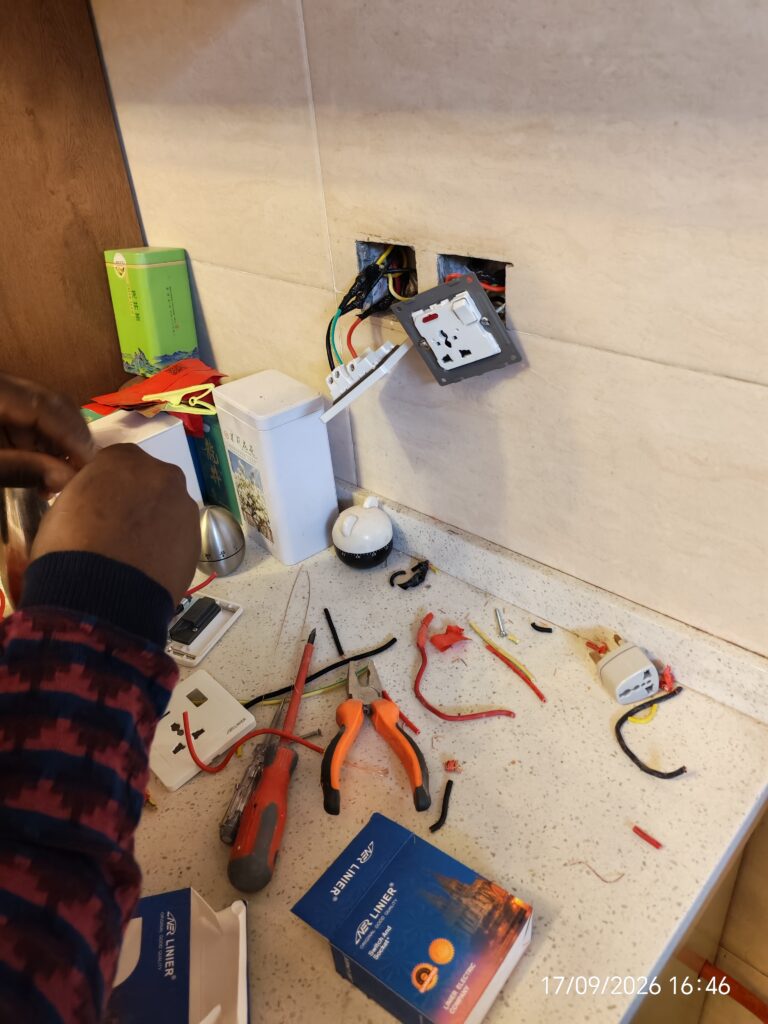
A well-organized distribution board should allow circuits to be identified.
Labels can indicate circuits such as:
- Lights
- Sockets
- Kitchen
- Cooker
- Shower
- Water heater
- Pump
- Garage
- Outdoor
- Air conditioning
Clear labeling can make future fault finding more efficient.
CUSTOMER TESTIMONY — RESIDENTIAL ELECTRICAL INSTALLATION IN KISUMU
“We were constructing a family home and wanted the electrical installation planned before the finishing stage. The team helped us consider the position of sockets, lighting points, kitchen appliances, water heater, outdoor lighting and security equipment. What we appreciated was the attention given to planning instead of waiting until the walls were already finished. The installation was organized around how we intended to use the house.”
— Customer Testimony, Homeowner, Kisumu
CUSTOMER TESTIMONY — COMMERCIAL PROPERTY IN MAMBOLEO
“Our commercial premises required additional electrical points, lighting and dedicated supplies for equipment. The work involved more than simply adding sockets because the existing distribution had to be assessed. The electrical installation was organized according to the equipment we use in the business. The technicians also checked the system after completing the work.”
— Customer Testimony, Business Owner, Mamboleo, Kisumu
CUSTOMER TESTIMONY — APARTMENT PROJECT
“We engaged Pro-Logic Technologies Limited during an apartment project where several electrical circuits had to be coordinated. The installation included lighting, sockets, water-heater supplies and common-area electrical requirements. The biggest benefit was having the electrical work considered during construction instead of trying to correct everything after finishing.”
— Customer Testimony, Property Development Project, Kisumu
CUSTOMER TESTIMONY — WORKSHOP ELECTRICAL INSTALLATION
“Our workshop needed electrical supplies for welding equipment, grinders, drills and other machines. The previous arrangement was not suitable for the equipment we were using. The new electrical arrangement was planned around the machines and the way the workshop operates. The result was a much more organized working environment.”
— Customer Testimony, Workshop Operator, Kisumu
CUSTOMER TESTIMONY — HOTEL ELECTRICAL WORK
“Our hotel required electrical work involving lighting, equipment connections and several areas of the building. Because the property operates daily, we needed the work coordinated carefully. The team assessed the requirements and worked on the electrical sections that needed attention. The installation was approached as a complete system rather than individual repairs.”
— Customer Testimony, Hotel Operator, Kisumu
CUSTOMER TESTIMONY — ELECTRICAL REWIRING
“We had an older property where several sockets and lighting points had developed problems. Rather than continuing to repair individual symptoms, we requested an electrical assessment. The inspection helped identify areas where the wiring and accessories required attention. We then proceeded with the necessary electrical work.”
— Customer Testimony, Property Owner, Kisumu
CUSTOMER TESTIMONY — WATER HEATER AND SHOWER INSTALLATION
“We needed electrical connections for a water heater and shower in a renovated house. We wanted the circuits properly separated and protected. The installation was completed with attention to the dedicated supply requirements and the bathroom environment. The team also tested the installation before completion.”
— Customer Testimony, Homeowner, Kisumu
CUSTOMER TESTIMONY — INDUSTRIAL ELECTRICAL WORK
“Our facility has several motors and electrical machines, so the electrical requirements are more complicated than ordinary household wiring. We needed assistance with power distribution and machine connections. The work focused on the electrical requirements of the equipment and the overall distribution system.”
— Customer Testimony, Industrial Client, Kisumu
ELECTRICAL SERVICES IN NYALENDA, KISUMU
Electrical services can include:
- House wiring
- Rewiring
- Lighting
- Socket installation
- Appliance circuits
- Security lighting
- Distribution boards
- Fault finding
- Electrical maintenance
ELECTRICAL SERVICES IN MANYATTA, KISUMU
Manyatta properties may require electrical work for:
- Residential buildings
- Shops
- Workshops
- Rental units
- Commercial premises
- Renovations
Services can include installation, repairs, upgrades and maintenance.
ELECTRICAL SERVICES IN KONDELE
Electrical work in Kondele can support:
- Shops
- Businesses
- Rental properties
- Offices
- Workshops
- Residential buildings
ELECTRICAL SERVICES IN NYAMASARIA
Services can include:
- New wiring
- Lighting
- Socket installation
- Commercial wiring
- Workshop supplies
- Outdoor electrical work
- Security-system power
ELECTRICAL SERVICES IN KIBUYE
Electrical installations around Kibuye can support commercial premises, shops, businesses, warehouses and other properties.
ELECTRICAL SERVICES IN DUNGA
Residential and commercial properties around Dunga may require internal and external electrical installations, including lighting, sockets, pumps and security-related power.
ELECTRICAL SERVICES IN OBUNGA
Electrical work can cover residential properties, rental units, businesses, shops and workshops.
ELECTRICAL SERVICES IN OTONGLO
Electrical installation services can support homes, businesses, workshops and construction projects in and around Otonglo.
ELECTRICAL SERVICES IN MASENO
Electrical services can extend beyond central Kisumu to Maseno and nearby areas, subject to project requirements and site accessibility.
ELECTRICAL SERVICES IN AHERO
Ahero and surrounding areas can require electrical installation for homes, commercial premises, agricultural businesses, workshops and institutions.
ELECTRICAL SERVICES IN MUHORONI
Electrical installation and maintenance can support residential, commercial, agricultural and industrial properties around Muhoroni.
ELECTRICAL SERVICES IN AWASI
Electrical projects in Awasi can include building wiring, lighting, sockets, pumps, commercial equipment and other electrical installations.
ELECTRICAL SERVICES AROUND KISUMU-KAKAMEGA ROAD
The corridor supports residential, commercial and institutional developments where electrical installation can involve new buildings, renovations, shops, warehouses and other premises.
ELECTRICAL SERVICES AROUND KISUMU-BUSIA ROAD
Electrical services can support businesses, workshops, warehouses, commercial buildings and residential developments along the corridor.
ELECTRICAL SERVICES AROUND KISUMU-NAIROBI ROAD
The Kisumu-Nairobi corridor contains residential, commercial, industrial and institutional properties requiring different electrical installations.
ELECTRICAL SERVICES AROUND KISUMU-AHERO ROAD
Electrical work can include:
- Building wiring
- Lighting
- Industrial power
- Pumps
- Workshops
- Commercial premises
- Agricultural installations
ELECTRICAL INSTALLATION FOR FARMS AROUND KISUMU
Agricultural properties can require electricity for:
- Water pumps
- Irrigation
- Security lighting
- Farm buildings
- Workshops
- Refrigeration
- Processing machinery
- Electric fencing
- Storage facilities
Pump and motor circuits should be designed around the equipment's requirements.
ELECTRICAL INSTALLATION FOR BOREHOLE PUMPS
Borehole pumping systems can require electrical connections for:
- Submersible pumps
- Control panels
- Protection devices
- Level controls
- Water tanks
- Pressure systems
Correct motor protection is particularly important for pumping equipment.
ELECTRICAL INSTALLATION FOR WATER TANK SYSTEMS
Automatic water systems may use:
- Pump motors
- Float switches
- Contactors
- Control panels
- Pressure switches
The electrical installation should coordinate the pump control with the water system.
ELECTRICAL INSTALLATION FOR SAUNA AND STEAM SYSTEMS
Saunas and steam rooms can contain significant electrical loads.
Electrical work may include:
- Heater supply
- Control equipment
- Lighting
- Ventilation
- Pumps
- Temperature controls
Because these environments involve heat and moisture, electrical installation requires appropriate planning.
ELECTRICAL INSTALLATION FOR SWIMMING POOLS
Swimming pool electrical systems may involve:
- Pool pumps
- Filtration equipment
- Lighting
- Heaters
- Control systems
Electrical work around water requires careful safety consideration and appropriate protective measures.
ELECTRICAL INSTALLATION FOR JACUZZIS
Jacuzzi systems can include:
- Pumps
- Heaters
- Controls
- Lighting
- Filtration
The electrical supply should be designed around the equipment's total requirements and the wet environment.
ELECTRICAL INSTALLATION FOR LAUNDRIES
Commercial laundries may contain:
- Washing machines
- Dryers
- Ironing equipment
- Water heaters
- Pumps
- Ventilation
These can represent substantial electrical loads.
ELECTRICAL INSTALLATION FOR BUTCHERIES
Butcheries may require electrical supplies for:
- Refrigerators
- Freezers
- Meat grinders
- Slicers
- Lighting
- Water heaters
- Display equipment
Dedicated circuits may be appropriate for larger equipment.
ELECTRICAL INSTALLATION FOR BAKERIES
Bakeries can contain:
- Ovens
- Mixers
- Refrigerators
- Freezers
- Proofers
- Dough machines
- Lighting
- Packaging equipment
The electrical system must account for the combined equipment load.
ELECTRICAL INSTALLATION FOR MAIZE FLOUR PROCESSING
Maize processing facilities may use:
- Motors
- Conveyors
- Milling machines
- Fans
- Blowers
- Pumps
- Control panels
Such facilities may require industrial electrical distribution and motor-control systems.
ELECTRICAL INSTALLATION FOR WORKSHOPS IN KISUMU
A workshop may need a combination of:
- General sockets
- Three-phase outlets
- Welding supplies
- Compressor supplies
- Lighting
- Machine circuits
- Motor controls
- Outdoor power
The layout should be based on actual equipment locations.
ELECTRICAL INSTALLATION FOR WELDING WORKSHOPS
Welding machines can have substantial electrical demands.
Installation planning should consider:
- Number of welders
- Machine rating
- Simultaneous use
- Supply type
- Cable capacity
- Protective equipment
- Distribution arrangement
ELECTRICAL INSTALLATION FOR CAR WASHES
Car wash businesses may require electricity for:
- Pressure washers
- Pumps
- Vacuum cleaners
- Compressors
- Lighting
- Water systems
- Security systems
Because water is heavily present, electrical safety is particularly important.
ELECTRICAL INSTALLATION FOR RESTAURANT KITCHENS
Commercial kitchens can contain many high-load appliances.
These may include:
- Ovens
- Cookers
- Fryers
- Refrigerators
- Freezers
- Food warmers
- Dishwashers
- Extractors
- Water heaters
The electrical installation should be planned around the kitchen equipment schedule.
ELECTRICAL INSTALLATION FOR CHURCHES AND PLACES OF WORSHIP
Electrical systems can include:
- Lighting
- Public address systems
- Audio equipment
- Screens
- Projectors
- Fans
- Air conditioners
- Outdoor lighting
- Security systems
Large halls may require distributed lighting and dedicated audiovisual circuits.
ELECTRICAL INSTALLATION FOR EVENT VENUES
Event facilities can require flexible power for:
- Lighting
- Sound systems
- DJ equipment
- Catering equipment
- Refrigeration
- Displays
- Outdoor equipment
Power distribution should be planned around expected temporary loads.
ELECTRICAL INSTALLATION FOR GUESTHOUSES AND LODGES
Guest facilities can require:
- Room lighting
- Sockets
- Water heaters
- Refrigerators
- Air conditioning
- Outdoor lighting
- Pumps
- Security systems
- Backup power
ELECTRICAL INSTALLATION FOR OFF-GRID PROPERTIES
Properties outside reliable grid coverage may combine:
- Solar
- Batteries
- Inverters
- Generators
- Grid electricity
Electrical integration should be designed around the intended operating strategy.
ELECTRICAL INSTALLATION AND ENERGY MANAGEMENT
Good electrical design can also consider energy consumption.
Energy management may involve:
- Efficient lighting
- Appropriate circuit separation
- Load scheduling
- Solar integration
- Inverter systems
- Equipment selection
- Automatic controls
COMMON ELECTRICAL INSTALLATION MISTAKES
Several mistakes can compromise an electrical system.
USING UNDERSIZED CABLES
A cable should be selected according to the intended circuit conditions and applicable requirements.
OVERLOADING SOCKET CIRCUITS
Too many high-load appliances on one circuit can create excessive demand.
POOR TERMINATIONS
Loose connections can produce heat and electrical faults.
INADEQUATE PROTECTION
Protective devices should correspond appropriately to the circuit.
POOR EARTHING
A weak or defective earthing arrangement can compromise safety.
UNLABELED DISTRIBUTION BOARDS
Unclear labeling makes maintenance more difficult.
UNPLANNED EXTENSIONS
Repeated additions can produce complicated and poorly coordinated wiring.
ELECTRICAL INSTALLATION DOCUMENTATION
For larger projects, documentation can be useful.
This may include:
- Circuit schedules
- Distribution-board labels
- Equipment schedules
- Cable information
- Installation drawings
- Maintenance records
- Test records
Documentation supports future maintenance and expansion.
ELECTRICAL MAINTENANCE CONTRACTS IN KISUMU
Commercial properties may benefit from planned electrical maintenance.
Maintenance programs can include periodic inspection of:
- Distribution boards
- Lighting
- Socket outlets
- Motors
- Pumps
- Outdoor systems
- Backup systems
- Control panels
This can help identify problems before they become major interruptions.
ELECTRICAL INSTALLATION FOR NEW COMMERCIAL DEVELOPMENTS
Commercial development should ideally incorporate electrical requirements before construction reaches the finishing stage.
The electrical contractor can coordinate with:
- Architect
- Main contractor
- Plumbing contractor
- HVAC contractor
- Interior designer
- Security contractor
- Equipment suppliers
Coordination helps reduce conflicts between building services.
ELECTRICAL INSTALLATION FOR RENOVATION PROJECTS
Renovations can be more complicated than new construction because the existing electrical system must be understood before modifications.
A renovation assessment can identify:
- Existing circuits
- Existing distribution
- Available capacity
- Old wiring
- Existing protection
- New electrical loads
ELECTRICAL INSTALLATION FOR EXTENSIONS
Building extensions may require additional:
- Lighting
- Sockets
- Appliance circuits
- Distribution
- Outdoor power
- Security systems
The existing system should be assessed before additional loads are connected.
ELECTRICAL INSTALLATION FOR GARAGES
Garages may require:
- Lighting
- General sockets
- Workshop sockets
- Vehicle charging
- Security systems
- Automatic doors
- Compressors
ELECTRIC VEHICLE CHARGING INSTALLATION
Electric vehicle charging equipment can require dedicated electrical circuits.
Installation planning should consider:
- Charger rating
- Available electrical capacity
- Circuit protection
- Cable routing
- Charger location
- Load management
ELECTRICAL INSTALLATION FOR SECURITY SYSTEMS
Security infrastructure can include:
- CCTV
- Electric fence
- Alarm systems
- Access control
- Gate automation
- Intercom systems
These systems require reliable power and appropriate backup arrangements where necessary.
FINAL ELECTRICAL TESTING
Before an electrical installation is considered complete, appropriate testing should be carried out by qualified personnel using suitable procedures and equipment.
Testing helps identify installation defects that may not be visible.
WHY PROFESSIONAL ELECTRICAL INSTALLATION MATTERS
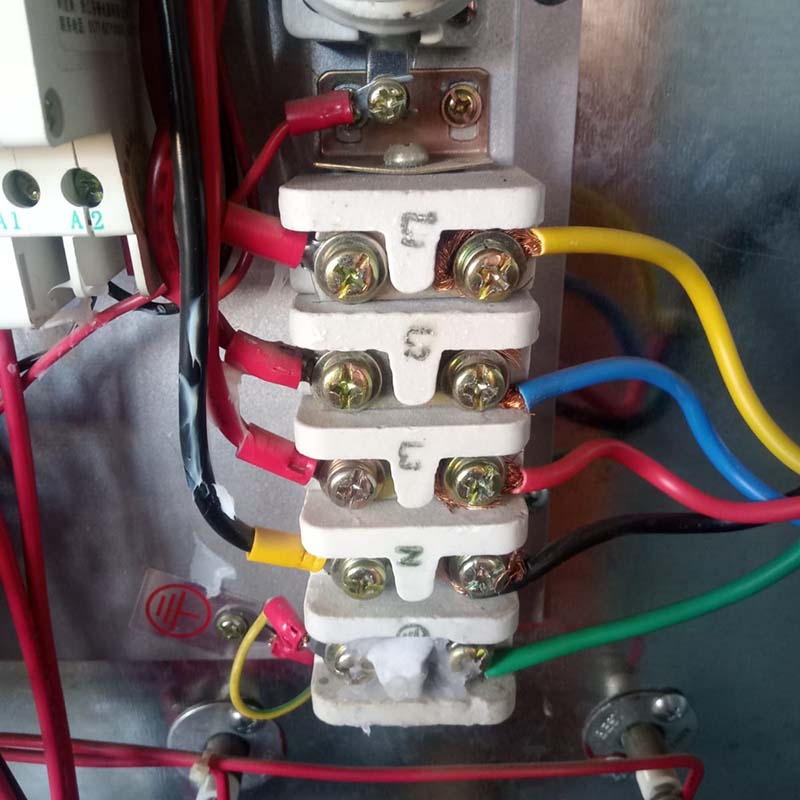
Electrical systems are infrastructure.
They support almost every modern building function.
A properly planned installation provides a structured foundation for:
- Lighting
- Appliances
- Machinery
- Security
- Communication systems
- Water systems
- Heating
- Cooling
- Backup power
- Industrial production
Electrical installation should therefore be approached as a technical engineering task rather than simply connecting wires.
PRO-LOGIC TECHNOLOGIES LIMITED — ELECTRICAL INSTALLATION IN KISUMU
Pro-Logic Technologies Limited provides electrical installation, electrical repair, electrical maintenance, power distribution, equipment connections and related technical services for customers in Kisumu and surrounding areas.
Our service scope can support:
Residential electrical installation
Commercial electrical installation
Industrial electrical installation
Apartment wiring
Office electrical fit-outs
Hotel electrical systems
School electrical installation
Workshop wiring
Factory electrical systems
Pump installation
Motor connections
Lighting installation
Distribution boards
Consumer units
Electrical protection
Earthing
Generator integration
Solar and inverter integration
CCTV power
Electric fence power
Gate automation power
VFD and motor-control systems
Electrical troubleshooting
Electrical maintenance
KISUMU SERVICE COVERAGE
Electrical installation services can cover Kisumu and surrounding locations including:
Kisumu CBD, Milimani, Mamboleo, Riat Hills, Manyatta, Nyalenda, Kondele, Nyamasaria, Kibuye, Obunga, Dunga, Migosi, Lolwe, Tom Mboya Estate, Kanyakwar, Otonglo, Kibos, Kisumu East, Kisumu West, Kisumu Central, Kisumu North, Maseno, Ahero, Muhoroni, Awasi and surrounding areas.
Service coverage can also extend to nearby towns and locations depending on the project requirements.
BOOK ELECTRICAL INSTALLATION SERVICES IN KISUMU
Whether you are constructing a new building, renovating an existing property, expanding a commercial facility, installing machinery or upgrading an old electrical system, the first step is understanding the actual electrical requirements of the property.
Professional electrical planning can help establish the appropriate circuit arrangement, distribution requirements, equipment connections, lighting requirements and protective systems.
For electrical installation, wiring, electrical upgrades, industrial power work, equipment connections and maintenance in Kisumu, contact:
PRO-LOGIC TECHNOLOGIES LIMITED
MAIN WORKSHOP / HEAD OFFICE:
LUTHULI AVENUE, KANGARI BUILDING, 3RD FLOOR, KA7, NAIROBI
PHONE: 0723763173
EMAIL: info@prologictechnologies.co.ke
WEBSITE: prologictecnologies.co.ke
ELECTRICAL INSTALLATION IN KISUMU — FROM A SINGLE ROOM TO COMPLETE BUILDINGS
From a single additional socket to a complete electrical installation for a residential, commercial or industrial development, electrical work should be planned around the property's actual requirements.
Pro-Logic Technologies Limited provides technical electrical installation and maintenance services for customers seeking structured electrical solutions in Kisumu and surrounding areas.
Residential wiring. Commercial wiring. Industrial power. Lighting. Distribution boards. Consumer units. Motors. Pumps. Machinery. Backup power. Security systems. Electrical maintenance. Fault finding. Electrical upgrades.
For electrical installation projects in Kisumu, arrange an assessment and discuss the building, equipment, location and electrical requirements with the technical team.