
Smart Borehole Drilling in Moyale
Reliable water is essential for homes, businesses, farms, institutions, construction projects and commercial developments. (Call 0723763173)In Moyale, where access to dependable water can be a major consideration for property owners and organizations, a properly planned borehole can provide an independent groundwater source when suitable groundwater is available.
Smart borehole drilling in Moyale is about more than simply drilling a deep hole into the ground. A successful borehole project requires careful planning, groundwater investigation, appropriate drilling equipment, accurate geological interpretation, suitable casing and screen installation, proper development, test pumping and water-quality assessment.
Our borehole drilling approach combines technical planning with practical project management. The objective is to develop a water source that is properly investigated, drilled and equipped according to the conditions encountered underground.
Whether you are a homeowner, property developer, hotel operator, institution, farmer, contractor, community organization or commercial business, professional borehole planning can help you understand the groundwater potential of your site before major drilling expenditure is committed.
Borehole Drilling in Moyale for Different Water Requirements
Different customers require different quantities of water.
A private residence may require a relatively modest supply for domestic use, while a hotel, school, hospital, livestock operation, irrigation project or commercial facility may need substantially greater production.
For this reason, borehole planning should begin with the intended water demand.
We can help customers consider applications such as:
- Domestic water supply
- Residential estates
- Apartments
- Hotels
- Lodges
- Schools
- Hospitals
- Clinics
- Offices
- Shops
- Commercial buildings
- Construction sites
- Farms
- Livestock watering
- Greenhouse projects
- Irrigation
- Landscaping
- Institutions
- Community water projects
- Industrial applications
The required borehole yield, pump capacity, storage volume and distribution system should be selected according to actual demand rather than simply installing the largest available equipment.
What Makes Borehole Drilling Smart?
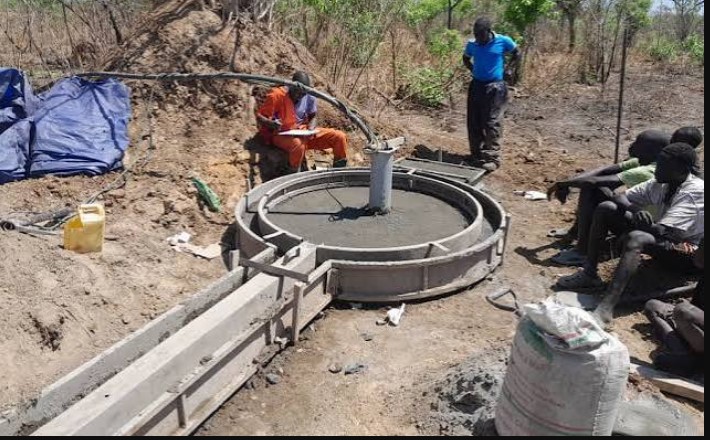
The word smart in smart borehole drilling refers to an informed, systematic approach to groundwater development.
Instead of treating every location as though the underground geology is identical, the project considers the characteristics of the proposed site.
A smart drilling project can involve:
- Understanding the customer's water requirements.
- Assessing the proposed location.
- Conducting appropriate groundwater investigations.
- Reviewing geological and hydrogeological information.
- Identifying promising drilling targets.
- Planning the drilling method.
- Drilling while recording geological formations.
- Selecting appropriate casing and screen arrangements.
- Developing the borehole.
- Carrying out pumping tests.
- Assessing water quality.
- Selecting a suitable pumping system.
- Designing storage and distribution.
- Planning maintenance.
This approach helps reduce avoidable mistakes and creates a clearer technical record of the completed borehole.
Smart Borehole Drilling in Moyale – Site Assessment
Every borehole project begins with the proposed site.
The site should be evaluated according to its intended use, accessibility, surrounding infrastructure, environmental considerations and groundwater investigation results.
Important questions include:
- Where will the borehole be located?
- What quantity of water is required?
- Is drilling equipment able to reach the site?
- Where will the water be stored?
- What pumping system will be used?
- Where will the water distribution network run?
- Are there existing wells or boreholes nearby?
- What information is available about groundwater in the surrounding area?
- Are there potential contamination sources?
- What approvals and permits are required?
Site assessment provides the foundation for the rest of the project.
Hydrogeological Survey for Borehole Drilling in Moyale
A hydrogeological assessment is an important part of responsible groundwater development.
The purpose is to investigate the subsurface conditions and identify areas that may have a reasonable probability of intersecting water-bearing formations.
Depending on the project, groundwater investigations can incorporate geological information, existing borehole records, topography, surface drainage, remote information and geophysical techniques.
The result is used to identify a proposed drilling point.
A survey does not create groundwater and cannot guarantee a particular yield. Groundwater occurs naturally within geological formations, and the final conditions can only be confirmed through drilling and testing.
Why a Groundwater Survey Matters
Drilling without investigation can expose a customer to unnecessary risk.
Subsurface conditions can vary considerably over relatively short distances.
A professional survey helps turn available geological and geophysical information into a more informed drilling decision.
The investigation may identify:
- Possible weathered zones
- Fractured rock
- Geological contacts
- Aquifer-bearing formations
- Areas of potentially low groundwater productivity
- Possible depth ranges
- Structural features
The interpretation should be treated as a technical assessment rather than a guarantee of water.
Geophysical Investigation
Geophysical methods may be used to investigate subsurface electrical properties.
One commonly used approach is electrical resistivity surveying.
Different geological materials can display different electrical responses depending on their composition, porosity, saturation, clay content and other characteristics.
Measurements can therefore provide useful information about the subsurface.
The survey data are interpreted together with geological and hydrogeological information.
Electrical Resistivity Survey
Electrical resistivity techniques can help investigate possible groundwater-bearing structures.
However, resistivity results should not be interpreted in isolation.
A low-resistivity zone, for example, can have several possible geological explanations. It may indicate saturated material, clay-rich formations, saline conditions or other subsurface characteristics.
Professional interpretation is therefore important.
Choosing a Borehole Drilling Site in Moyale
The ideal drilling location depends on the local geology and hydrogeology rather than simply choosing the lowest point on a property.
Groundwater does not necessarily occur directly beneath visible surface depressions.
A technically selected drilling point should take into account available geological evidence and the results of appropriate investigations.
The location should also be practical for future pumping, maintenance and water distribution.
Borehole Drilling Process
Once the drilling location has been selected and project planning is complete, drilling can begin.
The exact drilling process depends on the geology, expected depth, drilling equipment and project requirements.
A typical borehole project can include:
Site Preparation
The drilling area is prepared so that equipment can be positioned safely.
Access routes may need to be considered, particularly where the site is remote or difficult to reach.
Rig Positioning
The drilling rig is positioned over the selected drilling point.
Proper alignment is important because the borehole must be constructed according to the planned trajectory.
Drilling
The drilling equipment penetrates the geological formations.
Drilling continues while the formations encountered underground are recorded and assessed.
Geological Logging
Samples and drilling information can help establish the sequence of formations encountered.
The geological record is valuable when deciding where water-bearing intervals may have been intersected.
Borehole Construction
After drilling reaches the appropriate depth, the borehole is constructed using suitable casing, screens and related materials.
Borehole Development
The borehole is developed to remove drilling residues and improve hydraulic connection between the formation and borehole.
Pump Testing
The borehole is pumped to assess its performance.
Water Sampling
A water sample can be collected for laboratory analysis.
Pump Installation
Once the borehole's characteristics are understood, an appropriate pumping system can be selected.
Borehole Drilling Equipment
Professional drilling requires appropriate machinery and supporting equipment.
Depending on the project, equipment may include:
- Drilling rig
- Compressor
- Drill pipes
- Drill bits
- Mud or air systems
- Casing equipment
- Lifting equipment
- Borehole development equipment
- Pump-testing equipment
- Water-level measuring equipment
- Electrical testing equipment
- Geological sampling equipment
Equipment selection depends on the geology and drilling method.
Borehole Depth in Moyale
There is no single correct depth for every borehole in Moyale.
The depth required depends on local geological and hydrogeological conditions.
Some locations may encounter productive water-bearing formations at one depth, while another site may require considerably deeper drilling.
It is therefore not technically responsible to promise that every borehole will produce water at a predetermined depth.
The drilling process itself provides important information about the actual subsurface conditions.
How Much Water Can a Borehole Produce?
Borehole yield varies from site to site.
Factors affecting production include:
- Aquifer characteristics
- Fracture development
- Geological formation
- Borehole diameter
- Screen design
- Borehole construction
- Recharge conditions
- Pumping conditions
- Seasonal groundwater variation
A borehole should be tested before selecting a permanent pump.
A pump that is too large can cause excessive drawdown and potentially damage the borehole or pumping system.
Borehole Casing
Casing provides structural support for the borehole.
It helps prevent the borehole wall from collapsing and provides a controlled pathway for pumping equipment.
The appropriate casing material, diameter and installation depth depend on the geological conditions and borehole design.
Borehole Screens
Screens allow groundwater to enter the borehole while helping control the movement of formation material.
Screen placement should be based on the geological formations encountered during drilling.
Incorrect screen positioning can reduce borehole performance.
Gravel Pack
Where applicable, a properly designed gravel pack can be installed around screened sections.
The gravel pack helps stabilize the formation surrounding the screen and can improve the filtration characteristics of the borehole.
Its design should correspond to the formation materials and screen specifications.
Borehole Sealing
A borehole should be constructed to minimize the possibility of undesirable surface water entering the groundwater system.
Appropriate sealing arrangements are particularly important near the upper part of the borehole.
Construction should follow applicable technical and regulatory requirements.
Borehole Development
Drilling can leave fine particles and drilling residues around the borehole.
Development removes these materials and helps establish better hydraulic communication between the borehole and surrounding formation.
Development methods can vary depending on borehole construction and geological conditions.
A properly developed borehole should produce cleaner water and operate more effectively than an inadequately developed borehole.
Borehole Pump Testing in Moyale
A pump test is one of the most important stages of groundwater development.
The purpose is to determine how the borehole responds to pumping.
Information obtained during testing can include:
- Pumping rate
- Static water level
- Dynamic water level
- Drawdown
- Recovery
- Pumping duration
- Borehole performance
This information assists in selecting the appropriate permanent pumping rate and equipment.
Static Water Level
The static water level is the groundwater level when the borehole is not being pumped and has had sufficient time to recover.
It provides a useful reference point.
Dynamic Water Level
The dynamic water level is measured while the borehole is being pumped.
The difference between static and pumping levels provides information about drawdown.
Borehole Recovery
After pumping stops, the water level begins recovering.
Monitoring recovery provides additional information about borehole behaviour.
Selecting the Right Borehole Pump
A borehole pump should not be selected simply according to the borehole depth.
Pump selection considers:
- Borehole depth
- Water level
- Desired flow rate
- Total dynamic head
- Storage tank elevation
- Pipeline length
- Pipe diameter
- Required pressure
- Energy source
- Borehole yield
- Operating schedule
The objective is to select equipment capable of supplying the required water without unnecessarily stressing the borehole.
Solar Borehole Pumping in Moyale
Solar pumping can be particularly attractive where reliable grid electricity is unavailable or where reducing ongoing energy costs is important.
A solar borehole system can include:
- Solar panels
- Solar pump controller
- Submersible pump
- Mounting structure
- Electrical protection
- Water storage tank
- Pipework
- Distribution system
The system should be designed according to the borehole's pumping requirements and available solar resource.
Solar Pumping and Water Storage
A practical solar water system often uses water storage rather than attempting to match water consumption directly with sunlight availability.
During suitable daylight conditions, solar energy can operate the pump and fill a storage tank.
Stored water can then be used later.
This approach can simplify the system and reduce dependence on batteries in applications where water storage is practical.
Smart Borehole Solar Systems
A smart pumping system can incorporate controls that protect the pump and improve operational efficiency.
Depending on the equipment, controls may include:
- Dry-run protection
- Overload protection
- Low-water protection
- Tank-level control
- Pump scheduling
- Voltage monitoring
- Current monitoring
- Fault indication
Automation can reduce unnecessary pump operation and protect equipment.
Borehole Water Storage in Moyale
Water storage is an important component of many borehole projects.
The appropriate tank size depends on:
- Household demand
- Commercial demand
- Irrigation requirements
- Livestock demand
- Pump production
- Daily usage patterns
- Solar pumping availability
- Required reserve capacity
Storage can also provide water during periods when the pump is not operating.
Borehole Water Distribution
Once groundwater has been pumped, it needs to be transported to where it is required.
The distribution system can include:
- Rising main
- Storage tank
- Pressure system
- Distribution pipes
- Valves
- Taps
- Irrigation lines
- Building connections
Pipe sizing should account for flow rate, pressure and distance.
Borehole Water Quality Testing
Finding groundwater is only one part of a successful water project.
The water should also be assessed for quality according to its intended use.
A laboratory water analysis can examine parameters such as:
- pH
- Electrical conductivity
- Total dissolved solids
- Turbidity
- Hardness
- Major ions
- Chloride
- Sulphate
- Nitrate
- Fluoride
- Iron
- Manganese
- Microbiological parameters
- Other parameters where required
The appropriate laboratory panel depends on the intended water use and regulatory requirements.
Is Borehole Water Automatically Safe to Drink?
No.
Groundwater should not automatically be assumed to be potable merely because it comes from a borehole.
Water quality varies between locations.
Some groundwater may require treatment before drinking.
Laboratory analysis is therefore important before establishing a borehole as a drinking-water source.
Borehole Water Treatment
Depending on laboratory results, treatment may be necessary.
Potential treatment systems include:
- Sediment filtration
- Activated carbon
- Water softening
- Iron removal
- Manganese removal
- Fluoride treatment
- Reverse osmosis
- Disinfection
- UV treatment
- Chlorination
The treatment system should be selected based on laboratory results rather than guesswork.
Domestic Borehole Drilling in Moyale
A domestic borehole can provide water for:
- Drinking after appropriate treatment
- Cooking
- Cleaning
- Laundry
- Toilets
- Gardening
- Other household activities
The borehole design should correspond to the actual household water requirement.
A larger pump is not necessarily better.
The goal is to produce an appropriate amount of water reliably while protecting the groundwater source and pumping equipment.
Boreholes for Apartments and Estates
Large residential developments can require considerably more water than individual homes.
Apartment blocks and housing estates may require:
- Higher pumping capacity
- Larger storage
- Pressure boosting
- Multiple distribution zones
- Automated tank controls
- Water treatment
- Metering
Borehole design should consider both current and projected demand.
Hotel Borehole Drilling in Moyale
Hotels can have substantial and fluctuating water consumption.
Water may be required for:
- Guest rooms
- Showers
- Toilets
- Kitchens
- Laundry
- Cleaning
- Landscaping
- Staff facilities
- Swimming pools where applicable
A borehole for a hotel should therefore be designed around the property's operational demand.
Storage capacity can help manage periods of high consumption.
Borehole Drilling for Schools
Schools require dependable water for students, staff, sanitation, cleaning and food preparation.
A school borehole project should consider:
- Student population
- Staff numbers
- Daily water consumption
- Sanitation facilities
- Kitchen requirements
- Storage
- Water treatment
- Future expansion
Proper planning is particularly important because water demand can increase as enrolment grows.
Borehole Drilling for Hospitals and Clinics
Healthcare facilities require reliable water for sanitation and other essential operations.
Borehole systems for medical facilities may require higher levels of planning, redundancy, storage and treatment.
Water-quality requirements should be carefully considered according to the facility's activities and applicable standards.
Boreholes for Agriculture in Moyale
Agricultural water demand can be substantially greater than domestic demand.
Applications can include:
- Crop irrigation
- Horticulture
- Greenhouses
- Nurseries
- Livestock
- Tree plantations
- Landscaping
Irrigation boreholes should be designed according to crop requirements, available water, pumping hours and the sustainability of groundwater abstraction.
Livestock Water Boreholes
Livestock require reliable access to clean water.
A borehole can supply water for:
- Cattle
- Goats
- Sheep
- Camels
- Poultry
- Other livestock
The system should be sized according to the number and type of animals.
Storage tanks can be useful where animals require water throughout the day.
Commercial Borehole Drilling
Commercial businesses may use groundwater for various activities.
These can include:
- Construction
- Cleaning
- Hospitality
- Food-related operations
- Landscaping
- Agriculture
- Manufacturing
- General commercial use
The design should be based on the specific business application.
Borehole Drilling for Construction Sites
Construction projects may require water for:
- Concrete work
- Dust control
- Masonry
- Cleaning
- Worker facilities
- Equipment cleaning
A temporary or permanent borehole solution may be considered depending on the duration and requirements of the project.
Borehole Rehabilitation in Moyale
Existing boreholes can sometimes experience declining performance.
Possible causes include:
- Screen blockage
- Mineral deposits
- Sand production
- Pump problems
- Reduced groundwater levels
- Poor development
- Mechanical problems
Borehole rehabilitation begins with diagnosis.
The appropriate treatment depends on the reason for the decline.
Low-Yield Borehole Problems
A borehole that produces less water than expected should be investigated.
Potential causes include:
- Pumping beyond sustainable capacity
- Blocked screens
- Poor borehole development
- Pump deterioration
- Seasonal groundwater changes
- Mechanical problems
- Changes in groundwater conditions
It is important to distinguish between a borehole problem and a pump problem.
Borehole Pump Replacement
Submersible pumps operate underwater and are subject to mechanical and electrical stresses.
A failing pump may show symptoms such as:
- Reduced water flow
- Increased electrical consumption
- Frequent tripping
- Unusual noises
- Failure to start
- Intermittent operation
- Complete loss of pumping
Testing should establish whether the problem lies with the pump, electrical system, control equipment or borehole.
Borehole Maintenance
A borehole should not be treated as a completely maintenance-free water source.
Periodic checks can include:
- Pump performance
- Water levels
- Electrical consumption
- Flow rate
- Water quality
- Tank operation
- Pipework
- Valves
- Control equipment
Regular monitoring can reveal changes before they become major failures.
Monitoring Borehole Performance
Recording borehole performance over time can be valuable.
Useful records include:
- Pumping rate
- Water level
- Pump running time
- Electricity or solar performance
- Water quality
- Maintenance history
If performance changes significantly, the information can help technicians investigate the cause.
Borehole Drilling Cost in Moyale
The cost of drilling a borehole depends on numerous factors.
There is no universal price that applies to every property.
Project costs can be influenced by:
- Ground conditions
- Drilling depth
- Drilling diameter
- Casing requirements
- Screen requirements
- Geological conditions
- Site accessibility
- Borehole development
- Pump testing
- Water analysis
- Equipment
- Pumping system
- Solar installation
- Storage
- Pipeline requirements
- Regulatory requirements
A professional quotation should therefore be based on the actual project requirements.
What Affects Drilling Cost?
The geology is one of the most important factors.
Hard formations can require different drilling methods and equipment compared with softer formations.
Greater depth can also increase drilling time and material requirements.
Site access is another consideration.
A difficult-to-access property can increase logistical costs because of equipment movement and setup requirements.
Why Cheap Borehole Drilling Can Become Expensive
A low initial quotation does not necessarily represent the lowest total project cost.
Poor drilling practices, inappropriate casing, inadequate development or incorrect pump selection can lead to additional expenses later.
The better objective is to obtain a technically appropriate borehole at a reasonable overall project cost.
Borehole Permits and Compliance
Groundwater development may be subject to regulatory requirements.
Before drilling, property owners should establish the approvals, permits, water-resource requirements and environmental considerations applicable to their location and project.
Requirements can change according to the project and applicable Kenyan regulations.
Professional borehole planning should therefore include attention to the required documentation and approvals.
Borehole Drilling Documentation
A properly documented borehole project can provide useful information for future maintenance.
Records may include:
- Site location
- Borehole depth
- Geological log
- Casing details
- Screen details
- Static water level
- Pump-test results
- Water-quality results
- Pump specifications
- Installation information
- Maintenance history
These records should be kept safely.
Smart Borehole Drilling for Remote Properties
Some properties around Moyale can be difficult to access.
Remote projects require additional logistical planning.
Considerations can include:
- Road access
- Transport of drilling equipment
- Water or air requirements during drilling
- Equipment setup
- Fuel
- Accommodation
- Security
- Material transportation
- Communication
- Post-drilling service
Planning these factors early can help reduce project delays.
Borehole Drilling Site Accessibility
A drilling rig requires adequate space to operate.
Before mobilization, the property should be assessed for:
- Entry roads
- Gate dimensions
- Turning space
- Overhead obstructions
- Ground stability
- Working area
- Nearby buildings
- Utility lines
The exact equipment requirements depend on the selected drilling method.
Borehole Drilling Near Buildings
The drilling location should be selected with future access and safety in mind.
It may be necessary to maintain suitable separation from buildings, septic systems, waste areas and other potential contamination sources.
The final location should comply with applicable technical and regulatory requirements.
Borehole and Septic Systems
Groundwater protection is important.
A borehole should not be positioned carelessly near potential contamination sources.
Possible contamination sources can include:
- Septic systems
- Waste disposal areas
- Chemical storage
- Fuel storage
- Animal waste
- Drainage areas
Site planning should consider groundwater protection from the beginning.
Borehole Drilling for Water Independence
One of the major reasons property owners consider boreholes is to improve control over their water supply.
A borehole can potentially provide an independent groundwater source, subject to suitable groundwater availability and regulatory requirements.
However, a borehole should not be regarded as an unlimited water supply.
Groundwater is a natural resource that needs responsible management.
Sustainable Groundwater Use
A productive borehole should be operated within its sustainable capacity.
Over-pumping can cause excessive drawdown and may affect borehole performance.
Pump testing helps establish a reasonable operating rate.
Water demand should also be managed through storage, efficient fixtures and appropriate pumping schedules.
Smart Water Management
Modern borehole systems can be combined with water-management controls.
Examples include:
- Automatic tank filling
- Low-water pump protection
- Scheduled pumping
- Level sensors
- Flow monitoring
- Pressure controls
- Solar pump controllers
These features can reduce unnecessary operation and improve system reliability.
Combining Boreholes With Solar Energy
For properties seeking reduced dependence on grid electricity, solar-powered borehole pumping can be considered.
The system can use solar panels to power a submersible pump.
During daylight, the pump transfers groundwater into a storage tank.
Water can then be distributed when required.
This design is particularly useful where water storage is practical.
Solar Borehole Pump Sizing
Solar pump sizing should consider:
- Borehole yield
- Static water level
- Pumping depth
- Required flow
- Total head
- Daily water demand
- Available sunlight
- Solar panel capacity
- Controller characteristics
Oversizing or undersizing can reduce system performance.
Borehole Tanks and Solar Systems
Water tanks provide a practical form of energy storage.
Instead of storing all solar energy in batteries, the system stores pumped water.
This can be a useful approach for water applications because water can be consumed after the sun has gone down.
The final system design depends on the customer's water requirements.
Borehole Water for Irrigation
Irrigation requires careful planning because demand can be much greater than domestic consumption.
The design should consider:
- Crop type
- Irrigated area
- Soil
- Irrigation method
- Seasonal requirements
- Borehole yield
- Storage
- Pumping schedule
Drip irrigation, sprinklers and other systems have different flow requirements.
Borehole Drilling and Water Conservation
A borehole project should be combined with efficient water use.
Practical conservation measures include:
- Fixing leaking pipes
- Using efficient irrigation
- Installing appropriate storage
- Avoiding unnecessary pumping
- Monitoring water consumption
- Maintaining pumps
- Using suitable pipe sizes
Efficient water use can reduce operating costs and protect the groundwater resource.
Borehole Troubleshooting
When a borehole system stops supplying water, the problem may not necessarily be the borehole itself.
Possible causes include:
- Pump failure
- Electrical fault
- Controller fault
- Damaged cable
- Low water level
- Blocked pipe
- Tank sensor problem
- Valve failure
- Solar system problem
Troubleshooting should begin with systematic testing.
Borehole Electrical Systems
Borehole pumps require appropriate electrical protection.
Depending on the system, this can include:
- Circuit protection
- Overload protection
- Surge protection
- Dry-run protection
- Proper earthing
- Appropriate cable sizing
- Pump control equipment
The electrical system should be designed according to the pump manufacturer's specifications and applicable standards.
Borehole Solar Protection
Solar pumping equipment can be exposed to electrical surges and environmental conditions.
Proper protection and installation can reduce the risk of equipment damage.
Solar panels, controllers, cables and pump systems should be installed and maintained appropriately.
Borehole Water Pressure Systems
Some properties require pressurized water rather than gravity-fed distribution.
Pressure systems may use:
- Booster pumps
- Pressure tanks
- Pressure switches
- Variable-speed drives
- Automatic controllers
The appropriate solution depends on the building and water-demand characteristics.
Borehole Water for Domestic Drinking
Where borehole water is intended for drinking, laboratory testing should be carried out.
Depending on the results, treatment may be necessary.
The presence of minerals or microorganisms can vary from one groundwater source to another.
Water treatment should therefore be evidence-based.
Borehole Water for Livestock
Livestock water systems should provide convenient access and adequate storage.
Water troughs can be connected to elevated tanks or other storage systems.
Automatic level controls can reduce the need for manual filling.
Borehole Water for Landscaping
Hotels, offices, residential estates and commercial properties may use borehole water for landscaping.
Irrigation systems can be designed around the available borehole yield.
Watering schedules can be adjusted to reduce waste.
Borehole Drilling for Community Projects
Community water projects require careful planning because the water demand can involve many users.
Important considerations include:
- Number of users
- Daily demand
- Storage
- Pumping capacity
- Distribution
- Water quality
- Management
- Maintenance
- Financing
- Regulatory compliance
A borehole should be tested thoroughly before being relied upon as the primary community water source.
Borehole Drilling Consultation
Before drilling, customers can discuss their requirements with a technical team.
Useful information includes:
- Property location
- Intended use
- Estimated water demand
- Existing water sources
- Site accessibility
- Available electricity
- Interest in solar pumping
- Proposed storage
- Irrigation requirements
The more information available, the better the project can be planned.
Preparing Your Property for Borehole Drilling
Property owners can assist by ensuring the proposed drilling area is accessible.
Before equipment arrives:
- Clear unnecessary obstacles.
- Identify property boundaries.
- Identify known underground services.
- Provide suitable access.
- Keep unauthorized people away from the drilling area.
- Identify a safe equipment setup location.
The drilling team can then work more efficiently.
During the Drilling Process
Drilling can produce noise, dust, rock fragments and drilling fluids depending on the method.
Customers should expect normal drilling activity around the site.
The duration varies according to geological conditions, depth and drilling progress.
Some formations may be penetrated relatively quickly, while harder formations can require more time.
Geological Logging During Drilling
Geological logging provides a record of formations encountered.
It can help identify:
- Soil layers
- Weathered rock
- Fresh rock
- Fractured zones
- Potential aquifer zones
- Water strikes
The drilling record is useful when designing the final borehole.
Water Strikes
During drilling, groundwater may be encountered at different depths.
A water strike does not necessarily mean that the borehole will have a sustainable commercial yield.
The quantity and behaviour of the water need to be evaluated through proper testing.
Multiple Water-Bearing Zones
A borehole can sometimes intersect more than one water-bearing zone.
The final construction design should account for the geological conditions and water-quality considerations.
Some formations may be isolated or screened selectively depending on the technical assessment.
Borehole Construction Quality
Construction quality influences long-term borehole performance.
Important elements include:
- Appropriate casing
- Correct screen placement
- Proper centralization where required
- Suitable gravel pack
- Adequate sealing
- Proper development
- Accurate pump installation
A technically sound borehole is an investment in long-term water access.
Borehole Yield Versus Pump Capacity
A common misconception is that installing a high-capacity pump automatically increases borehole production.
It does not.
The borehole can only provide water according to the characteristics of the groundwater formation.
A pump that exceeds the sustainable borehole yield can cause excessive drawdown and operational problems.
Pump selection should therefore follow borehole testing.
Borehole Pump Efficiency
Pump efficiency affects operating costs.
An appropriately sized pump can reduce unnecessary energy consumption.
Solar systems particularly benefit from efficient pump selection because the available energy is limited by the solar array and operating conditions.
Borehole Maintenance Schedule
Maintenance frequency depends on the system.
A maintenance programme can include periodic inspection of:
- Pump
- Solar panels
- Controller
- Electrical protection
- Water tank
- Valves
- Pipework
- Water quality
- Borehole performance
The maintenance history should be recorded.
Signs Your Borehole Needs Attention
Contact a technician if you notice:
- Sudden reduction in water flow
- Increasing sand in water
- Changes in water colour
- Unusual pump noise
- Frequent electrical trips
- Pump starting and stopping excessively
- Water level falling unusually quickly
- Solar pump controller errors
- Tank failing to fill
- Pressure dropping
Early investigation can sometimes prevent larger problems.
Sand in Borehole Water
Sand production can have different causes.
It may relate to:
- Formation characteristics
- Inadequate development
- Screen design
- Excessive pumping
- Borehole construction issues
A technical assessment is necessary before selecting a corrective measure.
Changes in Borehole Water Quality
Changes in taste, colour, smell or clarity should be investigated.
Possible causes vary widely.
Laboratory testing can provide objective information about the water chemistry and microbiological condition.
Borehole Rehabilitation and Cleaning
An existing borehole that has become less productive may sometimes benefit from rehabilitation.
Possible techniques depend on the cause of the problem.
The first step is to establish whether the decline is caused by:
- Pump deterioration
- Screen blockage
- Mineral scaling
- Formation changes
- Water-level changes
- Structural problems
Treatment should then be selected accordingly.
Borehole Inspection
Where appropriate, borehole inspection can provide additional information about internal conditions.
The available inspection method depends on borehole construction and equipment.
Inspection can be particularly useful when diagnosing unexplained performance changes.
Smart Borehole Monitoring
Monitoring technology can help property owners understand how their water system is performing.
Data that can be monitored may include:
- Water level
- Pumping rate
- Tank level
- Pressure
- Pump runtime
- Electrical parameters
- Solar production
The level of monitoring required depends on the project.
Borehole Automation
Automation can reduce the need for manual pump operation.
A basic automated system can switch the pump on when the storage tank requires water and switch it off when the tank reaches the desired level.
Additional safeguards can protect against dry running and electrical problems.
Remote Borehole Monitoring
For larger installations, remote monitoring may be considered.
Depending on the equipment, information can potentially be made available through communication systems.
This can help property managers identify equipment problems without being physically present at the pump site.
Borehole Drilling for Property Developers
Property developers should consider groundwater early in the planning process.
The proposed water source can affect:
- Building design
- Plumbing
- Storage
- Pump room requirements
- Solar installation
- Irrigation
- Water treatment
- Operating costs
Early investigation can reduce the risk of discovering water-supply problems late in construction.
Borehole Drilling for New Homes
A new homeowner may wish to establish an independent water source before completing the plumbing system.
This allows the borehole, storage and distribution system to be integrated into the property design.
Borehole Drilling for Existing Homes
Existing properties can also be assessed for borehole installation.
The proposed drilling point must consider:
- Available space
- Existing structures
- Septic systems
- Power lines
- Plumbing
- Access for drilling equipment
A site assessment is therefore useful before drilling equipment is mobilized.
Borehole Drilling for Hotels and Lodges
Accommodation facilities may experience high water consumption during peak occupancy.
A properly planned borehole system can complement other water sources where groundwater is available.
Storage capacity can help maintain service during periods of high demand.
Borehole Drilling for Offices
Office buildings generally require water for:
- Washrooms
- Cleaning
- Kitchens
- Landscaping
- Staff facilities
The system can be designed according to occupancy and building size.
Borehole Drilling for Shops and Commercial Premises
Small commercial properties may have relatively modest water requirements.
However, restaurants, car washes and other water-intensive businesses can require substantially more.
The borehole should therefore be designed around the actual business activity.
Borehole Drilling for Car Wash Businesses
Car washes can consume significant quantities of water.
A borehole can potentially provide water for washing operations where groundwater is available and permitted for the intended use.
Water storage is often useful because customer demand can vary considerably throughout the day.
Borehole Drilling for Building Projects
Construction contractors can consider groundwater sources where appropriate.
Water can be used for concrete mixing, curing, masonry and general site operations.
The borehole should be designed according to the project duration and expected consumption.
Borehole Drilling in the Moyale Area
Moyale is located in northern Kenya near the Kenya-Ethiopia border, and groundwater development in the region requires site-specific investigation.
Local groundwater conditions should never be assumed to be identical across every property.
Two properties separated by a relatively short distance can encounter different geological structures and groundwater conditions.
This is one reason a professional site investigation is important.
Localized Groundwater Investigation
Groundwater investigation should focus on the actual property rather than relying solely on general statements about a town or county.
Existing borehole information can be useful, but nearby boreholes do not guarantee the same result at a new site.
The geological setting, structural conditions and depth of water-bearing formations can differ.
Borehole Drilling Near Moyale Town
Customers around Moyale town can discuss their proposed sites before arranging drilling.
The drilling location should be selected according to technical information and practical access.
Urban or developed properties may require additional consideration of buildings, roads, utilities and sanitation systems.
Borehole Drilling in Rural Areas Around Moyale
Rural properties can present different logistical challenges.
The project may require planning for equipment transportation, water storage, solar pumping and long-distance distribution.
Where electricity is unavailable, solar pumping can be evaluated as an alternative energy source.
Borehole Drilling and Solar Water Systems
Combining borehole drilling with solar pumping can create an integrated water solution.
The project can include:
Groundwater source → Submersible pump → Solar controller → Storage tank → Distribution network
The exact design depends on the borehole and the customer's water requirements.
Integrated Borehole Solutions
Rather than treating drilling and pumping as separate activities, the entire water system can be considered together.
This helps ensure that:
- Borehole yield matches pump capacity.
- Pump capacity matches storage.
- Storage matches daily demand.
- Solar generation matches pumping requirements.
- Pipework matches flow requirements.
- Water treatment matches laboratory results.
An integrated approach can improve the overall performance of the installation.
Borehole Drilling Enquiry in Moyale
If you are planning to drill a borehole, you can begin by providing basic project information.
Tell us:
Where is the property?
Provide the location or nearest landmark in Moyale.
What is the intended use?
For example, home, hotel, farm, school, livestock or commercial premises.
How much water do you expect to need?
An approximate daily requirement is useful.
Do you want solar pumping?
If electricity is unavailable or you want a solar solution, mention this at the beginning.
Is there an existing borehole?
If you are rehabilitating an old borehole, provide its history and any previous reports.
Questions to Ask Before Drilling a Borehole
Property owners should ask important questions before approving a drilling project.
These may include:
- What investigation has been carried out?
- What is the proposed drilling point?
- What drilling method will be used?
- What geological formations are expected?
- What documentation will be provided?
- How will the borehole be constructed?
- Will the borehole be pump-tested?
- Will water quality be analysed?
- What pumping system is recommended?
- What maintenance will be required?
Understanding these issues can help the customer make a better decision.
Avoiding Common Borehole Mistakes
Several avoidable mistakes can affect borehole projects.
Drilling Without Adequate Investigation
Groundwater exploration should be informed by available technical evidence.
Choosing a Pump Before Testing
The pump should be selected after understanding the borehole's characteristics.
Assuming Water Is Potable
Groundwater should be tested before being used for drinking.
Ignoring Storage
A good pump without sufficient storage may not provide convenient water availability.
Neglecting Maintenance
Even a well-constructed borehole requires periodic attention.
Over-Pumping
Operating beyond the borehole's sustainable capacity can create problems.
Professional Borehole Project Management
Borehole drilling involves multiple stages.
Good coordination helps ensure that investigation, drilling, construction, testing, pumping and water treatment are considered as parts of one project.
The customer should understand the major stages before work begins.
Borehole Drilling Warranty and Service Considerations
Customers should discuss applicable workmanship, equipment and service terms before a project begins.
Different components may have different manufacturer or service conditions.
It is important to retain documentation for pumps, controllers, solar equipment and other installed components.
Borehole Documentation for Future Repairs
Keep copies of:
- Borehole construction records
- Pump test results
- Water-quality report
- Pump specifications
- Solar equipment information
- Installation records
- Maintenance reports
These documents can save time during future maintenance or equipment replacement.
Long-Term Value of a Properly Planned Borehole
A borehole is a long-term infrastructure investment.
The initial drilling is only one part of the project.
Long-term performance depends on:
- Construction quality
- Appropriate pumping
- Water management
- Equipment maintenance
- Groundwater conditions
- Water-quality monitoring
A properly planned system can provide significant value to a property over its operating life.
Smart Borehole Drilling for Moyale Property Owners
The best borehole project is not necessarily the deepest borehole or the biggest pump.
The right system is one that is technically appropriate for the site and capable of meeting the customer's actual water requirements.
This means investigating the groundwater, understanding the geological conditions, constructing the borehole correctly, testing its production and selecting suitable pumping and storage equipment.
Frequently Asked Questions
What is smart borehole drilling?
Smart borehole drilling refers to a systematic approach that combines groundwater investigation, geological information, appropriate drilling, borehole construction, testing and efficient pumping.
Can you guarantee water before drilling?
No responsible groundwater professional should guarantee a specific quantity of water before drilling. Surveys can identify promising targets, but actual groundwater conditions must be confirmed by drilling and testing.
How deep should a borehole in Moyale be?
There is no universal depth. The required depth depends on the geological and hydrogeological conditions at the specific property.
Is a groundwater survey necessary?
A groundwater investigation can significantly improve the information available before drilling and help identify a more promising drilling target.
Can borehole water be used for drinking?
Potentially, but the water should be laboratory-tested first. Treatment may be necessary depending on the results.
Can a borehole be powered by solar?
Yes. Solar-powered borehole pumping is possible where the pump, solar array, controller, storage and distribution system are correctly designed.
How large should the water tank be?
Tank capacity depends on daily demand, borehole yield, pumping schedule and the desired reserve.
Can an old borehole be repaired?
Some existing boreholes can be rehabilitated. The cause of poor performance must first be identified.
Why has my borehole started producing less water?
Possible causes include pump problems, screen blockage, changing groundwater levels, excessive pumping or other borehole conditions. Diagnosis is required.
Can a borehole pump be too powerful?
Yes. A pump that exceeds the borehole's sustainable production can cause excessive drawdown and operational problems.
Does a borehole need maintenance?
Yes. Pumping equipment, water quality, water levels, storage and other components should be monitored periodically.
Can you install a borehole for irrigation?
Yes, irrigation requirements can be incorporated into borehole planning, subject to adequate groundwater availability and applicable requirements.
Can a borehole supply a hotel?
A properly tested borehole can potentially supply a hotel if its production is sufficient for the property's demand and the water meets the required quality standards.
Can a borehole supply livestock?
Yes, where groundwater production is adequate. Storage and trough systems can be designed according to livestock numbers.
Can borehole water be stored?
Yes. Elevated or ground-level tanks can be incorporated into the water system.
What information should I provide when requesting a quotation?
Provide the property location, intended use, estimated water demand, accessibility, existing water sources and whether you require solar pumping.
Why Work With Pro-Logic Technologies Limited?
Pro-Logic Technologies Limited approaches water and technical projects with an emphasis on proper diagnosis, planning and practical solutions.
For borehole projects, customers benefit from a process that considers the water source, pumping requirements, storage and final application rather than treating drilling as an isolated activity.
We can assist customers seeking:
- Borehole drilling
- Groundwater investigation
- Borehole assessment
- Pumping systems
- Solar borehole pumping
- Water storage solutions
- Borehole maintenance
- Borehole troubleshooting
- Water-system planning
Our services are intended for customers who want to develop dependable water infrastructure according to the characteristics of their property.
Contact Pro-Logic Technologies Limited
If you are searching for smart borehole drilling in Moyale, borehole drilling services in Moyale, water borehole drilling in Moyale, solar borehole pumping in Moyale, or professional groundwater development services, contact Pro-Logic Technologies Limited.
Phone
0723 763 173
When contacting us, provide the location of your property, intended water use and any information you already have about groundwater in the area.
If you have an existing borehole, provide its previous drilling report, pump-test report or water-quality results where available.
Start Your Borehole Project
A successful borehole begins before the drilling rig arrives.
It starts with understanding the water requirement, investigating the proposed site, identifying a suitable drilling target and planning the borehole according to the expected geological conditions.
After drilling, the project continues through borehole construction, development, testing, water-quality assessment and pump selection.
Where solar energy is appropriate, the pumping system can then be integrated with solar generation and water storage.
This complete approach helps turn a groundwater investigation into a functioning water-supply system.
If your property is in Moyale or the surrounding area, contact Pro-Logic Technologies Limited on 0723 763 173 to discuss your borehole requirements.
Whether your goal is domestic water, livestock supply, irrigation, hospitality, commercial use, institutional water or a solar-powered pumping system, the project should be designed around the actual conditions of the site.
Pro-Logic Technologies Limited – Smart Borehole Drilling and Water Solutions in Moyale.