
MICROWAVE REPAIR, INSTALLATION AND MAINTENANCE IN KIAMBU – ALL BRANDS, ALL FAULTS
A microwave (call 0723763173)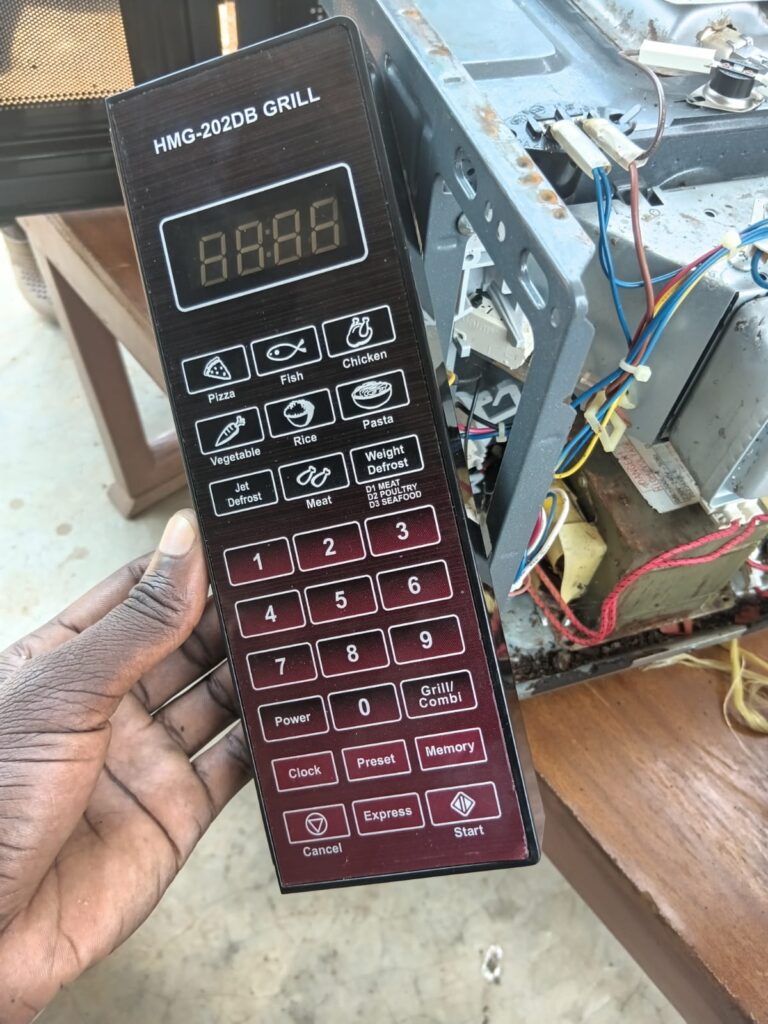 oven is one of the most frequently used appliances in modern kitchens. From homes and apartments to restaurants, hotels, offices, schools, hospitals, cafés and food businesses, microwaves provide fast and convenient heating. However, when a microwave stops heating, starts sparking, makes unusual noises, trips the circuit breaker, develops a faulty door, stops responding to the control panel or operates without heating food, professional diagnosis is required.
Pro-Logic Technologies Limited provides microwave repair, installation, servicing and maintenance in Kiambu and surrounding areas, covering residential, commercial and institutional customers. Our appliance-repair services include microwave diagnosis and repair, with faults such as heating failure, turntable problems, sparking and control-panel faults specifically covered by our service offering.
We work with different microwave brands and configurations and can assess both conventional domestic microwaves and selected commercial microwave equipment.
CALL / WHATSAPP: 0723763173
EMAIL: info@prologictechnologies.co.ke
WEBSITE: prologictechnologies.co.ke
MAIN WORKSHOP: KANGARI BUILDING, 3RD FLOOR, KA7, LUTHULI AVENUE, NAIROBI
MICROWAVE REPAIR IN KIAMBU
If your microwave is not working properly, do not immediately assume that the entire appliance needs replacement.
Microwave ovens contain several electrical and electronic systems that work together. A failure in one section can prevent the appliance from heating, starting, rotating, responding to commands or operating safely.
A proper diagnosis may involve inspecting:
- Magnetron
- High-voltage capacitor
- High-voltage diode
- High-voltage transformer
- Inverter power supply
- Control board
- Display board
- Keypad
- Door switches
- Door interlock system
- Thermal cut-outs
- Thermostats
- Cooling fan
- Turntable motor
- Turntable coupling
- Roller guide
- Waveguide cover
- Stirrer system
- Cavity
- Power cord
- Fuse
- Internal wiring
- Relays
- Sensors
- Light
- Cooling system
- Ventilation system
The correct repair depends on the exact fault.
WHAT MAKES MICROWAVE REPAIR DIFFERENT?
Microwave ovens are not ordinary electrical appliances.
They use a high-voltage section to generate microwave energy. Even after a microwave has been unplugged, certain components can potentially retain dangerous electrical energy.
For this reason, microwave repair should be carried out by a suitably trained technician with the correct diagnostic equipment and safety procedures.
The objective is not simply to make the microwave start.
The objective is to restore safe operation.
A professional repair should consider:
Electrical safety
Door interlock safety
High-voltage circuit condition
Magnetron condition
Waveguide condition
Thermal protection
Control operation
Heating performance
Turntable operation
Ventilation
Overall appliance condition
MICROWAVE REPAIR, INSTALLATION AND MAINTENANCE SERVICES IN KIAMBU
Pro-Logic Technologies Limited provides services covering:
- Microwave diagnosis
- Microwave repair
- Microwave installation
- Microwave servicing
- Preventive maintenance
- Electrical fault diagnosis
- Heating fault diagnosis
- Magnetron diagnosis
- High-voltage system diagnosis
- Control board repair
- Keypad diagnosis
- Door switch replacement
- Door interlock diagnosis
- Turntable motor replacement
- Waveguide inspection
- Waveguide cover replacement
- Cooling fan diagnosis
- Fuse and thermal protection diagnosis
- Inverter microwave repair
- Commercial microwave servicing
- Built-in microwave installation
- Countertop microwave setup
- Microwave relocation
- Electrical connection assessment
- Microwave cleaning and maintenance guidance
ALL MICROWAVE BRANDS
Microwave faults can occur across many manufacturers.
We can assess microwaves from brands including, subject to model and parts availability:
- Samsung
- LG
- Panasonic
- Sharp
- Ramtons
- Von
- Hisense
- Bosch
- Siemens
- Whirlpool
- Hotpoint
- Ariston
- Beko
- Electrolux
- Midea
- Toshiba
- Kenwood
- Defy
- AEG
- Nasco
- Mika
- Bruhm
- Armco
- Haier
- Candy
- Smeg
- Philips
- Russell Hobbs
- Daewoo
- Westpoint
- Other domestic and commercial microwave brands
The exact availability of replacement components depends on the particular model.
MICROWAVE NOT HEATING
One of the most common microwave complaints is:
“The microwave is running but the food is still cold.”
The display may work.
The light may come on.
The turntable may rotate.
The fan may run.
The timer may count down.
Yet the food does not heat.
This indicates that the microwave's control and mechanical systems may be functioning while the microwave-generation circuit has a problem.
Possible causes include:
- Failed magnetron
- High-voltage diode fault
- High-voltage capacitor fault
- Transformer problem
- Inverter board failure
- Relay failure
- Control-board fault
- Wiring fault
- Thermal protection problem
- Door interlock problem
A technician should test the relevant section rather than replacing the magnetron automatically.
MICROWAVE RUNS BUT DOES NOT HEAT – SOLUTION
The solution depends on the failed component.
A technician may:
- Confirm the heating complaint.
- Inspect the appliance externally.
- Verify the power supply.
- Check the door and interlock system.
- Inspect the high-voltage section.
- Test relevant components safely.
- Check the magnetron.
- Check the high-voltage diode.
- Check the capacitor.
- Check the transformer or inverter.
- Inspect wiring and connectors.
- Replace defective components where economically viable.
- Test heating operation after repair.
A microwave that operates without heating should not be repeatedly used in the hope that it will correct itself.
MICROWAVE SPARKING INSIDE
Sparking inside a microwave should be taken seriously.
Customers may notice:
- Blue flashes
- Bright sparks
- Crackling
- Burning smells
- Small flames
- Marks inside the cavity
Possible causes include:
- Metallic objects
- Aluminium foil
- Food deposits
- Damaged waveguide cover
- Burned cavity paint
- Carbon deposits
- Damaged stirrer cover
- Contaminated cavity
- Damaged internal components
If sparking occurs, stop operation and arrange an inspection.
MICROWAVE SPARKING – SOLUTION
The technician should establish exactly where the arcing occurs.
The cavity should be inspected for:
- Burn marks
- Carbon deposits
- Damaged coating
- Damaged waveguide cover
- Food contamination
- Corrosion
- Deformation
If the waveguide cover is damaged, it may require replacement.
If the cavity has severe damage, the repair decision becomes more complicated.
A microwave should not simply be painted internally with ordinary household paint and returned to service.
MICROWAVE MAKES A LOUD BUZZING SOUND
A microwave normally produces some operating sounds.
However, a sudden loud hum or buzzing sound can indicate a fault.
Possible causes include:
- Magnetron problems
- Transformer problems
- Cooling fan problems
- High-voltage circuit problems
- Loose components
- Mechanical vibration
- Turntable motor problems
A technician should determine whether the sound occurs:
- During heating
- During startup
- During cooling
- While the turntable operates
- Only intermittently
This helps narrow the diagnosis.
MICROWAVE MAKES A HUMMING SOUND BUT DOES NOT HEAT
A loud electrical hum during a no-heat condition can point toward the high-voltage section.
Potentially involved components include:
- Magnetron
- Transformer
- Capacitor
- Diode
- Inverter system
Because this section operates at hazardous voltage levels, it should not be tested casually.
Professional diagnosis is recommended.
MICROWAVE TURNING ON BUT NO HEATING
Sometimes a customer says:
“Everything looks normal, but the food remains cold.”
The display may operate normally.
This does not prove that the heating system is healthy.
The microwave-generation system is separate from many of the low-voltage control functions.
The repair therefore needs to focus on the heating circuit.
MICROWAVE TURNING ON AND OFF
A microwave that starts and then stops unexpectedly may have several possible causes.
Potential causes include:
- Overheating
- Faulty thermal cut-out
- Cooling fan failure
- Door-switch problem
- Control board problem
- Power supply instability
- Magnetron problem
- Inverter fault
- Relay fault
If the microwave repeatedly shuts down, it should be inspected rather than continuously restarted.
MICROWAVE TRIPS THE CIRCUIT BREAKER
If your microwave trips the MCB, RCD or another protective device, do not repeatedly reset it.
Possible causes include:
- Short circuit
- Damaged power cord
- Failed capacitor
- Transformer fault
- Magnetron fault
- Inverter fault
- Internal wiring fault
- Moisture contamination
- Damaged plug
- Faulty electrical socket
The appliance and electrical supply should be checked.
Repeatedly resetting the breaker can create additional safety risks.
MICROWAVE BLOWS THE FUSE
A microwave may have one or more protective fuses depending on its design.
A blown fuse is usually a symptom, not necessarily the root cause.
Replacing the fuse without finding why it failed can result in another blown fuse.
Possible underlying causes include:
- Shorted component
- Door-switch fault
- High-voltage fault
- Control-board problem
- Wiring fault
- Power surge
- Component breakdown
The technician should investigate the cause before fitting a replacement.
MICROWAVE DOOR NOT CLOSING
A microwave door is not simply a convenience feature.
The door and interlock system are important safety components.
Problems can include:
- Broken latch
- Misaligned door
- Damaged hinges
- Worn door mechanism
- Broken interlock actuator
- Damaged door frame
- Foreign material preventing closure
If the door does not close correctly, the microwave should not be operated.
MICROWAVE DOOR SWITCH PROBLEM
Microwaves commonly use interlock switches that monitor door position.
A defective switch can cause:
- Microwave not starting
- Microwave starting intermittently
- Microwave stopping when the door moves
- Fuse blowing
- Incorrect door detection
The switch should be properly diagnosed and replaced with a suitable component where required.
MICROWAVE DOOR NOT OPENING
A stuck microwave door can result from:
- Broken latch
- Damaged release mechanism
- Misalignment
- Mechanical obstruction
- Broken spring
- Damaged handle or push-button assembly
The door should not be forced aggressively because excessive force can damage the interlock assembly.
MICROWAVE KEYPAD NOT WORKING
If some buttons work while others do not, the problem may be related to:
- Membrane keypad
- Control board
- Connector
- Moisture
- Contamination
- Damaged tracks
- Control electronics
If the entire keypad is unresponsive, the technician should check whether the control board is receiving the required supply voltage.
MICROWAVE DISPLAY NOT WORKING
A microwave may operate while the display is blank, or the display may remain completely dead.
Possible causes include:
- Display board fault
- Control board fault
- Power supply problem
- Damaged connector
- Fuse
- Failed display component
- Voltage regulator problem
The correct repair depends on the model.
MICROWAVE DISPLAY SHOWING ERROR CODE
Modern microwaves can display diagnostic error codes.
An error code can help identify a problem, but it should not automatically be interpreted as a failed component.
The technician should consult the relevant service information where available and confirm the fault through testing.
MICROWAVE BUTTONS NOT RESPONDING
Non-responsive buttons can be caused by:
- Worn membrane
- Damaged keypad
- Moisture
- Dirt
- Control board failure
- Ribbon connector problems
- Software/control fault
Cleaning the external surface may help with ordinary contamination, but internal keypad faults require technical inspection.
MICROWAVE TIMER NOT WORKING
If the timer does not count down correctly, the problem can involve:
- Control board
- Display board
- Keypad
- Control software
- Internal power supply
A faulty timer can make the appliance inconvenient or unsafe to operate.
MICROWAVE LIGHT NOT WORKING
The internal cavity lamp allows the user to see the food while the appliance is operating.
A failed lamp does not necessarily mean the entire microwave is faulty.
Possible causes include:
- Burnt lamp
- LED module failure
- Wiring problem
- Control board problem
The appropriate replacement depends on the microwave design.
MICROWAVE FAN NOT WORKING
The cooling fan is important because heat generated during operation needs to be managed.
A failed cooling fan can cause overheating and thermal shutdown.
Possible causes include:
- Fan motor failure
- Obstruction
- Wiring fault
- Control-board fault
- Relay failure
A microwave with abnormal ventilation should not be used continuously until the problem has been checked.
MICROWAVE OVERHEATING
Microwave overheating can result from:
- Blocked ventilation
- Failed cooling fan
- Excessive operating cycles
- Internal component problems
- Poor installation
- Restricted airflow
- High-voltage component faults
Maintenance should include checking the ventilation path and fan operation.
MICROWAVE PLATE NOT ROTATING
The turntable helps distribute heating more evenly.
If the plate does not rotate, possible causes include:
- Turntable motor failure
- Broken coupling
- Misaligned roller ring
- Obstruction
- Control fault
- Damaged drive mechanism
The microwave may still heat, but uneven heating can result.
MICROWAVE TURNTABLE MOTOR REPLACEMENT
A defective turntable motor can usually be diagnosed through electrical and mechanical testing.
The technician checks:
- Motor supply
- Motor continuity
- Shaft movement
- Coupling
- Mechanical obstruction
- Control signal
If the motor has failed, a compatible replacement can be installed where available.
MICROWAVE PLATE NOT MOVING PROPERLY
Sometimes the motor is not the problem.
The glass plate may be incorrectly positioned.
The roller ring may also be:
- Dirty
- Damaged
- Misaligned
- Broken
The coupling underneath the plate should also be inspected.
MICROWAVE ROTATING BUT MAKING NOISE
Possible causes include:
- Worn turntable motor
- Damaged roller ring
- Broken coupling
- Uneven glass plate
- Food debris
- Mechanical friction
A small mechanical fault should be corrected before it damages the motor.
MICROWAVE MAGNETRON REPAIR AND REPLACEMENT
The magnetron is the component responsible for generating microwave energy in many conventional microwave ovens.
A faulty magnetron can cause:
- No heating
- Weak heating
- Abnormal electrical noise
- Overheating
- Repeated shutdown
Magnetron replacement must be performed with proper safety procedures.
The technician should also inspect related high-voltage components before replacing the magnetron.
MAGNETRON FAILURE – POSSIBLE CAUSES
A magnetron can fail because of:
- Age
- Overheating
- Cooling problems
- High-voltage faults
- Excessive electrical stress
- Internal component deterioration
If the magnetron has failed, simply replacing it without checking the rest of the high-voltage system may not address the underlying issue.
MICROWAVE HIGH-VOLTAGE CAPACITOR FAULT
The high-voltage capacitor forms part of the microwave generation circuit.
A failed capacitor can cause:
- No heating
- Blown fuse
- Abnormal buzzing
- High-voltage circuit failure
- Repeated fuse failure
This component requires specialist handling.
A capacitor should never be assumed to be safe merely because the microwave has been unplugged.
MICROWAVE HIGH-VOLTAGE DIODE FAULT
The high-voltage diode is another important part of the heating circuit.
A defective diode can cause:
- No heat
- Weak heating
- Excessive humming
- Fuse-related problems
- High-voltage circuit malfunction
Proper electrical testing is required.
MICROWAVE TRANSFORMER FAILURE
Traditional transformer-driven microwaves use a high-voltage transformer.
Possible transformer faults include:
- Open winding
- Shorted winding
- Overheating
- Abnormal noise
- Insulation failure
Transformer faults can be serious and should be professionally diagnosed.
INVERTER MICROWAVE REPAIR
Some modern microwaves use inverter technology rather than a conventional transformer arrangement.
An inverter system can provide more controlled power regulation.
However, inverter microwaves can also develop faults involving:
- Inverter board
- Power transistors
- Capacitors
- Control circuitry
- Magnetron
- Cooling system
A technician needs to identify whether the microwave uses an inverter architecture before diagnosis.
MICROWAVE CONTROL BOARD REPAIR
The control board coordinates various microwave functions.
Depending on the model, it may control:
- Cooking time
- Power level
- Door status
- Turntable
- Fan
- Light
- Display
- Relays
- Heating cycle
Control board faults can create several apparently unrelated symptoms.
MICROWAVE RELAY FAILURE
Relays may switch power to different sections of the microwave.
A failed relay can cause:
- No heating
- Fan problems
- Light problems
- Intermittent operation
- Heating that does not switch off correctly
The relay should be diagnosed in the context of the complete control circuit.
MICROWAVE WIRING FAULTS
Internal wiring can deteriorate because of:
- Heat
- Vibration
- Previous repair
- Loose connectors
- Burnt terminals
- Rodent damage
- Mechanical interference
Burnt connectors can create resistance and further heating.
Proper repair may require connector replacement rather than simply reconnecting the wire.
MICROWAVE FUSE REPLACEMENT
A replacement fuse must have the correct specification for the appliance.
Installing an incorrect fuse can compromise protection.
A technician should establish why the original fuse failed before returning the appliance to service.
MICROWAVE WAVEGUIDE COVER REPLACEMENT
The waveguide cover is an important part of the microwave cavity system.
It helps protect the waveguide opening from food contamination and moisture.
A damaged or heavily burned waveguide cover can contribute to arcing.
It should be inspected whenever sparking occurs.
MICROWAVE CAVITY BURN MARKS
Black or brown marks inside the microwave can result from arcing or food contamination.
The technician should determine:
- Where the mark is located
- Whether the cavity coating is damaged
- Whether the waveguide cover is affected
- Whether corrosion is present
- Whether the microwave remains suitable for repair
Severe cavity damage may make replacement more practical than repair.
MICROWAVE RUSTING INSIDE
Rust inside the cavity should not be ignored.
Small superficial areas may sometimes be assessed for repairability.
Severe corrosion around the waveguide area or cavity walls requires careful evaluation.
The structural condition of the appliance matters.
MICROWAVE BURNING SMELL
A burning smell can indicate:
- Food residue
- Electrical overheating
- Burnt wiring
- Arcing
- Magnetron/high-voltage problems
- Failed components
- Plastic components overheating
If the smell is electrical or accompanied by smoke or sparks, stop using the appliance.
MICROWAVE SMOKING
Smoke is not a normal microwave operating condition.
Possible sources include:
- Food burning
- Grease contamination
- Electrical component overheating
- Wiring
- Arcing
- Internal insulation
Disconnect the appliance safely and arrange an inspection.
MICROWAVE MAKING CRACKLING SOUNDS
Crackling can result from:
- Food deposits
- Moisture
- Metal objects
- Damaged waveguide cover
- Arcing
- Internal component problems
If crackling occurs repeatedly with no obvious food-related explanation, professional inspection is appropriate.
MICROWAVE STARTS THEN STOPS
A microwave that starts normally but stops during operation may be experiencing:
- Thermal protection
- Cooling fan failure
- Door-switch interruption
- Control-board fault
- Magnetron problem
- Inverter fault
- Power-supply problem
The exact timing of the shutdown is useful diagnostic information.
MICROWAVE ONLY HEATS SOMETIMES
Intermittent heating can be particularly difficult to diagnose.
Possible causes include:
- Loose connection
- Relay problem
- Door switch
- Magnetron deterioration
- Thermal issue
- Control-board fault
- Inverter fault
Customers should note whether the fault happens:
- When the microwave is cold
- After several cycles
- At certain power levels
- When the door is moved
- At random
This information can assist diagnosis.
MICROWAVE HEATS TOO SLOWLY
Slow heating does not necessarily mean that the microwave is completely healthy.
Possible causes include:
- Weak magnetron
- High-voltage circuit degradation
- Incorrect power setting
- Inverter fault
- Power supply problem
- Door/interlock problem
A technician can assess heating performance using appropriate testing methods.
MICROWAVE HEATS UNEVENLY
Uneven heating can result from:
- Turntable failure
- Stirrer problem
- Magnetron-related issues
- Incorrect food positioning
- Cavity contamination
- Waveguide problems
The turntable and internal microwave distribution system should be inspected.
MICROWAVE INSTALLATION IN KIAMBU
Pro-Logic Technologies Limited also provides appliance installation services.
For built-in and specialized microwave installations, proper installation is important for:
- Ventilation
- Electrical safety
- Cabinet clearance
- Appliance stability
- Access for servicing
- Correct power connection
A microwave should not simply be enclosed in a cabinet without considering the manufacturer's ventilation requirements.
BUILT-IN MICROWAVE INSTALLATION
Built-in microwaves require careful planning.
Before installation, the technician should consider:
- Cabinet dimensions
- Microwave dimensions
- Ventilation requirements
- Electrical outlet location
- Cable routing
- Appliance weight
- Door clearance
- Service access
- Manufacturer installation requirements
Incorrect installation can contribute to overheating.
COUNTERTOP MICROWAVE INSTALLATION
Countertop microwaves appear simple to install, but the appliance still requires:
- Stable positioning
- Adequate ventilation
- Correct electrical supply
- Dry environment
- Safe cable routing
- Clearance around ventilation openings
Avoid placing a microwave directly against a wall if doing so blocks its ventilation openings.
COMMERCIAL MICROWAVE INSTALLATION
Commercial kitchens can use microwaves much more intensively than domestic kitchens.
Commercial installation should therefore consider:
- Duty cycle
- Electrical loading
- Ventilation
- Location
- Cleaning access
- Staff usage
- Preventive maintenance
- Operating environment
Hotels, restaurants, cafés and institutions can benefit from scheduled maintenance rather than waiting for a complete breakdown.
MICROWAVE MAINTENANCE IN KIAMBU
Preventive maintenance can help identify developing problems before they become major failures.
A maintenance inspection can include:
- Power cord inspection
- Plug inspection
- Door inspection
- Door-switch assessment
- Cavity inspection
- Waveguide cover inspection
- Turntable inspection
- Roller ring inspection
- Cooling fan inspection
- Ventilation inspection
- Control-panel inspection
- General electrical assessment
High-voltage sections should only be accessed by qualified personnel.
COMMERCIAL MICROWAVE MAINTENANCE
For businesses, microwave downtime can interrupt food preparation and customer service.
Restaurants and hotels may use microwave ovens repeatedly throughout the day.
A maintenance programme can include scheduled checks based on:
- Usage
- Appliance age
- Operating environment
- Manufacturer recommendations
- Previous fault history
A maintenance record can also help businesses track recurring faults.
MICROWAVE CLEANING AND MAINTENANCE
Regular cleaning is important.
Food splashes can accumulate inside the cavity.
Grease and food deposits can contribute to:
- Smoke
- Burning smells
- Sparking
- Poor hygiene
- Internal contamination
The cavity should be kept clean according to the manufacturer's instructions.
Do not use abrasive materials that can damage the interior coating.
MICROWAVE MAINTENANCE TIPS FOR HOMEOWNERS
Users can reduce avoidable problems by:
- Keeping the cavity clean
- Avoiding metallic objects
- Not operating the microwave empty unless the manufacturer specifically permits a test procedure
- Keeping ventilation openings clear
- Checking the door condition
- Avoiding excessive force on the door
- Cleaning food spills promptly
- Using microwave-safe containers
- Stopping use if sparks occur
- Stopping use if smoke appears
- Seeking professional assistance for electrical faults
MICROWAVE INSTALLATION AND REPAIR IN KIAMBU TOWN
Customers in Kiambu Town can contact Pro-Logic Technologies Limited for microwave diagnosis, repair, servicing and installation.
Whether the microwave is:
- Not heating
- Sparking
- Making noise
- Not turning
- Not rotating
- Showing an error
- Not responding
- Tripping the breaker
- Developing a door fault
we can assess the appliance and determine the appropriate repair route.
MICROWAVE REPAIR IN RUIRU
We serve customers around Ruiru and surrounding areas for appliance repair services.
Microwave faults can be assessed before determining whether the appliance should be repaired at the customer's premises or taken to the workshop.
MICROWAVE REPAIR IN RUAKA
Residents and businesses around Ruaka can contact us for microwave troubleshooting and repair.
Large or built-in appliances may require an initial assessment before transportation.
MICROWAVE REPAIR IN KIKUYU
Customers in Kikuyu can access microwave repair and appliance servicing for domestic and selected commercial appliances.
MICROWAVE REPAIR IN LIMURU
Microwave faults in Limuru can be diagnosed and repaired depending on the model, parts availability and nature of the fault.
MICROWAVE REPAIR IN GITHUNGURI
For customers in Githunguri, we can assess common faults including heating failure, control problems, turntable faults, door problems and electrical issues.
MICROWAVE REPAIR IN WANGIGE
Microwave repair services are also available for customers around Wangige and neighbouring areas, subject to service scheduling.
MICROWAVE REPAIR IN KIAMBU ROAD
Customers along Kiambu Road and surrounding residential estates can contact Pro-Logic Technologies Limited for appliance diagnosis and servicing.
MICROWAVE REPAIR IN THINDIGUA
Microwave appliances in Thindigua can develop both electrical and mechanical faults. Diagnosis should establish whether the issue involves the control section, heating circuit, door system or mechanical components.
MICROWAVE REPAIR IN BANANA AND KARURI
We also cover surrounding areas including Banana, Karuri and nearby communities, depending on technician availability and the nature of the service required.
MICROWAVE REPAIR FOR APARTMENTS IN KIAMBU
Modern apartments commonly use countertop, freestanding and built-in microwaves.
Common apartment microwave faults include:
- No heating
- Door problems
- Control-panel faults
- Sparking
- Turntable failure
- Tripping power
- Display problems
Because many apartments use shared electrical infrastructure, repeated circuit trips should also prompt an assessment of the electrical supply.
MICROWAVE REPAIR FOR RESTAURANTS IN KIAMBU
Restaurants can experience heavier microwave usage than ordinary homes.
Commercial operators should pay attention to:
- Heating consistency
- Door condition
- Cooling
- Ventilation
- Electrical connections
- Cavity condition
- Control operation
- Cleaning
Preventive maintenance can help identify faults before they cause operational disruption.
MICROWAVE REPAIR FOR HOTELS
Hotels may operate several kitchen appliances simultaneously.
Microwave maintenance should therefore form part of the broader kitchen equipment maintenance programme.
Pro-Logic Technologies also provides broader appliance services for homes and businesses, covering multiple appliance categories.
MICROWAVE REPAIR FOR OFFICES
Office microwaves can experience heavy daily use.
Typical complaints include:
- No heating
- Broken keypad
- Turntable problems
- Door faults
- Display failure
- Internal contamination
Regular cleaning and inspection can extend appliance usability.
MICROWAVE REPAIR FOR SCHOOLS AND INSTITUTIONS
Institutional kitchens may operate appliances under demanding conditions.
Microwave inspection can form part of electrical and kitchen-equipment maintenance.
Safety is especially important where many different users operate the appliance.
MICROWAVE REPAIR FOR FOOD BUSINESSES
Food businesses depend on reliable kitchen equipment.
A microwave failure can slow down food preparation.
A commercial repair assessment should therefore consider not only the immediate fault but also:
- Appliance usage
- Electrical supply
- Ventilation
- Maintenance history
- Replacement-part availability
- Expected future operating load
MICROWAVE ELECTRICAL SAFETY
Microwave repair involves potentially hazardous electrical systems.
Do not attempt to open the appliance merely because it has stopped heating.
The high-voltage section requires appropriate technical knowledge and safety procedures.
The safest approach for a customer is to:
Unplug the microwave when appropriate.
Do not open the cabinet.
Do not bypass door switches.
Do not defeat safety interlocks.
Do not repeatedly reset a tripped breaker.
Contact a qualified appliance technician.
WHY DO NOT BYPASS THE DOOR SWITCH?
The door interlock is part of the microwave's safety architecture.
Bypassing it can create a dangerous condition.
A microwave should never be modified so that it can operate with a defective or defeated safety interlock.
A faulty interlock should be properly diagnosed and repaired.
MICROWAVE REPAIR AND GENUINE SPARE PARTS
Using a component with the wrong specification can create reliability and safety problems.
Replacement components should be matched to the appliance model and electrical requirements.
Pro-Logic Technologies' current appliance-service information states that it uses genuine/manufacturer-approved spare parts and backs repairs with a service warranty.
Availability should be confirmed for the exact model before repair.
MICROWAVE DIAGNOSIS BEFORE QUOTATION
A quotation for microwave repair can depend on:
- Brand
- Model
- Fault
- Required component
- Labour
- Parts availability
- Appliance condition
For that reason, customers should provide as much information as possible.
Useful information includes:
Brand
Model number
Approximate age
Fault description
Whether the display works
Whether the turntable rotates
Whether the microwave heats
Whether it sparks
Whether it trips power
Whether the door closes properly
A photograph can also help with preliminary identification.
HOW TO BOOK MICROWAVE REPAIR IN KIAMBU
Contact Pro-Logic Technologies Limited.
Provide:
- Your name.
- Location.
- Microwave brand.
- Model number.
- Description of the fault.
- Whether the appliance is built-in or countertop.
- Whether it powers on.
- Whether it heats.
- Whether there is sparking.
- Whether the breaker trips.
The technician can then advise on the appropriate next step.
MICROWAVE REPAIR WORKSHOP
Our main workshop is located at:
KANGARI BUILDING
3RD FLOOR, KA7
LUTHULI AVENUE
NAIROBI
This provides a workshop option for appliances that require more extensive diagnosis or disassembly.
Pro-Logic Technologies' website lists its physical address as Kangari House, Luthuli Avenue, Nairobi.
WHY CHOOSE PRO-LOGIC TECHNOLOGIES LIMITED?
Our current service information describes Pro-Logic Technologies as an appliance, electrical and engineering service provider covering Nairobi and Kenya, with appliance repair extending to microwaves and other household appliances.
Our service approach focuses on:
Diagnosis before replacement
Professional electrical troubleshooting
Appropriate spare parts
Clear repair recommendations
Residential and commercial service
Installation and maintenance
Workshop and field service options
Multiple appliance categories
CUSTOMER TESTIMONIALS
Customer testimonials published on a website should ideally come from verified customers.
For this page, genuine reviews can be added under this section as they are received.
VERIFIED CUSTOMER TESTIMONIAL – MICROWAVE REPAIR
“Add the customer's actual review here after receiving permission to publish it.”
VERIFIED CUSTOMER TESTIMONIAL – MICROWAVE NOT HEATING
“Add the customer's genuine review here.”
VERIFIED CUSTOMER TESTIMONIAL – COMMERCIAL MICROWAVE SERVICE
“Add the verified business customer's review here.”
Using genuine reviews rather than fabricated testimonials protects the credibility of the business and provides more useful information to future customers.
MICROWAVE REPAIR FAQ
WHY IS MY MICROWAVE RUNNING BUT NOT HEATING?
Possible causes include a magnetron, diode, capacitor, transformer, inverter, relay, control or related high-voltage fault. Professional testing is required.
WHY IS MY MICROWAVE SPARKING?
Possible causes include metal objects, food contamination, damaged waveguide cover, cavity damage or arcing. Stop using the microwave and have it inspected.
WHY DOES MY MICROWAVE TRIP THE BREAKER?
A short circuit, damaged component, power-supply problem, wiring issue or high-voltage fault may cause repeated tripping.
WHY IS MY MICROWAVE PLATE NOT ROTATING?
The turntable motor, coupling, roller ring or control circuit may be faulty.
CAN YOU REPAIR A SAMSUNG MICROWAVE?
Yes, Samsung microwaves can be assessed for faults including heating, control, door, turntable and electrical problems.
CAN YOU REPAIR LG MICROWAVES?
Yes, LG microwave appliances can be diagnosed and repaired subject to model and parts availability.
DO YOU REPAIR PANASONIC MICROWAVES?
Yes, Panasonic microwave faults can be assessed and repaired where suitable parts are available.
DO YOU REPAIR RAMTONS AND VON MICROWAVES?
Yes, these and other commonly used appliance brands can be assessed.
CAN A MICROWAVE MAGNETRON BE REPLACED?
In suitable cases, yes. The technician should also inspect the associated high-voltage system.
CAN A MICROWAVE CONTROL BOARD BE REPAIRED?
Depending on the fault and board condition, repair or replacement may be possible.
CAN YOU INSTALL A BUILT-IN MICROWAVE?
Yes, installation can be arranged, with attention to cabinet dimensions, ventilation, electrical connection and manufacturer requirements.
DO YOU OFFER MICROWAVE MAINTENANCE?
Yes. Maintenance can include inspection of the door, cavity, turntable, ventilation, electrical connections and general operating condition.
DO YOU REPAIR COMMERCIAL MICROWAVES?
Selected commercial microwave equipment can be assessed depending on the brand, model, fault and parts availability.
SHOULD I KEEP USING A MICROWAVE THAT SPARKS?
No. Stop using it and arrange an inspection.
SHOULD I KEEP RESETTING A MICROWAVE THAT TRIPS THE BREAKER?
No. Repeated electrical trips should be investigated.
WHY DOES MY MICROWAVE MAKE A LOUD HUM?
A loud hum can be caused by the high-voltage system, transformer, magnetron, fan or mechanical components. Diagnosis is required.
WHY DOES MY MICROWAVE HAVE A BURNING SMELL?
Food contamination, arcing, overheating components or electrical faults can produce burning smells.
WHY DOES MY MICROWAVE STOP AFTER A FEW MINUTES?
Thermal protection, cooling problems, door switches, control faults and high-voltage issues are possible causes.
MICROWAVE REPAIR SERVICE AREAS IN KIAMBU COUNTY
Our microwave service coverage can include:
Kiambu Town
Ruiru
Ruaka
Kikuyu
Limuru
Githunguri
Wangige
Karuri
Banana
Muchatha
Ndenderu
Thindigua
Kiambu Road
Riabai
Tigoni
Kahawa
Kahawa Sukari
Kahawa Wendani
Juja
Gatundu
Githurai
Kinoo
Kabete
Uthiru
Ridgeways
Runda
Rosslyn
Two Rivers area
and surrounding communities.
Coverage and technician availability should be confirmed when booking.
MICROWAVE REPAIR AND MAINTENANCE ACROSS KENYA
Although this page focuses on Kiambu, Pro-Logic Technologies also publishes appliance-service information covering Nairobi and other areas of Kenya. Its current website states that the company provides appliance repair and broader technical services across Kenya.
For locations outside Kiambu, contact the company to confirm service availability.
COMPLETE MICROWAVE FAULT-DIAGNOSIS CHECKLIST
When a microwave arrives for repair, a structured diagnosis can consider:
POWER
- Does the appliance receive mains power?
- Is the plug intact?
- Is the cable intact?
- Does the fuse operate?
- Is the internal power supply functioning?
CONTROL
- Does the display work?
- Does the keypad respond?
- Does the timer operate?
- Does the control board respond?
DOOR
- Does the door close correctly?
- Are the hinges intact?
- Are the latches functioning?
- Are the interlock switches operating?
HEATING
- Does the magnetron operate?
- Is the high-voltage system functioning?
- Is the inverter or transformer operating?
- Is the diode functioning?
- Is the capacitor functioning?
MECHANICAL
- Does the turntable rotate?
- Is the motor functioning?
- Is the coupling intact?
- Is the roller ring correctly positioned?
CAVITY
- Is the cavity clean?
- Is the waveguide cover intact?
- Are there burn marks?
- Is there corrosion?
- Is there evidence of arcing?
COOLING
- Does the fan operate?
- Are ventilation openings clear?
- Is the appliance overheating?
FINAL TEST
- Does it heat?
- Does it rotate?
- Does the control panel work?
- Does the door operate correctly?
- Does the appliance remain stable during operation?
PROFESSIONAL MICROWAVE REPAIR IN KIAMBU
A microwave is a compact appliance, but internally it contains several systems that require specialist knowledge.
The heating circuit, door interlock, control board, ventilation system, turntable and electrical protection all need to work correctly.
That is why replacing one visible component without diagnosis can fail to solve the actual problem.
Pro-Logic Technologies Limited provides microwave repair, installation and maintenance services for homes, businesses and institutions in Kiambu and surrounding areas.
Whether your microwave is not heating, sparking, making unusual noises, refusing to start, tripping the electrical supply, failing to rotate, displaying errors or developing a control-panel problem, the correct first step is professional diagnosis.
CONTACT PRO-LOGIC TECHNOLOGIES LIMITED
PRO-LOGIC TECHNOLOGIES LIMITED
Microwave Repair | Installation | Servicing | Maintenance
PHONE / WHATSAPP: 0723763173
EMAIL: info@prologictechnologies.co.ke
WEBSITE: prologictechnologies.co.ke
MAIN WORKSHOP:
KANGARI BUILDING, 3RD FLOOR, KA7
LUTHULI AVENUE
NAIROBI, KENYA
Pro-Logic's current website lists 0723 763 173 and info@prologictechnologies.co.ke as its contact details and identifies appliance repair, including microwaves, among its services.
BOOK MICROWAVE REPAIR IN KIAMBU
If your microwave is not heating, sparking, making abnormal sounds, refusing to start, tripping the breaker, displaying an error, failing to rotate or developing another fault, contact Pro-Logic Technologies Limited for diagnosis.
Send the microwave brand, model number, location and fault description when making an inquiry.
For built-in microwaves, commercial units and larger kitchen installations, provide photographs where possible so the technician can understand the installation arrangement before attending.
PRO-LOGIC TECHNOLOGIES LIMITED
0723763173
info@prologictechnologies.co.ke
prologictechnologies.co.ke
Kangari Building, 3rd Floor, KA7, Luthuli Avenue, Nairobi