
What Is the Most Common TV Repair 0723763173
Televisions (call 0723763173)have changed dramatically over the years. The bulky CRT sets that once occupied entire corners of living rooms have largely been replaced by slim LED, LCD, OLED, QLED and smart televisions. Modern TVs provide high-definition pictures, internet connectivity, streaming applications, digital broadcasting, Bluetooth, Wi-Fi and sophisticated audio systems.
Despite these improvements, televisions still develop faults.
A television may suddenly refuse to turn on. It may have sound without a picture, a picture without sound, horizontal or vertical lines, a dark screen, flashing standby lights, distorted colours, HDMI problems, backlight failure, software problems or complete power failure.
Among all these faults, backlight failure, power-related faults, main-board problems, damaged LED panels or strips, HDMI/input faults and software-related problems are some of the most frequently encountered issues in modern flat-screen televisions.
However, the exact “most common” repair varies according to the television brand, age, technology, operating environment, power quality and the type of television being used.
For many LED and LCD televisions, one of the most familiar repair situations is a TV that has sound but no visible picture because the LED backlight system has failed.
This article explains that fault and many others in detail. It also explains how professional technicians approach television diagnosis, why some faults are economical to repair while others are not, and what customers should know before taking a television to a repair workshop.
Understanding the Most Common TV Repairs
When a customer says, “My TV is not working,” that description is not enough for a technician to identify the defective component.
A television is made up of several interconnected systems.
These commonly include:
- Power supply circuitry
- Main board
- T-Con board
- Display panel
- LED backlight system
- Audio amplifier
- Speakers
- Infrared receiver
- Remote-control system
- HDMI circuits
- USB circuits
- Wi-Fi and Bluetooth hardware
- Digital tuner
- Voltage regulators
- Memory devices
- Firmware and operating software
- Control circuitry
A fault in one section can produce symptoms that appear to originate somewhere else.
For example, a customer may report a completely black screen. That could mean:
- The TV has lost its backlight.
- The power supply is not producing the required voltage.
- The main board is not sending the correct control signals.
- The display panel has failed.
- The T-Con section is faulty.
- The television software has crashed.
- The LED strips have developed an open circuit.
- A connector is damaged or loose.
Therefore, professional TV repair is not simply a matter of replacing whichever component appears suspicious.
A proper diagnosis is necessary.
1. LED Backlight Failure
One of the most recognizable repairs in modern LED televisions involves the backlight.
An LED television uses a display panel that needs illumination from behind or around the panel so that the image can be seen.
The LCD layer itself does not produce visible light. The backlight provides the illumination that allows the picture to appear.
When the backlight fails, the television may continue operating normally in other respects.
The customer may hear:
- Television programs
- Menu sounds
- Volume adjustment sounds
- Startup sounds
- Streaming audio
Yet the screen appears completely black.
This is commonly described as:
“The TV has sound but no picture.”
In some cases, shining a bright torch toward the screen at an angle can reveal a very faint image. That can be an important diagnostic clue that the LCD panel and video-processing system may still be producing an image while the illumination system has failed.
However, a torch test is only a preliminary indication. It does not replace electrical diagnosis.
Why LED Backlights Fail
LED backlights are exposed to heat and electrical stress during normal operation.
Over time, individual LED components can deteriorate.
A television may contain multiple LED strips with many individual LEDs.
If one LED becomes open-circuit, depending on the design, an entire section of the backlight can stop functioning.
Some televisions use series-connected LED arrangements. In these systems, one failed LED can interrupt current through a string.
Other designs incorporate protection or parallel arrangements, so the resulting symptoms can vary.
Common causes include:
- Aging LEDs
- Excessive operating temperature
- Excessive LED drive current
- Voltage fluctuations
- Poor-quality replacement strips
- Manufacturing weaknesses
- Repeated thermal cycling
- Dust accumulation affecting cooling
- Long periods of operation at maximum brightness
Symptoms of Backlight Problems
A faulty backlight may present itself in several ways.
Completely Dark Screen
The TV powers up and produces sound, but the screen remains black.
Screen Flashes Briefly
The picture may appear for a second and then disappear.
This is a classic situation in which the backlight protection circuit may detect an abnormal LED load and shut the backlight down.
Uneven Illumination
The television may work, but parts of the screen appear darker than others.
Bright Spots
Damage to individual diffuser components or LEDs can sometimes create bright circular areas visible on the screen.
Dark Sections
One side of the screen may appear darker than another because part of the LED array is no longer operating correctly.
Backlight Repair or Replacement?
A technician has several possible approaches depending on the design and condition of the television.
The repair may involve:
- Replacing individual LED components
- Replacing a damaged LED strip
- Replacing the complete LED strip set
- Repairing the LED driver circuit
- Replacing a faulty power board
- Correcting an LED connector or wiring issue
For long-term reliability, replacing the complete matched set of LED strips is often preferable to replacing only one failed LED, particularly where the remaining LEDs have already accumulated substantial operating hours.
The appropriate solution depends on the specific television.
2. TV Power Supply Failure
Power-related problems are another major category of television repair.
The power board converts incoming AC electricity into the various DC voltages required by the television's electronic circuits.
Depending on the television architecture, the power supply may provide several rails for:
- Main-board operation
- LED backlighting
- Audio amplification
- Standby circuits
- Other control sections
If the power supply fails, the television may appear completely dead.
Common Symptoms of Power Supply Faults
A faulty power supply may cause:
- No standby light
- No response to the remote
- No response to the power button
- Repeated clicking
- Repeated startup attempts
- TV switching off immediately
- TV restarting continuously
- Flashing standby indicator
- Partial operation
- Backlight failure
The same symptom can sometimes originate from another board, which is why proper testing is important.
Components That Can Fail on a TV Power Board
Power boards contain many electronic components.
Potential failure points include:
- Electrolytic capacitors
- MOSFETs
- Diodes
- Rectifiers
- Resistors
- Transformers
- PWM controller ICs
- Optocouplers
- Voltage regulators
- Fuses
- Surge protection components
- Switching components
- Solder joints
A technician may inspect the board visually and then perform electrical tests.
A blown fuse, for example, should not simply be replaced without determining why it opened.
A fuse often fails because another component has experienced an electrical fault.
Replacing the fuse alone may result in another failure immediately.
3. Main Board Failure
The main board is effectively the television's central processing platform.
It handles many important functions.
Depending on the model, the main board may manage:
- Video processing
- Audio processing
- HDMI inputs
- USB ports
- Network connectivity
- Smart-TV applications
- Remote-control commands
- Digital tuning
- System memory
- Firmware
- Communication with other boards
A defective main board can therefore create many different symptoms.
Common Main Board Symptoms
A television with a main-board problem may:
- Fail to boot
- Remain stuck on the logo
- Restart repeatedly
- Have no HDMI signal
- Lose sound
- Lose picture
- Freeze
- Fail to connect to Wi-Fi
- Ignore remote commands
- Display error messages
- Shut down unexpectedly
- Become extremely slow
- Show abnormal colours or graphics
Not every software or operational problem means the entire main board needs replacement.
Some faults can be repaired at component level.
Others may require board replacement.
4. TV With Sound but No Picture
This is one of the most common descriptions customers give technicians.
However, “sound but no picture” is a symptom, not a diagnosis.
Possible causes include:
- Failed LED backlights
- LED driver fault
- Power supply fault
- T-Con fault
- Main-board fault
- Display-panel fault
- Loose internal connections
- Firmware issues
- Incorrect picture settings in unusual cases
The first step is determining whether the television is actually generating an image.
A technician may perform controlled tests to establish whether the LCD panel is receiving video data and whether the backlight is operating.
5. TV With Picture but No Sound
The opposite situation also occurs.
The television displays an image but produces no audio.
Possible causes include:
- Muted television
- Incorrect audio settings
- Faulty speakers
- Audio amplifier failure
- Main-board audio section failure
- Damaged speaker wiring
- Software problems
- HDMI audio configuration issues
- External-device problems
Before opening the television, basic settings should always be checked.
A surprisingly large number of apparent audio faults are caused by configuration problems.
6. Speaker Failure
Television speakers operate for many hours and can eventually deteriorate.
A speaker may develop:
- Distortion
- Crackling
- Weak volume
- Intermittent sound
- Complete silence
- Buzzing
- Rattling
If only one speaker is defective, replacing the damaged speaker may restore normal audio.
If both speakers are silent, the technician should investigate the audio amplifier and signal path before assuming that both speakers have failed.
7. HDMI Port Problems
HDMI is now one of the most important connections on a television.
Customers use HDMI ports for:
- Decoders
- Game consoles
- Laptops
- Streaming devices
- Blu-ray players
- Home theatre equipment
- Computers
- Media players
An HDMI socket can be damaged mechanically.
This may happen when a cable is:
- Pulled sideways
- Inserted incorrectly
- Forced into the port
- Bent
- Repeatedly connected and disconnected
- Damaged externally
Symptoms of HDMI Problems
The television may display:
No signal
even though the external device is operating.
Other symptoms include:
- Intermittent picture
- No audio through HDMI
- One HDMI port works while another does not
- Picture cuts out
- HDMI device is not detected
- Resolution problems
A technician should determine whether the problem is:
- The cable.
- The external device.
- The television input selection.
- The HDMI socket.
- The HDMI protection circuitry.
- The main-board HDMI processing section.
8. TV Display Panel Damage
The display panel is the most expensive and delicate component in many flat-screen televisions.
Panel damage may occur when:
- The screen is hit
- The TV falls
- The television is transported incorrectly
- Pressure is applied to the display
- A heavy object strikes it
- Children accidentally hit the screen
- The panel develops an internal manufacturing failure
Panel damage can produce:
- Cracks
- Black areas
- Vertical lines
- Horizontal lines
- Ink-like spreading
- Missing sections of picture
- Coloured lines
- Flickering
- Permanent image abnormalities
Unfortunately, a cracked LCD or OLED panel is generally not repaired in the same way as an electronic board.
Panel replacement can be expensive because the panel is often the most valuable part of the television.
9. Vertical Lines on a Television Screen
Vertical lines can have several causes.
Potential sources include:
- Panel failure
- T-Con problems
- Ribbon connections
- Tab bonding failure
- Main-board video processing problems
- Internal display-driver faults
The pattern of the lines is important.
A single fixed line can have a different cause from multiple changing lines.
Lines that change when the television warms up can also provide useful diagnostic information.
However, pressing or bending the screen is not a recommended diagnostic method because it can permanently damage the panel.
10. Horizontal Lines
Horizontal lines can similarly originate from different sections.
Possible causes include:
- Panel driver faults
- T-Con circuitry
- Ribbon connections
- Display-panel defects
- Video-processing problems
The technician needs to examine how the lines behave.
Questions include:
- Are they permanent?
- Do they move?
- Do they appear during startup?
- Are they visible on the TV menu?
- Do they occur on every input?
- Do they disappear after warming up?
- Are they concentrated in one region?
These observations help narrow the diagnosis.
11. T-Con Board Problems
The timing-control board, commonly called the T-Con board, is responsible for coordinating image information sent to the display panel.
Not every television has a conventional separate T-Con board because modern television designs vary.
Where present, T-Con problems can cause:
- No picture
- Half-screen picture
- Lines
- Flickering
- Washed-out images
- Abnormal colours
- Image distortion
- Intermittent display
A technician may check the board's power rails, communication signals and connections.
12. TV Showing Half Picture
A television showing only half an image can be caused by several things.
Possible causes include:
- T-Con fault
- Panel driver problem
- Ribbon connection issue
- Main-board video fault
- Display panel failure
If the television consistently shows exactly half of the image while the other half works correctly, the fault may be associated with the panel's driving system or signal distribution.
Panel-related problems can be particularly difficult and uneconomical to repair.
13. Flickering Screen
Screen flickering can be caused by:
- LED backlight deterioration
- Power supply instability
- Loose connections
- T-Con problems
- Main-board issues
- Software problems
- External signal problems
- Incorrect display settings
A technician should first determine whether the flicker appears on the television's internal menu.
If the menu itself flickers, the television hardware becomes more suspicious.
If only an external HDMI device flickers, the problem may involve the source device, cable or input configuration.
14. Television Restarting by Itself
Some televisions repeatedly turn themselves off and back on.
This is often called a boot loop or restart loop.
Possible causes include:
- Firmware corruption
- Main-board failure
- Power supply instability
- Overheating
- Shorted components
- Memory failure
- Faulty peripheral circuits
Smart televisions can be particularly vulnerable to software-related startup problems because their operating systems are considerably more complex than those found in older sets.
15. Smart TV Software Problems
Modern smart televisions are effectively specialized computers.
They have:
- Processors
- Memory
- Storage
- Operating systems
- Network interfaces
- Applications
- Firmware
- Security systems
- Wireless communication
Software problems may cause:
- Freezing
- Slow operation
- Apps refusing to open
- Unexpected restarts
- Startup loops
- Wi-Fi problems
- Remote-control delays
- Menus becoming unresponsive
A factory reset or firmware procedure may resolve some issues.
However, if memory hardware has deteriorated, software replacement may not solve the underlying problem.
16. TV Not Connecting to Wi-Fi
A smart TV that cannot connect to Wi-Fi may have a software or network problem rather than a major hardware fault.
Possible causes include:
- Incorrect Wi-Fi password
- Weak wireless signal
- Router problems
- Network configuration issues
- Outdated firmware
- Wi-Fi module failure
- Main-board fault
Testing the television with another known-good network can help establish whether the television or router is responsible.
17. Remote Control Problems
Not every television problem requires opening the TV.
A remote may stop working because:
- Batteries are exhausted
- Buttons are worn
- The remote is damaged
- The infrared emitter is faulty
- The television's receiver is defective
- The smart remote has lost pairing
- Bluetooth communication is malfunctioning
Testing the remote with a smartphone camera can sometimes show whether an infrared remote is emitting light, although this is only a basic test and is not applicable to every remote-control technology.
18. TV Buttons Not Working
The physical buttons on a television can wear out.
Depending on the model, the buttons may control:
- Power
- Volume
- Channel
- Input
- Menu
A defective button board or control switch may cause intermittent operation.
Sometimes contamination or physical damage affects the button mechanism.
19. USB Port Problems
USB ports are commonly used for:
- Flash drives
- Media playback
- Software updates
- External storage
- Accessories
A damaged USB socket can result in the television failing to recognize a storage device.
However, before diagnosing the port itself, the technician should test:
- The USB drive
- The file system
- Supported media formats
- Another USB port
- The television software
20. TV Overheating
Modern televisions generate heat through:
- Power circuits
- Processors
- LED drivers
- Backlight LEDs
- Audio amplifiers
Excessive heat can reduce component lifespan.
Symptoms of thermal problems may include:
- TV shutting down after running for some time
- Random restarts
- Picture disappearing after warming up
- Intermittent operation
- Slow smart-TV performance
Dust, restricted ventilation and high ambient temperatures can make thermal problems worse.
21. Standby Light but TV Does Not Start
This is another common complaint.
A standby indicator means that at least part of the television is receiving power.
It does not necessarily mean that all power circuits are functioning.
Possible causes include:
- Main-board failure
- Power supply fault
- Faulty power button
- Remote-control problem
- Firmware failure
- Protection-mode activation
A technician can measure the appropriate standby and startup signals to determine where the problem lies.
22. TV Turns Off After a Few Seconds
When a television starts and then shuts down, protection circuits may be involved.
Potential causes include:
- LED backlight fault
- Power supply problem
- Overcurrent
- Short circuit
- Main-board failure
- Thermal protection
- Panel-related problem
The television may be deliberately shutting down to prevent further damage.
This is why repeatedly switching a faulty television on and off is not necessarily a good troubleshooting strategy.
23. TV Has a Red or Abnormal Standby Indicator
Standby LEDs can provide useful diagnostic information.
Some manufacturers use blinking patterns to indicate specific error conditions.
The number and timing of flashes can sometimes point technicians toward:
- Power problems
- Backlight problems
- Main-board faults
- Communication errors
- Protection circuits
However, blink codes differ by brand and model.
A blink count should therefore not be interpreted without the relevant service information.
24. Colour Problems
A television may display incorrect colours for several reasons.
Symptoms may include:
- Green picture
- Purple picture
- Excessive red
- Excessive blue
- Washed-out colours
- Negative-looking image
- Solarized appearance
- Colour patches
Possible causes include:
- Picture settings
- HDMI cable
- External device
- T-Con fault
- Main-board video processing
- Panel fault
- Ribbon connection
- Firmware problem
A technician should establish whether the abnormal colour is present on the TV's own menu before concluding that internal hardware has failed.
25. Ghosting and Image Retention
Some display technologies can experience image retention.
This can happen when static graphics remain visible temporarily after the content changes.
OLED televisions are particularly associated with image retention and, under certain circumstances, permanent burn-in.
Potential examples include:
- News channel logos
- Game HUD elements
- Stationary computer interfaces
- Fixed menu elements
Not every retained image means the panel is permanently damaged.
Temporary retention can sometimes disappear after normal varied content is displayed.
Permanent burn-in, however, is a panel characteristic rather than a conventional circuit-board repair.
26. OLED Television Repairs
OLED televisions operate differently from traditional LED-backlit LCD TVs.
An OLED panel generates light at the pixel level, so there is no conventional LED backlight array behind the screen.
Consequently, an OLED television does not have the same backlight-strip failure pattern as a standard LED/LCD television.
Common OLED-related problems can instead involve:
- Panel degradation
- Pixel defects
- Burn-in
- Power-board faults
- Main-board faults
- T-Con/display-driving circuitry
- Software issues
Panel replacement can be particularly costly.
27. QLED Television Problems
QLED televisions generally use an LCD-based display system with LED backlighting and quantum-dot technology.
Therefore, many QLED televisions can still experience conventional LCD/LED-related problems such as:
- Backlight failure
- Power supply faults
- Main-board problems
- HDMI problems
- T-Con faults
- Panel defects
The presence of “QLED” does not mean the television is immune to ordinary electronic faults.
28. Plasma Television Problems
Plasma televisions are much less common than they once were.
Older plasma sets can develop:
- Power-board failures
- Sustain-board problems
- Buffer-board faults
- Panel faults
- Capacitor failures
- Cooling problems
Because replacement parts may be difficult to source, repair economics can be different from those of current LED televisions.
29. CRT Television Repairs
Older CRT televisions have very different circuitry.
Typical faults include:
- Power supply failure
- Horizontal output transistor failure
- Flyback transformer problems
- Deflection faults
- Weak picture tube
- Colour convergence issues
- Vertical deflection failure
- Audio problems
CRT repair requires specialized knowledge because these sets contain high-voltage circuits.
A television can retain dangerous electrical energy even after being unplugged.
Electrical Safety During TV Repair
Television repair is not a suitable activity for untrained individuals when internal access is required.
Some television circuits contain hazardous voltages.
Particular caution is required around:
- Mains input sections
- Primary power supplies
- High-voltage circuits
- Large capacitors
- CRT high-voltage systems
- Backlight driver circuits
Unplugging a television does not automatically make every internal component safe to touch.
Professional technicians use appropriate test equipment, isolation practices and discharge procedures.
Why Professional Diagnosis Matters
Replacing parts without diagnosis can become expensive.
Suppose a customer has a television with a black screen.
A person might immediately purchase:
- A power board
- Main board
- T-Con board
- LED strips
and start replacing components.
If the actual fault is the panel, the money spent on other parts may be wasted.
A professional diagnosis attempts to identify the faulty section before replacement.
The Typical TV Diagnostic Process
A competent technician may approach a television fault in stages.
Step One: Customer Description
The technician asks what happened.
Important questions include:
- Did the TV fail suddenly?
- Was there a power surge?
- Was it dropped?
- Did the screen become dark gradually?
- Is there sound?
- Does the standby light operate?
- Did the TV restart?
- Does the fault occur on all inputs?
The customer's observations can be extremely valuable.
Step Two: External Inspection
The television is examined externally.
The technician looks for:
- Cracks
- Physical impact
- Burn marks
- Damaged ports
- Loose cables
- Broken power cords
- Signs of liquid exposure
Step Three: Functional Testing
The technician attempts to reproduce the reported fault.
The television may be tested with:
- Remote control
- Physical buttons
- Different inputs
- Known-good cables
- Internal menus
- External devices
Step Four: Internal Diagnosis
If necessary, the television is opened.
The technician may inspect:
- Power board
- Main board
- T-Con
- Backlight connectors
- Panel connections
- Speaker wiring
- Ribbon cables
Step Five: Electrical Measurements
Appropriate instruments can be used to measure relevant circuits.
Depending on the fault, the technician may check:
- Standby voltage
- Supply rails
- LED output
- Fuse continuity
- Regulator outputs
- Resistance
- Signal presence
- Communication lines
Measurements should be interpreted according to the television's design rather than using generic voltage assumptions.
Step Six: Repair Recommendation
After diagnosis, the technician should explain:
- What failed
- What caused the symptom
- What repair is possible
- Whether parts are available
- Expected repair time
- Estimated cost
- Whether repair is economically sensible
This allows the customer to make an informed decision.
What Makes Backlight Repair Different From Panel Repair?
This distinction is extremely important.
A backlight can often be replaced independently of the display panel.
The display panel itself is considerably more complex.
If the LED strips are faulty, replacement may restore the television at a reasonable cost.
If the LCD panel is physically cracked, replacing the entire panel may approach or exceed the value of the television.
Therefore, a black screen should never automatically be treated as a panel failure.
Can a TV With No Picture Always Be Repaired?
No.
Most electronic faults are technically repairable in some form, but that does not mean every television is economically repairable.
A repair may become impractical when:
- The panel is cracked
- Replacement parts are unavailable
- The television is extremely old
- The required component costs too much
- The repair requires a rare panel
- Multiple major boards have failed
- The repair risk is high
The best decision depends on the television's size, age, condition, original value and repair cost.
Why Television Panels Are So Expensive
The panel is a highly specialized component.
It contains extremely fine structures and is manufactured as a complete display assembly.
Replacing it may involve:
- A specialized panel
- Transportation
- Careful disassembly
- Alignment
- Delicate ribbon connections
- Significant labour
A panel can therefore represent a large percentage of the television's original purchase price.
TV Repair in Kenya
Television repair is an important service in Kenya because households, offices, hotels, schools, entertainment venues and businesses depend heavily on television equipment.
Common television brands found in the Kenyan market include various models from manufacturers such as:
- Samsung
- LG
- Sony
- Hisense
- TCL
- Skyworth
- Vitron
- Bruhm
- Von
- Philips
- Panasonic
- Xiaomi
- Changhong
- Haier
- Sharp
Different models use different circuit architectures.
A technician therefore needs more than general knowledge of television repair.
Model-specific diagnosis can be important.
Power Quality and Television Failures
Electrical conditions can contribute to electronic failures.
Power disturbances may include:
- Voltage spikes
- Surges
- Brownouts
- Lightning-related transients
- Repeated interruptions
Sensitive electronic components can be damaged by abnormal electrical conditions.
This is one reason surge protection and appropriate electrical installation practices can be valuable for electronic equipment.
Lightning Damage
Televisions can sometimes be affected by lightning-related electrical disturbances.
Damage may appear in:
- Power supply
- HDMI circuits
- Network ports
- Tuner circuits
- Main board
- USB circuitry
Network and HDMI ports can sometimes provide pathways for electrical disturbances depending on the circumstances.
After a severe electrical event, several circuits may be damaged simultaneously.
TV Repair After a Power Surge
A television that stops working immediately after a power event should be treated differently from one that gradually developed a fault.
The technician may inspect:
- Input protection
- Fuse
- Rectifier
- Primary switching circuit
- Power regulators
- Main-board supply rails
- HDMI protection components
Replacing the fuse alone is rarely sufficient if the fuse opened because of a secondary component failure.
Preventing Common TV Problems
While not every failure can be prevented, good operating practices can reduce unnecessary stress.
Maintain Ventilation
Do not block the television's ventilation openings.
Avoid placing it in an enclosed space with poor airflow.
Avoid Excessive Brightness
Running LED backlights at maximum brightness continuously can increase thermal and electrical stress.
Using a moderate brightness level may reduce stress on the backlight system.
Use Suitable Power Protection
A properly selected surge-protection device can provide additional protection against certain electrical disturbances.
However, no consumer device can guarantee protection against every lightning or power event.
Handle HDMI Cables Carefully
Do not force connectors into HDMI sockets.
Avoid putting sideways pressure on the cable while it is connected.
Keep Liquids Away
Liquid exposure can cause corrosion and short circuits.
Even small amounts of moisture can create problems if they enter through ventilation openings.
Transport Flat-Screen TVs Correctly
Large televisions are fragile.
When moving one:
- Use appropriate packaging.
- Protect the screen.
- Avoid placing heavy objects against the display.
- Avoid twisting the television.
- Follow the manufacturer's transportation guidance.
Improper handling can damage the panel even when no crack is immediately visible.
Should You Repair or Replace Your TV?
This is one of the most important questions customers ask.
The answer depends on the fault.
A relatively inexpensive board-level or backlight repair may make excellent economic sense.
A severely damaged panel may not.
Factors to Consider
Television Age
A newer television is generally more attractive to repair than an obsolete model.
Screen Size
Large televisions can be expensive to replace, making repair more attractive when the panel is intact.
Fault Type
A power board or backlight problem can have a very different repair economics from a cracked panel.
Parts Availability
If replacement parts are unavailable, even a technically repairable television may not be practical to fix.
Overall Condition
If the television has already developed several unrelated faults, replacement may make more sense.
Common TV Faults by Symptom
Here is a simplified diagnostic guide.
| Symptom | Possible Causes |
|---|---|
| No power | Power supply, fuse, main board |
| Standby light but no startup | Main board, power supply, software |
| Sound but black screen | Backlight, LED driver, T-Con, panel |
| Picture but no sound | Speakers, amplifier, settings, main board |
| Flickering picture | Backlight, power supply, T-Con, signal |
| Vertical lines | Panel, T-Con, ribbon connections |
| Horizontal lines | Panel, T-Con, video circuitry |
| Half screen | Panel, T-Con, ribbon connection |
| No HDMI | Cable, port, main board, protection circuit |
| TV restarts | Firmware, main board, power supply |
| Wi-Fi failure | Router, software, Wi-Fi hardware |
| Abnormal colours | Settings, cable, T-Con, panel |
| Screen goes dark after startup | Backlight or LED driver |
| Cracked screen | Panel damage |
| Distorted audio | Speaker, amplifier, board |
| Remote not working | Batteries, remote, receiver/pairing |
This table is a starting point rather than a replacement for professional diagnosis.
The Difference Between Repair and Replacement
A television technician may perform either component-level repair or module replacement.
Component-level repair means repairing an individual circuit.
Examples include:
- Replacing a capacitor
- Replacing a regulator
- Replacing a MOSFET
- Repairing a damaged connector
- Replacing a damaged diode
- Repairing a power-supply circuit
Board replacement means installing an entire replacement board.
Neither approach is automatically superior.
The correct choice depends on:
- Fault complexity
- Technician expertise
- Part availability
- Cost
- Board condition
- Long-term reliability
Component-Level TV Repair
Component-level repair can be useful when a board is otherwise healthy.
For example, a technician may identify a failed voltage regulator and replace it rather than replacing an entire board.
This can reduce waste and sometimes reduce repair costs.
However, component-level repair requires proper diagnostic equipment and circuit knowledge.
Simply replacing random components can create additional damage.
TV Repair Tools
Professional television technicians may use equipment such as:
- Digital multimeter
- Oscilloscope
- DC power supply
- ESR meter
- Soldering station
- Hot-air rework station
- Magnification equipment
- LED backlight tester
- Signal generator
- Insulation/isolation equipment
- Current measurement tools
- Programmer equipment where appropriate
The exact equipment depends on the level of repair being performed.
Why the Multimeter Is Important
A multimeter can help measure:
- Voltage
- Resistance
- Continuity
- Diodes
- Current in suitable circumstances
It can help technicians determine whether a power rail is present or whether a fuse or connection is open.
However, knowing where and how to measure is more important than simply owning the instrument.
LED Backlight Testing
A dedicated LED tester can sometimes help technicians determine whether LED strings are open or abnormal.
Testing can reveal:
- Open strings
- Abnormal current behaviour
- Uneven LED performance
Because different LED arrays have different electrical characteristics, test equipment must be used appropriately.
Why Random Parts Swapping Is Dangerous
Suppose a TV has a black screen.
A technician replaces the main board.
The problem remains.
Then the power board is replaced.
The problem remains.
Then the T-Con is replaced.
The customer has now paid for several unnecessary parts.
A systematic diagnostic procedure avoids this approach.
The Importance of Model Numbers
Two televisions from the same brand can have completely different internal components.
Even two televisions with the same screen size may use different:
- Main boards
- Power boards
- LED strips
- Panels
- T-Con systems
- Firmware
The model number is therefore important when ordering replacement parts.
A technician should verify compatibility rather than relying only on brand and screen size.
Why Customers Should Describe the Fault Clearly
A useful fault description can save diagnostic time.
Instead of saying:
“My TV is spoiled.”
a customer can provide information such as:
“The TV switches on, I can hear the decoder, but the screen is completely dark.”
Or:
“The picture works for about ten minutes and then disappears while the sound continues.”
Or:
“HDMI 1 works, but HDMI 2 and HDMI 3 no longer detect any device.”
These descriptions give technicians useful starting points.
Intermittent TV Problems
Some television faults do not happen continuously.
Intermittent problems can be more difficult to diagnose.
Examples include:
- Picture disappearing after warming up
- Television restarting occasionally
- HDMI signal cutting out
- Sound disappearing intermittently
- Flickering that occurs only at certain times
A technician may need to operate the television for an extended period to reproduce the fault.
Heat-Related Failures
Electronic components can behave differently as temperature changes.
A television may:
- Work when cold.
- Warm up.
- Develop a fault.
- Fail or become unstable.
- Work again after cooling.
This pattern can provide important diagnostic information.
Potential causes include:
- Thermal component failure
- Weak solder joints
- Aging capacitors
- Semiconductor instability
- Backlight deterioration
Cold-Solder Joint Problems
Mechanical and thermal stress can eventually affect solder connections.
A weak solder joint may produce:
- Intermittent operation
- Flickering
- Random shutdown
- Startup problems
- Loss of signal
Professional repair may involve identifying and correctly reworking the affected connection.
Simply reheating a large area without diagnosis is not a reliable repair method.
Capacitor Failures
Electrolytic capacitors are common components in power electronics.
Over time, some may experience:
- Increased ESR
- Reduced capacitance
- Leakage
- Physical swelling
A capacitor does not have to be visibly swollen to be defective.
Electrical testing is therefore more reliable than visual inspection alone.
Why TV Repair Costs Differ
There is no single universal price for television repair.
The final cost can depend on:
- Brand
- Model
- Screen size
- Fault
- Parts required
- Labour
- Availability of components
- Panel condition
- Location
- Diagnostic complexity
A backlight repair and a cracked-panel replacement are fundamentally different jobs.
What a Good TV Repair Service Should Provide
A professional service should ideally offer:
- Fault diagnosis
- Clear explanation
- Repair quotation
- Compatible parts
- Skilled workmanship
- Testing after repair
- Reasonable warranty terms
- Honest advice when repair is uneconomical
Customers should be cautious of services that immediately quote a price without first establishing what has failed.
TV Repair for Homes
Residential customers commonly seek repairs for:
- Living-room televisions
- Bedroom TVs
- Smart TVs
- Decoder-connected televisions
- Gaming displays
The objective is usually to restore normal operation without replacing an otherwise useful television unnecessarily.
TV Repair for Hotels
Hotels can have many televisions operating simultaneously.
A single faulty TV may be inconvenient, but repeated television failures can become a maintenance issue.
Hotel TV maintenance may involve:
- Screen repairs
- Remote-control replacement
- HDMI troubleshooting
- Audio problems
- Power failures
- Wall-mounted TV servicing
- Smart-TV configuration
Commercial environments often benefit from organized equipment records and preventive maintenance.
TV Repair for Offices
Televisions are increasingly used in:
- Meeting rooms
- Reception areas
- Training rooms
- Digital signage
- Presentation spaces
HDMI and connectivity faults can be particularly disruptive in office environments.
TV Repair for Schools
Schools may use televisions for:
- Teaching
- Presentations
- Video lessons
- Digital content
- Public announcements
A repair technician may need to diagnose connectivity, audio and display issues as well as conventional electronic faults.
Mobile TV Repair Services
Some television repair businesses provide mobile services.
A technician may visit a customer's:
- Home
- Office
- Hotel
- Shop
- School
- Business premises
Depending on the fault, diagnosis may be possible on site.
More complicated board-level work may require the television or circuit board to be taken to a workshop.
TV Repair Workshop Services
A workshop is generally better equipped for complex electronic repairs.
A workshop can provide:
- Controlled work areas
- Specialized test instruments
- Soldering equipment
- Replacement components
- Board diagnostics
- Backlight testing
- Long-duration testing
Large or fragile televisions may also be easier to handle with appropriate workshop equipment.
What Is the Most Common TV Repair Overall?
There is no single fault that dominates every television market.
However, among modern LED/LCD televisions, backlight-related problems are one of the most common reasons for a television to be brought in with a “sound but no picture” complaint.
Power supply faults are also very common.
Main-board failures, HDMI problems, T-Con/display faults, speaker failures and software issues are also regularly encountered.
The actual ranking varies according to the population of televisions being serviced.
Why Backlights Fail So Frequently
The backlight is a high-use component.
A television may operate for thousands of hours.
The LEDs are repeatedly exposed to:
- Electrical current
- Heat
- Cooling
- Heating
- Brightness changes
- Thermal expansion and contraction
Over time, individual LEDs can degrade.
If the backlight driver detects an abnormal load, it may shut the illumination system down.
The television may therefore appear dead visually even though the processor, audio and other sections continue working.
Is Backlight Repair Worth It?
Often, yes.
If the panel itself is healthy, replacing failed LED strips can restore a television that would otherwise be discarded.
The economics depend on the television.
A large modern TV may be worth repairing because replacement would be expensive.
An old small TV with multiple failures may not be worth the expense.
Why Replacing the Entire LED Strip Set Can Be Better
If one LED fails after many years, the remaining LEDs have experienced similar operating conditions.
Replacing only the visibly failed component can sometimes result in another LED failing later.
A complete matched strip replacement can therefore be a more durable solution where suitable parts are available.
The technician should also consider the LED drive current and thermal behaviour after repair.
Testing a TV After Backlight Repair
A professional repair should not end immediately after the picture returns.
The television should be checked for:
- Stable picture
- Even illumination
- Correct brightness
- Normal startup
- Proper shutdown
- Audio
- HDMI
- Remote control
- Extended operation
This helps confirm that the repair has actually solved the problem.
Why Brightness Settings Matter After Repair
If the backlight has been replaced, operating it at unnecessarily high brightness can increase thermal and electrical stress.
A sensible brightness setting may help extend the useful life of the new LED strips.
Technicians may recommend avoiding permanent maximum-backlight operation unless it is genuinely required.
Common Mistakes TV Owners Make
Repeatedly Switching a Faulty TV On and Off
This may not solve the problem and can place additional stress on components.
Opening the TV Without Experience
Internal circuits can be dangerous.
Pressing the Screen
Pressure can permanently damage the panel.
Using Incorrect Power Boards
A visually similar board is not necessarily electrically compatible.
Buying Random LED Strips
LED strips must match the television's panel and optical design.
Ignoring Overheating
Poor ventilation can shorten component life.
How to Know When to Call a TV Technician
Professional assistance is appropriate when:
- The TV does not power on
- The screen is black
- There is sound without picture
- The TV repeatedly restarts
- HDMI ports stop working
- The screen develops lines
- The display flickers
- The TV shuts down unexpectedly
- There is a burning smell
- The television has suffered a power surge
- The screen has physical damage
- Internal components need testing
If the television smells burnt or shows signs of electrical damage, it should be unplugged and professionally inspected.
A Practical Fault-Diagnosis Example
Consider a 55-inch LED television.
The customer reports:
“It turns on, but the screen is black.”
A technician should not immediately order a panel.
The technician may establish:
Observation 1
Standby light operates.
This indicates that at least the standby circuit is functioning.
Observation 2
The television responds to the remote.
This suggests that the control system may be operating.
Observation 3
Sound is present.
This indicates that audio processing is functioning at least partially.
Observation 4
A faint image is visible during a controlled inspection.
This strongly suggests that image generation may still be occurring.
Diagnostic Direction
The backlight system becomes a major suspect.
Further electrical testing can confirm whether the LED strips or driver circuit are responsible.
This example demonstrates why symptom-based diagnosis is important.
Another Example: Completely Dead TV
Suppose another television has:
- No standby indicator
- No response to remote
- No response to physical button
The technician may first investigate the power path.
Potential areas include:
- AC input
- Fuse
- Standby power supply
- Primary switching circuit
- Standby regulator
- Main-board short circuit
Again, the goal is to find the failed section rather than replace boards randomly.
Another Example: TV With Lines
Suppose the TV displays multiple vertical lines.
The technician can investigate whether:
- The lines appear on the internal menu.
- They appear on every input.
- They change with temperature.
- They occupy a fixed region.
- The T-Con is functioning.
- Panel connections are intact.
If the panel itself is defective, board replacement may not solve the problem.
TV Repair and Electronic Waste
Repairing televisions can also reduce electronic waste.
Instead of discarding a television because of a failed:
- Capacitor
- Power board
- LED strip
- Connector
- Regulator
- Speaker
the defective component can sometimes be replaced.
This extends the useful life of the equipment.
However, repair should always be technically and economically appropriate.
Choosing a TV Repair Technician
Customers should look for a technician or repair company that:
- Understands modern television architecture
- Uses diagnostic equipment
- Explains faults clearly
- Provides a quotation before major work
- Uses compatible components
- Tests the television after repair
- Handles panels carefully
- Provides reasonable warranty terms
- Does not replace parts blindly
Experience with a particular brand can also be useful.
Questions to Ask Before Authorizing a Repair
A customer can ask:
- What is the suspected fault?
- Has the television been diagnosed?
- Is the panel damaged?
- Is the replacement part available?
- Is the part new or refurbished?
- What is the expected repair cost?
- How long will the repair take?
- Is there a warranty?
- Will the TV be tested before collection?
- Is repair economically worthwhile?
These questions encourage transparency.
Common TV Repair Services
A television repair company may provide services including:
- LED TV repair
- LCD TV repair
- Smart TV repair
- OLED TV troubleshooting
- QLED TV repair
- Power board repair
- Main-board repair
- Backlight replacement
- LED strip replacement
- T-Con diagnosis
- HDMI repair
- USB port repair
- Speaker replacement
- Audio fault diagnosis
- Display fault diagnosis
- Software troubleshooting
- TV installation
- TV maintenance
- Board-level electronics repair
Television Maintenance
Repair is not the only important service.
Preventive maintenance can help identify developing problems before complete failure.
A technician may inspect:
- Ventilation
- Power connections
- Cable condition
- HDMI ports
- Mounting
- External damage
- Software condition
- General operation
For businesses with many televisions, scheduled inspection can be particularly useful.
How Long Does a TV Repair Take?
The time varies significantly.
Simple problems may be resolved relatively quickly.
More complicated faults may require:
- Board diagnosis
- Part sourcing
- Panel disassembly
- Backlight replacement
- Software procedures
- Extended testing
A professional technician should provide a realistic estimate after diagnosis rather than promising an exact completion time before knowing the fault.
Why Some TV Repairs Need a Workshop
Backlight replacement, panel work and board-level repairs can require specialized tools and controlled working conditions.
For example, replacing LED strips may require careful removal of the LCD panel.
The panel can be extremely fragile.
A small amount of twisting or pressure can result in permanent damage.
Therefore, technicians should use suitable handling procedures.
The Most Important Lesson About TV Repair
A television's symptom does not always identify its defective component.
“Black screen” does not automatically mean a bad panel.
“No power” does not automatically mean a bad power board.
“No sound” does not automatically mean bad speakers.
“Lines” do not automatically mean a bad T-Con.
“No HDMI” does not automatically mean the HDMI socket is defective.
Good television repair is based on diagnosis, measurement and verification.
Frequently Asked Questions About Common TV Repairs
What is the most common TV repair?
For many modern LED/LCD televisions, backlight-related faults are among the most frequently encountered repairs, particularly televisions that have sound but no visible picture. Power supply faults are also very common.
Why does my TV have sound but no picture?
A failed backlight is one possible cause. Other possibilities include power-supply, T-Con, main-board or panel problems.
Can a black TV screen be repaired?
Often yes, depending on the cause. A failed backlight or board may be repairable. A severely damaged display panel can be much more expensive to replace.
Is a TV with sound but no picture worth repairing?
Frequently it is, especially if the television is otherwise healthy and the fault is in the backlight or another replaceable circuit.
Why does my TV turn on and then go black?
A backlight protection shutdown is one possibility. Other causes include power problems, main-board faults and software issues.
Can LED strips be replaced?
Yes. Suitable replacement LED strips can be installed in many LED/LCD television models.
Should all LED strips be replaced?
Replacing the complete matched set can often be preferable to replacing only one failed strip, but the appropriate solution depends on the television and available parts.
Is a cracked TV screen repairable?
A physically cracked display panel is generally not repaired like a circuit board. Panel replacement may be possible, but the cost can be high.
Why does my TV have vertical lines?
Vertical lines can be associated with the panel, T-Con system, ribbon connections or video circuitry. Diagnosis is required.
Why does my TV keep restarting?
Possible causes include firmware problems, power instability, main-board faults, memory problems and overheating.
Why does HDMI stop working?
Possible causes include the cable, external device, HDMI socket, protection components or main-board circuitry.
Can a power surge damage a television?
Yes. Electrical disturbances can damage power supplies and other circuits, including HDMI and network interfaces.
Can a TV power board be repaired?
In many cases, yes. Depending on the failure, a technician may repair individual components or replace the complete board.
Is replacing a TV board better than repairing it?
Not always. The decision depends on the fault, cost, availability of parts and reliability considerations.
Why is my TV picture flickering?
Possible causes include backlight problems, power instability, T-Con faults, loose connections, software issues or an external signal problem.
Why is one side of my TV darker?
Uneven backlighting may indicate an LED strip problem, diffuser issue or other display-related fault.
Why is my TV picture too dark?
Possible causes include brightness settings, failing backlights, power problems or panel-related issues.
Why does my TV work when cold but fail after some time?
Heat-related component failure, weak connections, power-supply problems or aging components can produce temperature-dependent faults.
Final Answer: What Is the Most Common TV Repair?
If the question is asked in the context of today's common flat-screen televisions, backlight failure is one of the most common and recognizable repair categories, particularly in LED/LCD TVs that still produce sound while the screen appears black.
However, there is no universal number-one fault for every television.
Power supply failures are also extremely common. Main-board faults, HDMI problems, audio failures, display-panel problems, T-Con faults and software issues make up a significant portion of the remaining repair workload.
The most important point is that the visible symptom does not necessarily identify the failed component.
A black screen could be a backlight problem, but it could also be caused by the power supply, LED driver, main board, T-Con or panel.
A professional technician therefore begins with fault identification and electrical diagnosis, then determines whether the appropriate solution is component-level repair, board replacement, backlight replacement, software recovery or, where necessary, television replacement.
For television owners, early diagnosis can prevent a minor fault from developing into a more expensive failure. Keeping the television properly ventilated, protecting it from electrical disturbances, handling HDMI connections carefully and avoiding physical pressure on the display can also help extend the equipment's service life.
For repair businesses, explaining the difference between a symptom and an actual fault is equally important. Customers are more likely to make good decisions when they understand whether they are dealing with a backlight, power-supply, main-board, display-panel or software problem.
Ultimately, the best TV repair is not the one that replaces the most parts. It is the repair that correctly identifies the failed section, restores reliable operation and provides sensible value compared with replacing the television.
Professional Television Repair and Diagnosis
Whether a television has no power, sound but no picture, a flickering display, vertical lines, HDMI failure, abnormal colours, audio problems, backlight failure, repeated restarting or smart-TV connectivity issues, proper diagnosis should come before major component replacement.
Modern televisions contain sophisticated electronics, and each model can use a different internal architecture. Professional troubleshooting therefore requires appropriate equipment, technical knowledge and careful handling.
If the television has suffered a power surge, physical damage, liquid exposure, burning smell or complete electrical failure, disconnecting it from the power source and arranging professional inspection is the safer approach.
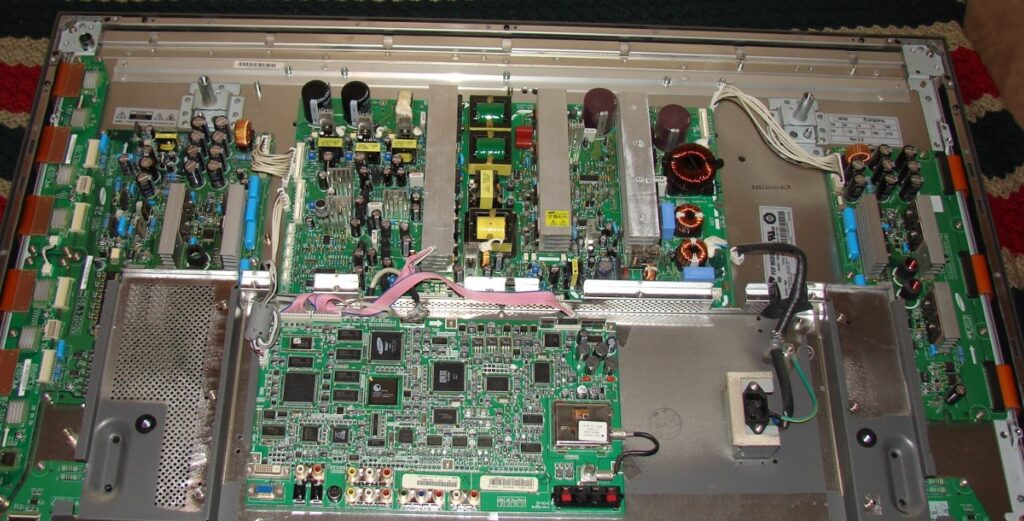
A properly diagnosed television fault can often be repaired without replacing the entire television, particularly when the display panel remains healthy.