
Average Repair Costs for AV Receivers vs Soundbars in Kenya
Audio equipment plays an important role in modern homes, entertainment rooms, offices, hotels, churches, conference facilities, restaurants, schools, and commercial spaces across Kenya. Two of the most common types of home audio equipment are AV receivers and soundbars. Both can deliver excellent sound, but they have very different internal designs, features, repair requirements, and maintenance costs.
When an AV receiver or soundbar develops a fault, one of the first questions most customers ask is:
“How much will it cost to repair?”
The answer depends on the brand, model, fault, availability of spare parts, extent of damage, and whether the technician can repair the existing circuit board or needs to replace an entire module.
In general, soundbar repairs are often less expensive than AV receiver repairs because soundbars are smaller and usually have fewer independent amplifier channels. However, some premium soundbars contain sophisticated digital processing, wireless subwoofer communication, HDMI eARC circuitry, Wi-Fi modules, Bluetooth systems, multiple amplifier channels, and proprietary mainboards. Such soundbars can therefore become expensive to repair.
AV receivers are usually more complicated. A modern receiver may contain several amplifier channels, HDMI processing, video switching, DSP processing, networking, Bluetooth, Wi-Fi, digital audio converters, multiple power supplies, protection circuits, cooling systems, and extensive control circuitry.
Based on current repair-market ranges in Nairobi and Kenya, common AV receiver repairs may fall around KSh 3,000–15,000, while complex or high-end receiver repairs can exceed that range. Soundbar repairs commonly fall around KSh 2,000–6,000 for basic faults, with premium or board-level repairs reaching approximately KSh 5,000–15,000 or more, depending on the model and parts required. These are estimates rather than fixed prices, because every unit must be diagnosed before an accurate quotation can be provided.
This guide explains the differences between AV receiver and soundbar repair costs, common faults, what influences the final price, when repair makes sense, and how professional diagnosis can help customers avoid unnecessary replacement costs.
Understanding AV Receivers and Soundbars
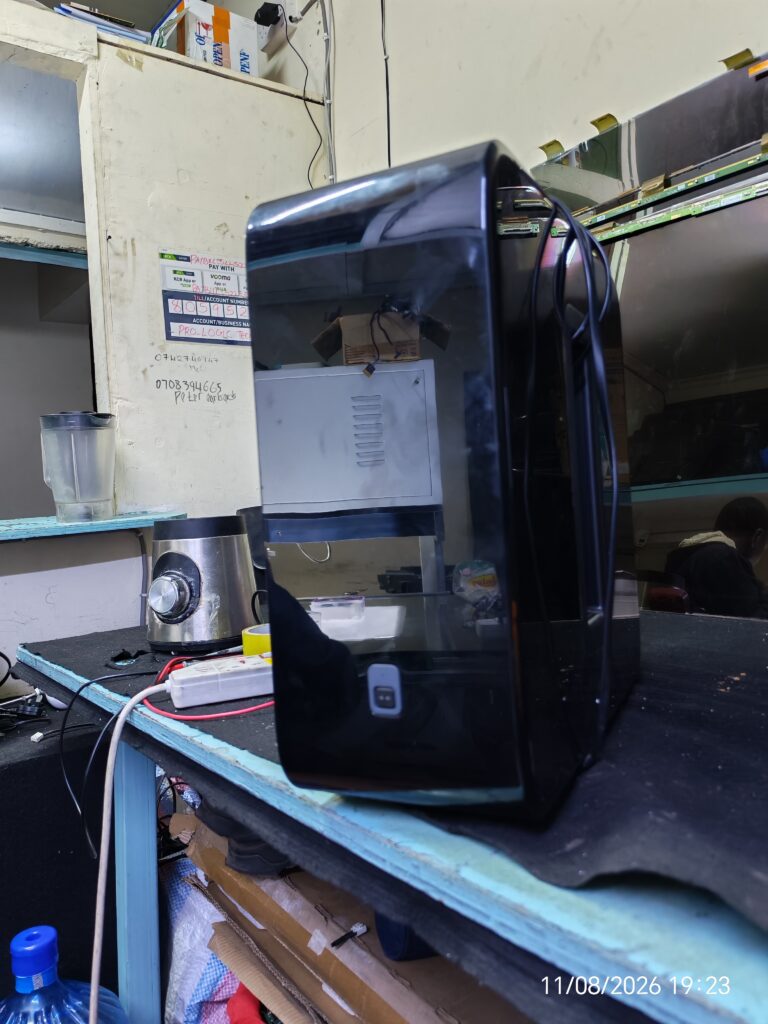
Before comparing repair prices, it is important to understand what these two products actually do.
What Is an AV Receiver?
An AV receiver, commonly called an AVR, is the central control and amplification unit in a home theatre system.
It can receive audio and video signals from different devices such as:
-
Smart TVs
-
Blu-ray players
-
DVD players
-
Game consoles
-
Decoders
-
Streaming devices
-
Media players
-
Computers
-
Projectors
-
Satellite receivers
-
Digital audio devices
-
Bluetooth devices
-
Network streaming services
The receiver processes these signals and distributes audio to multiple speakers.
A typical AV receiver can control:
-
Front left speaker
-
Front right speaker
-
Centre speaker
-
Surround speakers
-
Rear surround speakers
-
Height speakers
-
Subwoofer
-
Additional audio zones
Because an AVR performs many functions simultaneously, its internal circuitry can be considerably more complex than that of a basic soundbar.
What Is a Soundbar?
A soundbar is a compact audio system designed primarily to improve the sound produced by a television.
A soundbar may contain:
-
Multiple speakers
-
Amplifier circuits
-
Digital signal processing
-
Bluetooth
-
Optical audio input
-
HDMI ARC or eARC
-
USB
-
Wi-Fi
-
Wireless subwoofer communication
-
Remote control circuitry
-
Firmware
-
Power supply circuitry
Some soundbars are simple two-channel systems.
Others are advanced surround systems with separate wireless subwoofers and rear speakers.
Premium soundbars can therefore be significantly more complicated than their appearance suggests.
Average AV Receiver Repair Cost in Kenya
The cost of repairing an AV receiver depends heavily on the type of failure.
A basic receiver with a small electronic fault may be repairable for a few thousand shillings.
A receiver with a failed power supply, amplifier section, HDMI board, DSP processor, or mainboard may cost considerably more.
A practical general range for AV receiver repair is approximately:
KSh 3,000–15,000 for many common faults.
High-end, vintage, or severely damaged receivers can require KSh 20,000 or more, particularly when several boards or specialized components are involved.
Average Soundbar Repair Cost in Kenya
Soundbars are generally smaller and may have fewer independent components than AV receivers.
Typical basic soundbar repairs can range from:
KSh 2,000–6,000
More complicated repairs involving amplifier boards, mainboards, speaker replacements, wireless modules, or premium-brand components can reach:
KSh 5,000–15,000 or more.
The exact price cannot normally be determined simply by looking at the soundbar.
A technician needs to establish whether the problem is related to the power supply, amplifier, speakers, software, HDMI system, wireless subwoofer, control board, or another circuit.
AV Receiver vs Soundbar Repair Costs
The following comparison gives a general idea of how repair costs can differ.
| Repair Type | AV Receiver | Soundbar |
|---|---|---|
| Diagnosis | KSh 800–3,000 | KSh 1,000–3,000 |
| Minor electrical repair | KSh 1,500–4,000 | KSh 1,500–4,000 |
| Power supply repair | KSh 3,000–10,000 | KSh 2,500–6,000 |
| Amplifier repair | KSh 4,000–10,000+ | KSh 3,500–8,000 |
| Speaker repair | KSh 2,000–6,000 per unit | KSh 2,500–6,000 |
| HDMI repair | KSh 4,000–12,000 | KSh 2,500–7,000 |
| Bluetooth repair | KSh 2,000–6,000 | KSh 2,500–6,000 |
| Mainboard repair | KSh 5,000–15,000+ | KSh 4,000–15,000+ |
| Software/firmware service | KSh 2,000–6,000 | KSh 1,500–4,000 |
| Full servicing | KSh 2,000–5,000+ | KSh 2,000–5,000 |
| Complex board replacement | KSh 10,000–25,000+ | KSh 6,000–15,000+ |
These figures are indicative rather than fixed prices. Parts availability, brand, model, damage level, and technician labor can significantly change the final quotation. Current Nairobi repair references show similar broad ranges for receiver and soundbar servicing.
Why AV Receiver Repairs Can Be More Expensive
AV receivers contain many separate systems inside one chassis.
A typical modern receiver may have:
-
AC power input
-
Standby power supply
-
Main power supply
-
Multiple amplifier channels
-
Protection circuitry
-
HDMI board
-
DSP processor
-
Digital-to-analog converters
-
Analog input circuitry
-
Digital input circuitry
-
Video processing
-
Network module
-
Bluetooth module
-
Wi-Fi module
-
Display board
-
Front control panel
-
Remote control receiver
-
Cooling fan
-
Multiple relays
-
Speaker output circuits
When one section fails, the technician must determine whether the fault is isolated or has affected other sections.
For example, a power surge may damage a power supply and subsequently affect another circuit.
This is why simply replacing a fuse is not always an adequate repair.
Why Some Soundbar Repairs Can Also Be Expensive
It is easy to assume that because a soundbar is small, it must be cheap to repair.
That is not always true.
Modern premium soundbars can contain highly integrated electronic boards.
Instead of having many separate replaceable circuits, manufacturers may combine several functions onto a single mainboard.
A single board can include:
-
Processor
-
Bluetooth
-
Wi-Fi
-
HDMI
-
Digital audio processing
-
Amplifier control
-
USB
-
Optical interface
-
Wireless subwoofer communication
If that board fails, component-level repair may not always be practical.
In some models, the replacement board itself can represent a substantial portion of the total repair cost.
Cost of Diagnosing an AV Receiver
Diagnosis is one of the most important parts of audio equipment repair.
A receiver that appears to have a simple problem may have a deeper electronic fault.
Typical diagnostic or inspection charges may range from approximately:
KSh 800–3,000
Some workshops may waive the diagnostic fee if the customer proceeds with the repair, while others charge separately for inspection and testing. Current Nairobi references show diagnostic charges varying according to workshop and service type.
Diagnosis may include:
-
Visual inspection
-
Power testing
-
Input testing
-
Output testing
-
Speaker channel testing
-
HDMI testing
-
Bluetooth testing
-
Optical input testing
-
Control testing
-
Temperature assessment
-
Protection-mode assessment
-
Board inspection
-
Component testing
-
Software or firmware assessment
Cost of Diagnosing a Soundbar
Soundbar diagnosis is often less complicated than full AV receiver diagnosis, but modern soundbars can still require specialized testing.
A typical diagnostic range may be:
KSh 1,000–3,000
The technician may test:
-
Power
-
Audio output
-
Speaker drivers
-
HDMI ARC/eARC
-
Optical input
-
Bluetooth
-
USB
-
Remote control
-
Display indicators
-
Wireless subwoofer
-
Mainboard
-
Amplifier section
-
Firmware
A proper diagnosis prevents customers from paying for unnecessary parts.
AV Receiver Not Powering On
A receiver that refuses to turn on can have several possible causes.
Common possibilities include:
-
Failed power supply
-
Damaged fuse
-
Faulty standby circuit
-
Failed regulator
-
Damaged power-management component
-
Shorted amplifier section
-
Faulty relay
-
Mainboard problem
-
Surge damage
-
Internal component failure
A basic fault may cost approximately:
KSh 1,500–4,500
More serious power supply repairs can reach:
KSh 5,000–10,000 or more.
The actual cost depends on the damaged components and whether board replacement is necessary.
Soundbar Not Powering On
A soundbar that does not turn on may have:
-
Power supply failure
-
Blown fuse
-
Damaged regulator
-
Failed standby circuit
-
Power board damage
-
Surge damage
-
Faulty control board
-
Internal short circuit
Basic repairs can fall around:
KSh 1,500–4,000
Power board repairs may reach approximately:
KSh 2,500–6,000 or more.
AV Receiver Has No Sound
An AV receiver can display normally while producing no audio.
Possible causes include:
-
Amplifier failure
-
Speaker protection activation
-
Input configuration problem
-
DSP fault
-
Audio processing problem
-
Faulty relay
-
Output-stage damage
-
HDMI audio configuration
-
Muting circuit failure
-
Software issue
Repair costs commonly depend on whether the problem is configuration-related or hardware-related.
A simple issue may require little more than diagnosis and configuration.
A damaged amplifier section can require several thousand shillings.
Soundbar Has No Sound
A soundbar can have power and still produce no sound.
Potential causes include:
-
Failed amplifier IC
-
Damaged speaker
-
Audio processing fault
-
HDMI ARC/eARC issue
-
Optical input problem
-
Bluetooth configuration issue
-
Firmware problem
-
Muting circuit
-
Mainboard failure
Basic soundbar audio repairs may cost approximately:
KSh 2,000–6,000
More extensive amplifier or board repairs can cost more.
AV Receiver Produces Distorted Sound
Distorted sound can be caused by:
-
Failed output components
-
Damaged capacitors
-
Amplifier bias problems
-
Damaged speaker
-
Overheating
-
Power supply instability
-
Signal processing problems
-
Faulty input circuitry
Amplifier-stage repair may range around:
KSh 4,000–8,000 or more
depending on the receiver and extent of damage.
Soundbar Produces Distorted Sound
A soundbar may produce:
-
Crackling
-
Rattling
-
Hissing
-
Buzzing
-
Weak bass
-
Harsh treble
-
Intermittent distortion
Possible causes include:
-
Damaged speaker driver
-
Amplifier fault
-
Loose internal connection
-
Damaged voice coil
-
Power supply instability
-
Audio board failure
-
Mechanical damage
Repairs can commonly fall between:
KSh 2,500–8,000
depending on the fault.
AV Receiver HDMI Repair Costs
HDMI is one of the most important systems in modern AV receivers.
A receiver may have several HDMI ports for:
-
Television
-
Decoder
-
PlayStation
-
Xbox
-
Blu-ray player
-
Streaming device
-
Computer
-
Projector
HDMI problems may result in:
-
No picture
-
No sound
-
Intermittent signal
-
One HDMI port not working
-
Several ports not working
-
Audio but no video
-
Video but no audio
-
ARC problems
-
Handshake failures
HDMI-related receiver repair may cost approximately:
KSh 4,000–12,000
depending on whether the problem involves a connector, IC, board-level component, or complete board.
Soundbar HDMI ARC and eARC Repair
Modern soundbars often depend heavily on HDMI ARC or eARC.
Problems can include:
-
No audio from TV
-
Soundbar repeatedly disconnecting
-
ARC not detected
-
eARC not working
-
Intermittent audio
-
TV recognizes soundbar but produces no sound
Potential causes include:
-
HDMI port damage
-
Cable problems
-
Software configuration
-
Firmware issue
-
Mainboard fault
-
HDMI processing circuitry
Typical repair estimates can fall around:
KSh 2,500–7,000
depending on the model and fault.
AV Receiver Bluetooth Repair
Bluetooth allows users to connect:
-
Smartphones
-
Tablets
-
Laptops
-
Smart TVs
-
Other compatible devices
Bluetooth problems may include:
-
Device cannot detect receiver
-
Receiver cannot pair
-
Connection drops
-
No audio
-
Bluetooth works intermittently
Possible causes include:
-
Bluetooth module fault
-
Software issue
-
Antenna problem
-
Mainboard fault
-
Configuration problem
Typical repairs may range around:
KSh 2,000–6,000.
Soundbar Bluetooth Repair
Bluetooth is particularly important for soundbars.
A soundbar may stop connecting to smartphones or TVs because of:
-
Software errors
-
Pairing problems
-
Bluetooth module failure
-
Mainboard problems
-
Firmware corruption
Basic Bluetooth or software service may cost:
KSh 1,500–4,000
while board-level repairs can cost more.
AV Receiver Power Supply Repair
Power supply faults are among the more important receiver repairs.
Symptoms may include:
-
No power
-
Receiver turns off
-
Standby light only
-
Random shutdown
-
Protection mode
-
Clicking sound
-
Display goes off
-
Receiver restarts
Depending on the problem, power supply repair may cost approximately:
KSh 3,000–10,000
A complete replacement board can be more expensive.
Soundbar Power Supply Repair
Soundbars also depend on reliable power supplies.
Symptoms include:
-
No power
-
Standby light only
-
Soundbar turns off
-
Soundbar restarts
-
Subwoofer loses connection
-
Sound becomes unstable
Typical power supply repair can fall around:
KSh 2,500–6,000
depending on the model.
AV Receiver Amplifier Repair
The amplifier section is one of the most critical parts of an AV receiver.
If the output stage fails, the receiver may:
-
Enter protection mode
-
Shut down
-
Produce distorted sound
-
Lose one channel
-
Lose multiple channels
-
Blow fuses
-
Become excessively hot
Repair can involve testing:
-
Output transistors
-
Amplifier ICs
-
Driver components
-
Resistors
-
Capacitors
-
Relays
-
Protection circuits
-
Power supply rails
A typical amplifier repair may fall around:
KSh 4,000–10,000+
depending on the number of channels affected and the availability of parts.
Soundbar Amplifier Repair
Soundbars generally use compact amplifier circuits.
Possible symptoms include:
-
No sound
-
Low volume
-
Distorted sound
-
One side not working
-
Bass missing
-
Sound cutting out
-
Soundbar shutting down at higher volume
Typical amplifier repairs may cost approximately:
KSh 3,500–8,000
with premium units potentially costing more.
AV Receiver Overheating
AV receivers can produce considerable heat because they contain multiple amplifier channels.
Overheating may be caused by:
-
Blocked ventilation
-
Dust
-
Failed cooling fan
-
Excessive operating temperature
-
Internal component failure
-
Protection-circuit problems
-
Poor installation
-
Heavy continuous operation
A professional technician should establish why the receiver is overheating rather than simply cleaning it.
Typical overheating-related service may range around:
KSh 3,500–7,000
depending on the required work.
Soundbar Overheating
Soundbars can also overheat, particularly when installed in poorly ventilated locations.
Possible symptoms include:
-
Sudden shutdown
-
Sound cutting out
-
Distortion after extended operation
-
Reduced output
-
Restarting
-
Burning smell
A technician may inspect the ventilation, power supply, amplifier section and internal components.
Speaker Replacement Costs
Speaker damage is another common repair requirement.
A speaker driver may fail because of:
-
Excessive volume
-
Mechanical damage
-
Moisture
-
Age
-
Voice-coil failure
-
Amplifier damage
-
Physical impact
Speaker replacement costs depend heavily on the model.
A general range may be:
KSh 2,000–6,000 per speaker or driver
with premium replacement units costing considerably more.
Soundbar Speaker Replacement
Soundbar drivers are often specialized.
Replacing a soundbar speaker may require finding a compatible driver with appropriate:
-
Size
-
Impedance
-
Power handling
-
Physical mounting
-
Frequency characteristics
-
Connector configuration
Typical replacement costs can fall around:
KSh 3,500–10,000+
depending on the brand and model.
Wireless Subwoofer Repair
Many soundbars are supplied with wireless subwoofers.
The subwoofer can experience:
-
No power
-
No pairing
-
No bass
-
Intermittent connection
-
Distorted bass
-
Amplifier failure
-
Wireless module failure
Repair may cost approximately:
KSh 2,000–7,000
depending on the problem and model.
Wireless receiver or pairing-board problems may require specialized diagnosis.
AV Receiver Remote Control Problems
A receiver may appear faulty when the actual problem is the remote control.
Possible causes include:
-
Dead batteries
-
Damaged buttons
-
Infrared transmitter failure
-
Receiver sensor problem
-
Remote programming issue
-
Main control board problem
A basic remote or IR-related repair can be relatively inexpensive.
Typical costs may range around:
KSh 800–2,500
for simple repairs, with replacement remotes costing more depending on brand.
Soundbar Remote Control Problems
Soundbar remotes can develop similar issues.
The soundbar may work from its buttons but fail to respond to the remote.
The fault can be in:
-
Remote control
-
IR sensor
-
Control board
-
Firmware
-
Button circuitry
Professional diagnosis helps identify which component is responsible.
Software and Firmware Repairs
Modern audio equipment is no longer purely hardware-based.
AV receivers and soundbars use software to control many functions.
Firmware problems can cause:
-
Boot loops
-
Frozen displays
-
Missing inputs
-
Bluetooth problems
-
HDMI problems
-
Network problems
-
Unexpected shutdowns
-
Configuration errors
Firmware service may cost approximately:
KSh 1,500–6,000
depending on the equipment and complexity.
Software problems should be diagnosed before replacing hardware.
Why Brand Matters
The brand of an audio system can have a major effect on repair cost.
Popular brands found in Kenya include:
-
Sony
-
Samsung
-
LG
-
Yamaha
-
Denon
-
Marantz
-
Pioneer
-
Onkyo
-
Harman Kardon
-
JBL
-
Philips
-
Hisense
-
Vitron
-
Vision Plus
-
Sayona
-
Panasonic
-
Kenwood
-
Bose
The cost of repairing one model can be completely different from repairing another model from the same manufacturer.
Premium AV Receiver Repairs
Premium AV receivers often contain more advanced electronics.
A high-end receiver may support:
-
Dolby Atmos
-
DTS:X
-
Multiple HDMI inputs
-
eARC
-
4K or higher video
-
HDR
-
Network streaming
-
Multi-room audio
-
Advanced DSP
-
Wi-Fi
-
Bluetooth
-
Multiple zones
Because these systems are more complex, repairs may require more specialized diagnostics.
A KSh 100,000+ receiver can sometimes justify a KSh 20,000 or even higher repair, particularly if replacement would be substantially more expensive.
Entry-Level AV Receiver Repair
For inexpensive receivers, the economics are different.
Suppose a receiver originally cost KSh 20,000–30,000.
If the repair quotation is KSh 12,000–15,000, the customer should compare the repair cost with the cost of replacing the equipment.
However, the cheapest replacement is not always the best option.
A repaired receiver may provide better connectivity, sound quality and features than a new entry-level model.
Premium Soundbar Repair
Premium soundbars can cost considerably more than basic soundbars.
They may include:
-
Dolby Atmos
-
DTS
-
Wireless subwoofer
-
Rear wireless speakers
-
Wi-Fi
-
Bluetooth
-
HDMI eARC
-
Multi-room features
-
Advanced DSP
If a premium soundbar develops a board fault, repairing it may be more economical than replacing the entire system.
Basic Soundbar Repair
Basic soundbars are often easier to replace if the repair becomes too expensive.
For example, if a basic soundbar is worth KSh 8,000 and requires a KSh 7,000 board replacement, replacement may make more economic sense.
However, a simple KSh 2,500 repair may still be worthwhile.
When Should You Repair an AV Receiver?
Repair is usually worth considering when:
-
The receiver is high quality
-
The speakers are compatible and valuable
-
Replacement would be expensive
-
The fault is localized
-
Spare parts are available
-
The unit has otherwise been reliable
-
The receiver has features difficult to replace affordably
When Should You Replace an AV Receiver?
Replacement may be more appropriate when:
-
Several major boards have failed
-
Replacement parts are unavailable
-
Repair cost approaches replacement cost
-
The receiver is severely damaged
-
The model is obsolete
-
The equipment has suffered extensive surge damage
A professional diagnosis should come before making the decision.
When Should You Repair a Soundbar?
Repair often makes sense when:
-
The soundbar is relatively expensive
-
The fault is minor
-
The amplifier can be repaired
-
The speaker driver can be replaced
-
The mainboard is available
-
The wireless subwoofer is valuable
-
The unit is otherwise in good condition
When Should You Replace a Soundbar?
Replacement can make more sense when:
-
The unit is very inexpensive
-
The mainboard is unavailable
-
The repair is close to replacement cost
-
Multiple sections are damaged
-
The model is obsolete
-
The replacement part costs too much
Factors That Determine the Final Repair Cost
No responsible technician should give a final repair price solely from the statement:
“My soundbar is not working.”
Several factors must be considered.
1. Brand
Premium brands may have more expensive replacement parts.
2. Model
Different models use different boards and components.
3. Fault
A blown fuse is not equivalent to a failed DSP board.
4. Parts Availability
A commonly available component may be inexpensive.
A discontinued proprietary board may be difficult and expensive to source.
5. Labor
Some equipment takes significantly longer to dismantle and test.
6. Physical Damage
Bent chassis, damaged connectors, liquid damage and broken speaker assemblies increase repair costs.
7. Surge Damage
Power surges can affect multiple circuits.
8. Water or Moisture
Corrosion can spread across circuit boards and connectors.
9. Calibration
Some repairs require testing and audio calibration after component replacement.
Why Diagnosis Matters
Diagnosis is more than simply switching the equipment on.
A professional diagnosis attempts to establish:
What failed?
Why did it fail?
Has the failure affected another section?
Can the existing board be repaired?
Is a replacement part required?
Is repair economically sensible?
This is particularly important with AV receivers because multiple systems interact with one another.
Common AV Receiver Problems
Some of the most frequently reported receiver problems include:
-
Receiver not turning on
-
Receiver stuck in standby
-
Protection mode
-
No sound
-
One channel not working
-
Several channels not working
-
Distorted sound
-
Receiver overheating
-
Receiver shutting down
-
HDMI not working
-
ARC not working
-
Bluetooth failure
-
Optical input failure
-
Display not working
-
Remote not working
-
Network problems
-
Wi-Fi problems
-
Random restarts
-
Loud humming
-
Speaker relay failure
-
Input switching problems
-
Audio dropouts
-
Firmware problems
-
DSP faults
-
Power supply faults
Common Soundbar Problems
Soundbars commonly develop:
-
No power
-
No sound
-
Low volume
-
Distorted sound
-
Crackling
-
Buzzing
-
Hissing
-
No bass
-
Subwoofer not working
-
Subwoofer not pairing
-
Bluetooth failure
-
HDMI ARC failure
-
eARC problems
-
Optical input problems
-
USB problems
-
Remote problems
-
Display problems
-
Random shutdown
-
Overheating
-
Software problems
-
Firmware errors
-
Mainboard failure
-
Amplifier failure
-
Speaker driver damage
-
Power supply failure
Cost of Repairing a Soundbar With No Power
The first step is to establish whether electricity is reaching the equipment correctly.
Possible faults include:
-
Power input
-
Fuse
-
Power supply
-
Regulator
-
Standby circuit
-
Mainboard
-
Shorted component
Basic repairs may fall around:
KSh 1,500–4,000
More extensive power-board repairs may cost:
KSh 2,500–6,000 or more.
Cost of Repairing a Soundbar With No Bass
A missing bass response does not automatically mean the subwoofer is defective.
The issue may involve:
-
Audio settings
-
Subwoofer pairing
-
Wireless communication
-
Amplifier
-
Speaker driver
-
Mainboard
-
Crossover processing
Diagnosis is therefore important.
Cost of Repairing an AV Receiver With One Channel Dead
One dead channel can result from:
-
Output transistor failure
-
Amplifier IC
-
Relay
-
Speaker connection
-
Driver circuit
-
Protection circuit
-
Input processing
The repair may cost less than replacing an entire receiver if the fault is localized.
Cost of Full AV Receiver Servicing
Full servicing can include:
-
Internal cleaning
-
Inspection
-
Connector inspection
-
Cooling inspection
-
Electrical testing
-
Audio testing
-
Input testing
-
Output testing
-
General performance assessment
-
Calibration
A general servicing range may be:
KSh 2,000–5,000+
depending on the equipment and work required.
Cost of Full Soundbar Servicing
Soundbar servicing may include:
-
Cleaning
-
Speaker inspection
-
Power testing
-
Audio testing
-
Connectivity testing
-
Bluetooth testing
-
HDMI testing
-
Subwoofer testing
-
Remote testing
-
Firmware assessment
A typical service may range around:
KSh 2,000–5,000
depending on the model and extent of servicing.
Pickup and Delivery Costs
AV receivers can be heavy.
Customers outside the workshop may therefore require pickup and delivery.
Depending on distance and logistics, transport charges may be added to the repair cost.
Some Nairobi references place pickup and delivery in the broad range of several hundred to a couple of thousand shillings.
The final charge depends on location and equipment size.
Home Visit Charges
Some audio faults can be diagnosed at the customer's premises.
A home visit can be useful when:
-
The receiver is part of a large installed system
-
The equipment is difficult to transport
-
Multiple speakers are connected
-
Cabling needs inspection
-
The system is installed in a hotel
-
The system is installed in a church
-
The system is installed in a conference facility
-
The equipment is part of a commercial entertainment setup
A home diagnostic visit may cost more than workshop diagnosis because it includes travel and technician time.
Repair Costs in Nairobi
Nairobi has a large market for electronics repair, particularly around established electronics and appliance service areas.
Customers in areas such as:
-
CBD
-
Luthuli Avenue
-
River Road
-
Ngara
-
Westlands
-
Kilimani
-
Kileleshwa
-
Lavington
-
Parklands
-
South B
-
South C
-
Embakasi
-
Kasarani
-
Roysambu
-
Zimmerman
-
Donholm
-
Eastleigh
-
Industrial Area
can seek professional audio equipment diagnosis and repair.
The final cost will still depend on the equipment rather than simply the location.
AV Receiver Repair in Nairobi
Professional receiver repair services may cover:
-
Sony
-
Yamaha
-
Denon
-
Marantz
-
Pioneer
-
Onkyo
-
Harman Kardon
-
Kenwood
-
Panasonic
-
LG
-
Samsung
-
Other brands
Services can include board-level diagnosis, amplifier repairs, power supply repairs, HDMI troubleshooting, connectivity problems and audio restoration.
Soundbar Repair in Nairobi
Soundbar repair can cover brands such as:
-
Samsung
-
LG
-
Sony
-
JBL
-
Bose
-
Hisense
-
Philips
-
Panasonic
-
Vitron
-
Vision Plus
-
Sayona
-
Other brands
Each model should be assessed individually.
AV Receiver and Soundbar Repair Across Kenya
Audio equipment repair is not limited to Nairobi.
Customers in counties such as:
-
Kiambu
-
Machakos
-
Kajiado
-
Nakuru
-
Nyeri
-
Murang'a
-
Kirinyaga
-
Embu
-
Meru
-
Laikipia
-
Nyandarua
-
Nyeri
-
Kericho
-
Kisumu
-
Siaya
-
Kakamega
-
Bungoma
-
Busia
-
Uasin Gishu
-
Nandi
-
Trans Nzoia
-
Mombasa
-
Kilifi
-
Kwale
-
Taita Taveta
-
Garissa
-
Isiolo
-
Samburu
-
Marsabit
-
Turkana
-
Baringo
-
Narok
-
Homa Bay
-
Migori
-
Kisii
-
Nyamira
may require audio equipment repair services.
For customers outside Nairobi, equipment can often be assessed through an agreed delivery or collection arrangement where available.
Why Customers Should Avoid Guessing the Repair Cost
One of the most common mistakes customers make is comparing repair prices before knowing the actual fault.
For example:
A customer may say:
“My soundbar repair should cost KSh 2,000.”
But another soundbar of the same brand may require a KSh 10,000 mainboard.
Similarly, two AV receivers may both show “no sound,” while one has a simple configuration problem and another has an amplifier-stage failure.
The symptom alone does not determine the repair cost.
Repair vs Replacement: A Practical Approach
A useful way to evaluate repair is to compare:
Repair cost + expected reliability
against:
Replacement cost + installation/setup cost.
For example, if an AV receiver costs KSh 80,000 to replace and requires a KSh 8,000 repair, repair may be financially attractive.
If a basic soundbar costs KSh 8,000 and requires a KSh 7,000 mainboard, replacement may make more sense.
Why High-End Receivers Are Often Worth Repairing
High-end receivers can contain expensive technologies and superior amplification.
Replacing one may require purchasing:
-
New receiver
-
New cables
-
New accessories
-
New remote
-
New setup
-
New calibration
A professional repair can preserve the existing installation.
Why Some Soundbars Are Better Replaced
Soundbars are frequently designed as integrated consumer products.
When the mainboard fails, replacement boards can sometimes be expensive relative to the original purchase price.
This is particularly true for low-cost soundbars.
However, premium systems may be worth repairing.
The Importance of Genuine or Compatible Parts
The quality of replacement components matters.
A repair should use components that are appropriate for the specific model.
For example, an amplifier component must be compatible with the equipment's:
-
Electrical characteristics
-
Thermal requirements
-
Power requirements
-
Circuit design
Similarly, replacement speakers should be appropriately matched to the original design.
Board-Level Repair vs Board Replacement
There are two common approaches.
Board-Level Repair
The technician repairs the existing circuit board.
This can involve replacing failed components.
Advantages include:
-
Lower parts cost in some cases
-
Original board retained
-
Useful for discontinued equipment
-
Potentially more economical
Board Replacement
The damaged board is replaced.
Advantages can include:
-
Faster restoration
-
Predictable component compatibility
-
Useful when damage is extensive
However, replacement boards can be expensive.
Water and Moisture Damage
Moisture can damage both soundbars and AV receivers.
Potential effects include:
-
Corrosion
-
Short circuits
-
Damaged connectors
-
Component failure
-
Speaker damage
-
Power supply faults
Liquid-damaged equipment should be inspected before being repeatedly powered.
Dust and Dirt
Dust accumulation can affect cooling and ventilation.
This is especially relevant for:
-
AV receivers
-
Amplifiers
-
Soundbars with ventilation openings
-
Systems installed in dusty environments
Regular professional servicing can help identify problems before they become major failures.
Power Surges
Power disturbances can damage audio electronics.
AV receivers and soundbars contain sensitive digital and analog circuitry.
Surge protection and stable power supply practices can reduce risk.
However, surge protection is not a guarantee against every electrical event.
Installation Affects Repair Costs
Poor installation can contribute to failures.
Examples include:
-
Blocked ventilation
-
Excessive heat
-
Poor cable routing
-
Unsupported equipment
-
Incorrect speaker connections
-
Moisture exposure
-
Dust accumulation
-
Poor-quality power connections
Correct installation can help protect the equipment.
Why AV Receivers Require Specialized Diagnosis
A receiver can have multiple independent channels.
A technician may therefore need to determine whether a fault is:
-
Channel-specific
-
Power-related
-
Processor-related
-
Input-related
-
Output-related
-
Protection-related
This is why receiver diagnosis can take longer than basic soundbar troubleshooting.
Why Soundbars Require Specialized Diagnosis
Soundbars are compact.
This means components can be tightly integrated.
A technician may need to carefully inspect:
-
Power board
-
Mainboard
-
Amplifier section
-
Speaker assembly
-
Bluetooth module
-
HDMI circuitry
-
Optical circuitry
-
Wireless subwoofer system
Compact construction can make some repairs more labor-intensive than customers expect.
Questions to Ask Before Approving a Repair
Customers should ask:
-
What is the diagnosed fault?
-
How much is the diagnosis?
-
Are parts included?
-
Is labor included?
-
Is a board being repaired or replaced?
-
Is the replacement part available?
-
How long will the repair take?
-
Is testing included?
-
Is calibration required?
-
Is any repair warranty provided?
-
Is pickup or delivery included?
-
What happens if the repair is not economical?
Clear answers help customers make informed decisions.
What Information to Provide the Technician
When requesting an estimate, provide:
-
Brand
-
Model number
-
Exact symptoms
-
Whether the unit powers on
-
Whether sound is present
-
Whether all channels work
-
Whether HDMI works
-
Whether Bluetooth works
-
Whether the problem started after a power surge
-
Whether liquid entered the equipment
-
Whether the equipment was recently moved
-
Photos of the front and rear panels
-
Photos of the model label
-
Error codes if displayed
This information can make preliminary assessment easier.
Common Symptoms and Possible Repair Ranges
| Symptom | Equipment | Approximate Repair Range |
|---|---|---|
| No power | Soundbar | KSh 1,500–6,000 |
| No power | AV receiver | KSh 1,500–10,000+ |
| No sound | Soundbar | KSh 2,000–8,000 |
| No sound | AV receiver | KSh 3,000–10,000+ |
| Distorted sound | Soundbar | KSh 2,500–8,000 |
| Distorted sound | AV receiver | KSh 4,000–10,000+ |
| HDMI problem | Soundbar | KSh 2,500–7,000 |
| HDMI problem | AV receiver | KSh 4,000–12,000 |
| Bluetooth problem | Soundbar | KSh 1,500–6,000 |
| Bluetooth problem | AV receiver | KSh 2,000–6,000 |
| Mainboard problem | Soundbar | KSh 4,000–15,000+ |
| Mainboard problem | AV receiver | KSh 5,000–15,000+ |
| Subwoofer problem | Soundbar system | KSh 2,000–7,000 |
| Amplifier problem | AV receiver | KSh 4,000–10,000+ |
These ranges are intended as practical estimates and not guaranteed quotations. Published Nairobi repair references show considerable variation based on equipment type and fault complexity.
AV Receiver Repair Cost by Fault Category
Minor Faults
Minor faults may include:
-
Loose connectors
-
Fuse-related issues
-
Simple control problems
-
Minor component failures
-
Configuration issues
Approximate range:
KSh 1,500–4,000
Moderate Faults
These may include:
-
Amplifier problems
-
Power supply problems
-
Bluetooth problems
-
HDMI port issues
-
Speaker relay faults
Approximate range:
KSh 3,000–8,000
Major Faults
These may include:
-
Mainboard damage
-
DSP failure
-
Multiple amplifier channels
-
Severe surge damage
-
Multiple board failures
Approximate range:
KSh 8,000–20,000+
Soundbar Repair Cost by Fault Category
Minor Faults
Approximate range:
KSh 1,500–4,000
Moderate Faults
Approximate range:
KSh 3,000–8,000
Major Faults
Approximate range:
KSh 7,000–15,000+
Premium models can exceed these figures if proprietary boards or expensive modules are required.
Why Repair Prices Change Over Time
Electronics repair pricing is affected by:
-
Exchange rates
-
Imported spare parts
-
Shipping costs
-
Availability of discontinued boards
-
Manufacturer support
-
Component availability
-
Labor
-
Transport
-
Equipment complexity
Therefore, an online price guide should be treated as an estimate rather than a permanent price list.
Repairing Vintage AV Receivers
Vintage receivers can be especially challenging.
Examples include older units from:
-
Pioneer
-
Sansui
-
Marantz
-
Yamaha
-
Kenwood
-
Technics
-
Sony
-
Harman Kardon
Older receivers may require:
-
Capacitor replacement
-
Relay replacement
-
Cleaning
-
Switch servicing
-
Potentiometer servicing
-
Amplifier restoration
-
Power supply repair
-
Calibration
A valuable vintage receiver can justify a significant repair investment because replacing it with an equivalent unit may be difficult.
Vintage Receiver Recapping
Capacitors age over time.
A receiver may develop:
-
Hum
-
Weak channels
-
Distortion
-
Instability
-
Power problems
-
Reduced performance
A comprehensive recap can therefore be considerably more expensive than a simple component replacement.
Some published repair references indicate vintage receiver restoration can reach tens of thousands of shillings depending on the model and scope of work.
Commercial Audio Equipment
AV receivers and soundbars are not limited to homes.
They can be used in:
-
Hotels
-
Lodges
-
Restaurants
-
Offices
-
Boardrooms
-
Conference rooms
-
Schools
-
Churches
-
Entertainment venues
-
Apartments
-
Airbnb properties
-
Training centres
Commercial equipment may require faster turnaround because downtime can affect business operations.
Home Theatre Repair
A complete home theatre system may contain:
-
AV receiver
-
Front speakers
-
Centre speaker
-
Surround speakers
-
Subwoofer
-
Television
-
Projector
-
Streaming device
-
Decoder
-
HDMI cables
A problem with one component can sometimes appear to be a problem with another.
For example, a TV may display an image but have no sound because of an HDMI ARC configuration problem rather than a failed soundbar.
Professional Testing
After repair, audio equipment should ideally be tested under realistic operating conditions.
Testing may include:
-
Power-up
-
Standby operation
-
Audio playback
-
Input switching
-
HDMI
-
Optical
-
Bluetooth
-
Speaker output
-
Subwoofer output
-
Remote control
-
Extended operation
-
Temperature monitoring
Testing helps confirm that the original problem has actually been resolved.
Avoiding Unnecessary Repairs
Professional diagnosis should always distinguish between:
Hardware failure
and
configuration or software problems.
For example, an AV receiver may have no sound because the wrong input or speaker mode has been selected.
A soundbar may appear faulty because the TV is configured to use its internal speakers.
These situations do not necessarily require hardware repair.
Preventive Maintenance for AV Receivers
Owners can reduce the risk of problems by:
-
Keeping ventilation openings clear
-
Avoiding excessive heat
-
Keeping dust away
-
Using appropriate power protection
-
Avoiding blocked cooling fans
-
Keeping cables properly organized
-
Updating firmware where appropriate
-
Avoiding excessive volume for prolonged periods
-
Having unusual shutdowns investigated early
Preventive Maintenance for Soundbars
Soundbar owners should:
-
Keep ventilation clear
-
Avoid moisture
-
Keep the unit away from excessive heat
-
Use suitable HDMI cables
-
Maintain the wireless subwoofer within an appropriate environment
-
Keep firmware updated where applicable
-
Avoid unnecessary physical impacts
-
Investigate unusual buzzing or distortion
-
Use appropriate power protection
Frequently Asked Questions
How much does it cost to repair an AV receiver in Kenya?
Many common AV receiver repairs fall approximately between KSh 3,000 and KSh 15,000, although simple faults may cost less and complex or high-end repairs can exceed KSh 20,000.
How much does it cost to repair a soundbar?
Basic soundbar repairs commonly fall around KSh 2,000–6,000, while premium or complex board repairs can reach approximately KSh 15,000 or more.
Is an AV receiver more expensive to repair than a soundbar?
Generally, yes. AV receivers have multiple amplifier channels and more complex processing systems. However, premium soundbars can also be expensive to repair.
Is a soundbar cheaper to replace?
Sometimes. If the soundbar is an inexpensive model and requires a costly mainboard, replacement may be more economical.
Is it worth repairing a high-end AV receiver?
Often yes, especially if the receiver is expensive and the repair is significantly cheaper than replacement.
Can you repair HDMI problems?
Yes, depending on the fault. HDMI ports, associated circuitry and board-level faults can sometimes be repaired or the relevant board can be replaced.
Can a soundbar subwoofer be repaired?
Yes. Problems may involve the amplifier, power supply, speaker driver or wireless communication system.
Why does my AV receiver keep shutting down?
Possible causes include overheating, protection activation, amplifier faults, power supply problems or internal component failure.
Why does my soundbar turn off by itself?
Possible causes include power supply problems, overheating, firmware issues, protection circuits or internal electronic faults.
Does the brand affect repair cost?
Yes. Spare-part availability and board pricing can vary considerably between manufacturers and models.
Does the model number matter?
Yes. Always provide the exact model number when requesting an estimate.
Getting an Accurate AV Receiver or Soundbar Repair Quote
The best way to obtain an accurate price is to have the equipment professionally diagnosed.
A useful quotation should identify:
-
Diagnosis
-
Labor
-
Parts
-
Testing
-
Calibration where applicable
-
Transport if applicable
-
Any additional service charges
The customer should understand what is being repaired before approving the work.
Pro-Logic Technologies Audio Repair Services
Pro-Logic Technologies provides electronics and home entertainment repair services for customers who need professional assistance with AV receivers, soundbars, home theatre systems, amplifiers and related audio equipment.
Services can include:
-
AV receiver diagnosis
-
AV receiver repair
-
Amplifier repair
-
Soundbar repair
-
Home theatre repair
-
Power supply repair
-
Audio board repair
-
Mainboard diagnosis
-
HDMI troubleshooting
-
Bluetooth troubleshooting
-
Optical input troubleshooting
-
Speaker repair
-
Subwoofer repair
-
Wireless subwoofer troubleshooting
-
Remote and control-system diagnosis
-
Firmware/software troubleshooting
-
Preventive maintenance
-
Audio system testing
The objective is to identify the actual cause of the problem before recommending repair or replacement.
AV Receiver Repair Services
Customers can seek assistance with receivers that:
-
Do not power on
-
Remain in standby
-
Enter protection mode
-
Have no sound
-
Have distorted sound
-
Have one dead channel
-
Have multiple dead channels
-
Overheat
-
Shut down
-
Have HDMI problems
-
Have Bluetooth problems
-
Have optical input problems
-
Have display problems
-
Have remote-control problems
-
Have network problems
-
Have firmware issues
Soundbar Repair Services
Soundbar repair can cover:
-
No power
-
No sound
-
Low sound
-
Distorted sound
-
Crackling
-
Buzzing
-
Hissing
-
No bass
-
Subwoofer problems
-
Bluetooth problems
-
HDMI ARC problems
-
HDMI eARC problems
-
Optical input problems
-
Remote problems
-
Mainboard faults
-
Amplifier faults
-
Speaker faults
-
Power supply faults
-
Software issues
Why Professional Diagnosis Is Important
Audio equipment contains electrical and electronic circuits that can be damaged by incorrect handling.
Professional diagnosis helps:
-
Identify the failed section
-
Prevent unnecessary part replacement
-
Determine whether repair is economical
-
Identify related damage
-
Confirm compatibility of replacement parts
-
Test the equipment after repair
Customers should avoid repeatedly powering equipment that has suffered a major electrical fault, burning smell, liquid exposure, or obvious internal damage.
Final Comparison: AV Receiver vs Soundbar Repair
If the main objective is minimizing repair costs, a basic soundbar will generally be cheaper to repair than a complex AV receiver.
However, repair cost should never be determined by equipment type alone.
A basic soundbar with a failed mainboard can be more expensive to repair than an AV receiver with a minor component fault.
Likewise, a premium AV receiver may justify a KSh 15,000–20,000 repair when replacement would cost substantially more.
The most important factors are:
The exact fault.
The model.
The availability of parts.
The extent of damage.
The value of the equipment.
The cost of replacement.
For many common repairs in Kenya, a practical expectation is approximately KSh 2,000–6,000 for many basic soundbar repairs and KSh 3,000–15,000 for many common AV receiver repairs, with complex repairs potentially going considerably higher. Current Nairobi market references support these broad ranges, but an actual quotation should always follow diagnosis.
If you have an AV receiver, amplifier, soundbar or complete home theatre system that is not working correctly, professional diagnosis can help determine whether repairing the equipment is financially sensible or whether replacement would be the better option.
Contact Pro-Logic Technologies
For AV receiver repair, soundbar repair, amplifier repair and home theatre troubleshooting, contact Pro-Logic Technologies.
Call or WhatsApp: 0723 763 173
We assist customers with audio equipment diagnosis, repair, servicing and related electronics solutions.
Whether your equipment has no power, no sound, distorted audio, HDMI problems, Bluetooth problems, amplifier faults, subwoofer problems or intermittent operation, proper diagnosis is the first step toward finding the right solution.
Pro-Logic Technologies – Professional AV Receiver, Soundbar, Amplifier and Home Theatre Repair Services.