
Water is one of the most importan (call 0723763173)t resources on any property. Whether the land is being used as a family home, agricultural farm, rental compound, school, business premises, livestock project, greenhouse, hotel, or developing residential property, dependable water can make daily operations considerably easier.
For property owners in Kitere and the surrounding areas, developing a groundwater source can be an effective way of strengthening an existing water supply where site conditions are suitable. A properly planned borehole can become the foundation of a wider water system incorporating pumping equipment, elevated storage, solar energy, filtration, pressure boosting, irrigation, and automated controls.
Pro-Logic Technologies provides technical assistance for customers planning borehole and water-supply projects in Kitere. Rather than treating drilling as an isolated activity, we can help look at the entire chain—from identifying a suitable drilling location to getting water into the buildings, fields, tanks, livestock facilities, or irrigation network where it is needed.
The most important principle is simple: every borehole is site-specific. Ground conditions, groundwater levels, geological formations, water quality, drilling depth, sustainable yield, and pumping requirements can differ considerably between properties. A system that works on one piece of land should not automatically be copied onto another property.
Developing Groundwater in Kitere
Groundwater is water held beneath the surface within geological formations. Depending on the local geology, groundwater may occur within weathered materials, fractures, permeable formations, or other underground structures capable of storing and transmitting water.
Accessing this resource requires more than drilling to an arbitrary depth.
A properly planned project considers:
- The characteristics of the property
- Available groundwater information
- Geological conditions
- Proposed drilling position
- Intended water consumption
- Expected pumping requirements
- Borehole construction
- Water storage
- Energy requirements
- Water treatment
- Final distribution
This is why the initial planning stage is so important.
Water Solutions for Kitere Properties
Different customers need water for very different reasons.
A homeowner may primarily need a dependable domestic supply.
A farmer may need large volumes for irrigation.
A dairy operator may require water throughout the day for animals and cleaning.
A school may have high morning and midday consumption.
A hotel may experience changing demand depending on occupancy.
A developer may need a system that can support several buildings.
Consequently, borehole design should begin with the question:
“What does this property actually need the water to do?”
Once that is understood, the groundwater and pumping infrastructure can be planned around the application.
Initial Consultation
The first stage of a borehole project is understanding the proposed installation.
Useful information includes:
- Property location
- Approximate property size
- Intended use of water
- Number of buildings
- Number of occupants
- Agricultural activities
- Irrigation requirements
- Livestock numbers
- Existing water sources
- Existing tanks
- Availability of electricity
- Interest in solar pumping
- Desired future expansion
A domestic compound, for example, may need a modest storage and distribution system, while a commercial farm could require substantial pumping and irrigation infrastructure.
Selecting the Drilling Point
Where the borehole is placed can affect both the drilling process and the eventual water system.
The selected position should take account of the wider property layout.
Considerations can include:
- Geological information
- Groundwater investigation results
- Access for drilling machinery
- Property boundaries
- Existing structures
- Septic installations
- Waste-disposal areas
- Drainage
- Flood-prone areas
- Roads and access routes
- Future buildings
- Tank position
- Electrical connections
The ideal point is therefore not necessarily the most convenient empty space on the property.
Groundwater Investigation
A groundwater investigation can provide useful information before drilling.
Depending on the project, this may involve reviewing available geological and groundwater information and conducting suitable geophysical investigations.
Geophysical methods can help investigate subsurface characteristics and identify zones that may warrant consideration for drilling.
It is important to understand what such an investigation can and cannot do.
A survey is not a guarantee of water at a particular depth. It is a tool for improving the basis on which the drilling location is selected.
Actual conditions become clearer as drilling progresses.
Reading the Ground During Drilling
The underground environment is not visible from the surface.
As drilling advances, material brought to the surface can reveal information about the formations being penetrated.
This may include:
- Topsoil
- Clay
- Weathered material
- Rock formations
- Fractured rock
- Different geological layers
- Potential water-bearing intervals
Recording this information helps inform the construction of the completed borehole.
Drilling the Borehole
Once the location and drilling plan have been established, suitable equipment is brought to the property.
Drilling equipment and techniques depend on the expected geological environment and project requirements.
The work can involve substantial machinery, drill pipes, compressors, drilling tools, water, rock fragments, and other materials.
Adequate access and working space are therefore important.
During drilling, observations are made about the formations encountered and the behavior of the borehole.
Determining the Finished Depth
One of the questions customers commonly ask is:
“How deep will the borehole be?”
There is no universal answer.
The appropriate depth is determined by the geological conditions encountered and the objectives of the project.
Two properties in the same general area may have different drilling requirements.
For this reason, a contractor should avoid presenting an arbitrary depth as though it applies to every property.
Constructing the Borehole
After drilling, the open hole needs to be converted into a stable groundwater structure.
Construction may involve:
- Casing
- Screens
- Gravel pack
- Appropriate sanitary protection
- Surface headworks
The exact arrangement depends on the geological formations and engineering requirements.
The purpose is to provide a stable pathway through which groundwater can enter the borehole and subsequently be pumped to the surface.
Casing Installation
Casing provides structural support to portions of the borehole.
It helps stabilize formations that might otherwise collapse and forms part of the permanent borehole construction.
Its diameter, material, and installation depth depend on the design.
A borehole is expected to operate for a long time, so construction quality matters.
Installing Screens
Screen sections allow groundwater to enter the borehole from selected formations while helping control the movement of formation particles.
Screen placement is determined by information gathered during drilling.
Poorly selected or positioned screens can contribute to sand production and reduced performance.
Gravel-Pack Construction
Where the borehole design requires it, suitable gravel can be placed around screened sections.
This creates a filtering zone between the surrounding geological material and the screen.
The characteristics of the gravel should be appropriate for the formation.
Cleaning and Developing the Borehole
Drilling leaves behind materials that need to be removed.
Borehole development helps clean the well and improve the connection between the groundwater-bearing formation and the finished borehole.
Depending on the construction, suitable methods may involve pumping, airlifting, surging, or other development techniques.
The objective is to produce a cleaner and hydraulically effective borehole.
Why Development Should Not Be Ignored
An inadequately developed borehole may exhibit:
- Excessive turbidity
- Sand production
- Reduced flow
- Premature pump wear
- Difficult filtration
- Poor hydraulic performance
Proper development is therefore an important part of commissioning.
Finding Out What the Borehole Can Actually Produce
A borehole can contain water without necessarily being capable of supplying the volume a customer wants.
This distinction is extremely important.
A farm requiring substantial irrigation, for instance, needs more than evidence that groundwater exists. It needs to know how much water can reasonably be extracted.
Pumping tests provide valuable information.
Pump Testing
A pumping test can help establish the behavior of the borehole under pumping conditions.
Measurements can include:
- Resting water level
- Pumping water level
- Drawdown
- Recovery
- Pumping rate
- Duration of pumping
- Response of the groundwater system
These results can then contribute to pump selection and system design.
Static and Pumping Water Levels
The water level when the borehole is at rest is different from the level observed while water is being extracted.
The pumping level can fall because of drawdown.
Knowing both conditions is useful when deciding where and how the pump should operate.
Sustainable Borehole Production
The highest flow rate observed during a test should not automatically become the permanent pumping rate.
Long-term groundwater management requires consideration of sustainable performance.
Over-pumping can create excessive drawdown and may negatively affect the borehole or surrounding groundwater conditions.
A good water system works within the capabilities of its source.
Water Quality Is a Separate Question
Having a productive borehole does not automatically mean the water is suitable for every application.
Groundwater can contain naturally occurring substances influenced by local geology and environmental conditions.
Water may require testing for parameters such as:
- pH
- Turbidity
- Electrical conductivity
- Total dissolved solids
- Hardness
- Iron
- Manganese
- Fluoride
- Nitrates
- Chlorides
- Sulphates
- Microbiological indicators
The appropriate laboratory testing depends on the intended application.
Drinking Water Considerations
Water intended for human consumption should be tested appropriately.
Clear-looking groundwater is not automatically safe drinking water.
Where laboratory results identify a treatment requirement, the appropriate treatment technology can be selected.
Depending on the results, a system might use:
- Sediment filtration
- Activated carbon
- Iron removal
- Manganese treatment
- Softening
- Disinfection
- UV treatment
- Reverse osmosis
There is no reason to install every type of filter on every borehole. Treatment should respond to actual water-quality results.
Borehole Pump Selection
Once borehole performance is understood, pumping equipment can be selected.
The pump should be matched to the entire hydraulic system.
Important factors include:
- Borehole yield
- Static water level
- Pumping water level
- Pump installation depth
- Required flow
- Vertical lift
- Pipe length
- Pipe diameter
- Friction losses
- Tank elevation
- Pressure requirements
- Daily demand
This is why choosing a pump simply because it has a certain horsepower can produce poor results.
Submersible Pump Installation
A submersible pump operates below the water level and pushes water through the rising main toward the surface.
The installation can include:
- Pump
- Rising pipe
- Electrical cable
- Control equipment
- Protection devices
- Non-return components where required
- Water-level protection
Correct installation is important for reliability.
Protecting the Pump
Borehole pumps are valuable pieces of equipment.
Protection systems can help reduce damage from conditions such as:
- Overload
- Electrical faults
- Voltage problems
- Dry running
- Surges
- Abnormal operating conditions
Appropriate protection depends on the pump and electrical configuration.
Dry-Running Protection
One potentially damaging condition is operating a pump without sufficient water.
Dry-run protection can help prevent the pump from operating when water levels fall below an appropriate operating condition.
The exact control arrangement depends on the system.
Electrical Installation for Borehole Pumps
The pump's electrical system should be designed as part of the project.
It may include:
- Control panel
- Circuit protection
- Motor protection
- Overload protection
- Surge protection
- Earthing
- Isolation
- Water-level controls
- Dry-run protection
Electrical installation should be handled with appropriate safety measures.
Solar Water Pumping in Kitere
Solar power can be incorporated into borehole projects where it makes technical and economic sense.
This is particularly attractive for properties where:
- Grid electricity is unavailable
- Grid power is unreliable
- Pumping costs are high
- Agricultural pumping is required
- Daytime water production is suitable
- The customer wants renewable energy
A solar pumping installation can include:
- Solar modules
- Pump controller
- Pump
- Mounting structure
- Protection equipment
- Cabling
- Storage
- Water-level controls
Solar Pumping and Water Storage
One of the useful features of solar water systems is the ability to use water storage instead of relying entirely on electrical batteries.
During periods of suitable sunlight, the solar system can operate the pump and fill a tank.
The stored water can then be consumed later.
This arrangement can be particularly practical for farms and rural properties.
Designing the Solar System
Solar pumping should be engineered around the water requirement.
The design can consider:
- Daily water volume
- Borehole output
- Pumping depth
- Total dynamic head
- Pipe losses
- Required flow
- Solar availability
- Pump efficiency
- Controller characteristics
- Tank capacity
- Seasonal conditions
A larger solar array is not automatically the correct solution.
Solar Borehole Pumping for Farms
Agricultural users can benefit from solar pumping because irrigation often takes place during daylight hours.
Water can be moved from the borehole into storage and then distributed to crops according to the irrigation schedule.
The system can be configured for:
- Drip irrigation
- Sprinklers
- Greenhouses
- Nurseries
- Livestock
Irrigation from a Kitere Borehole
Agricultural irrigation places specific demands on groundwater infrastructure.
Before designing an irrigation system, the available water supply should be compared with the farm's requirements.
Important questions include:
- How many acres require irrigation?
- What crops are being grown?
- What irrigation method will be used?
- How many hours per day is irrigation required?
- How much water does the borehole produce?
- Is water storage available?
- Is solar pumping being considered?
Drip Irrigation Systems
Drip irrigation can provide water close to plant roots through controlled outlets.
A typical installation may contain:
Borehole → Pump → Storage → Filtration → Pressure System → Mainline → Drip Network
This arrangement can be automated according to crop requirements.
Sprinkler Systems
Sprinklers can be appropriate for certain agricultural and landscaping applications.
System design needs to consider:
- Pressure
- Flow
- Coverage
- Pipe sizing
- Pump capacity
- Number of irrigation zones
A borehole pump must be capable of supporting the required hydraulic conditions.
Greenhouse Water Infrastructure
Greenhouses benefit from controlled water delivery.
A complete setup may combine groundwater extraction with:
- Storage tanks
- Filters
- Pressure pumps
- Drip lines
- Fertigation equipment
- Valves
- Timers
- Controllers
Automation can make irrigation more consistent.
Livestock Water Supply
A dependable water source can support livestock operations.
Borehole water can be directed to storage and then supplied to:
- Cattle
- Dairy animals
- Goats
- Sheep
- Pigs
- Poultry
The system should be sized according to the number and type of animals and other farm activities.
Boreholes for Dairy Operations
Dairy farms use water for more than drinking.
Water may also be needed for:
- Cleaning
- Milking areas
- Equipment
- Animal housing
- Staff facilities
Storage can provide a reserve and reduce the effect of temporary pumping interruptions.
Poultry Farm Water Systems
Poultry houses require dependable water delivery.
Storage tanks can feed automated drinking systems and provide reserve capacity.
The borehole pump, tank, and distribution network should be designed around the farm's operational demand.
Domestic Borehole Systems in Kitere
A household water system can be relatively straightforward.
A typical configuration might be:
Borehole → Pump → Storage Tank → Household Distribution
Additional filtration or pressure boosting can be incorporated where required.
If the water is intended for drinking, appropriate quality testing should be carried out.
Large Residential Compounds
A large home or residential compound may need additional infrastructure.
Possible requirements include:
- Multiple tanks
- Booster pumping
- Garden irrigation
- Guest accommodation
- Staff facilities
- Filtration
- Automated level controls
The system should be based on the entire property's water consumption.
Boreholes for Rental Compounds
Rental properties can benefit from centralized water infrastructure.
A typical system can incorporate:
- Borehole
- Storage
- Booster pump
- Distribution
- Metering
- Level controls
Individual meters can help property managers understand usage where appropriate.
Boreholes for Apartments
Apartment developments often experience high peak demand.
A properly designed system may incorporate:
- Borehole
- Pumping equipment
- Large storage
- Booster pumps
- Pressure management
- Treatment
- Automated controls
- Distribution pipework
Water demand should be estimated from the number of units and expected occupancy.
Boreholes for Schools
Schools can have substantial water consumption concentrated around particular times of day.
Water is needed for:
- Students
- Staff
- Toilets
- Handwashing
- Kitchens
- Cleaning
- Gardening
Storage capacity can help manage peak consumption.
Boreholes for Hotels and Lodges
Hospitality businesses depend heavily on water.
Water may be required for:
- Guest bathrooms
- Kitchens
- Laundry
- Cleaning
- Gardens
- Staff facilities
A borehole can form part of a hotel's primary or supplementary water strategy.
Boreholes for Commercial Buildings
Commercial properties may need water for:
- Offices
- Restaurants
- Shops
- Workshops
- Cleaning
- Staff facilities
The system can be designed around operating hours and peak demand.
Borehole Water for Car Washes
Car washes can use substantial amounts of water.
A borehole, storage tank, and pressure system can provide a dedicated supply where appropriate.
Water recycling can also be considered as part of a water-efficiency strategy.
Boreholes for Construction Projects
Construction sites need water for:
- Concrete production
- Masonry
- Dust suppression
- Cleaning
- Worker sanitation
Where groundwater development is appropriate, a borehole can provide construction water and potentially remain useful after the project is complete.
Water Storage Design
The tank is an important part of the overall system.
Tank capacity can be influenced by:
- Daily demand
- Pump output
- Solar availability
- Operating schedule
- Peak consumption
- Required reserve
A tank should be large enough for the intended application without being selected arbitrarily.
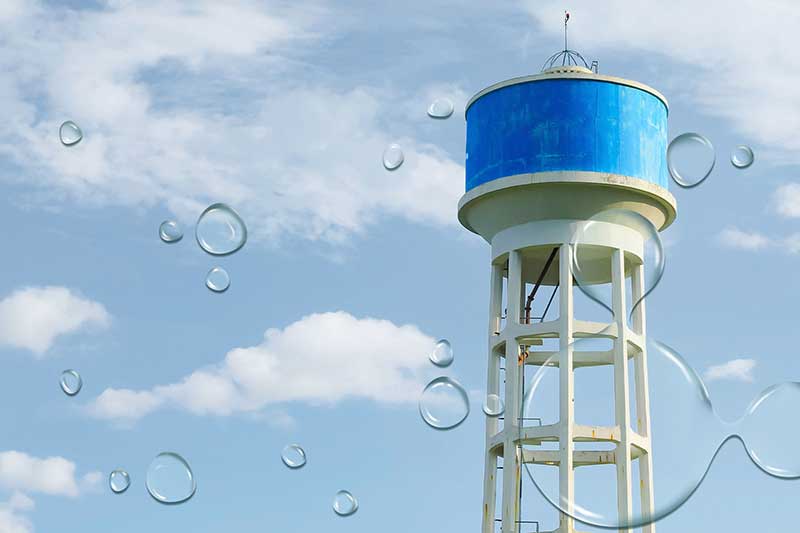
Elevated Water Tanks
Placing a tank above the points of use can allow gravity to provide pressure for certain applications.
However, the available pressure depends on the elevation difference.
Where higher pressure is needed, a booster pump can be installed.
Booster Pumping
Booster pumps can improve pressure after storage.
They can be useful for:
- Multi-storey buildings
- Apartments
- Hotels
- Schools
- Commercial premises
- Irrigation
The pump should be sized for the required pressure and flow.
Water Filtration for Borehole Systems
Filtration is not identical for every borehole.
Some systems may require basic sediment removal.
Others may need treatment for specific chemical or physical parameters.
Potential treatment systems include:
- Sediment filters
- Carbon filters
- Iron-removal systems
- Manganese treatment
- Softeners
- Disinfection
- Membrane systems
Laboratory analysis should guide the selection.
Water Softening
Hard water can cause scale on:
- Pipes
- Taps
- Showers
- Water heaters
- Appliances
- Irrigation equipment
If testing confirms excessive hardness and treatment is necessary, a suitable softening system can be considered.
Iron and Manganese Treatment
Some groundwater sources can contain elevated iron or manganese.
Possible effects include:
- Staining
- Taste changes
- Deposits
- Discoloration
Treatment technology should be selected according to the measured concentrations.
Borehole Automation
Modern water systems can be automated.
Automation can control:
- Borehole pumping
- Tank filling
- Booster pumps
- Irrigation
- Water levels
- Pressure
- Solar pumping
Level sensors can instruct the pump to start or stop according to tank conditions.
Automatic Tank Filling
An automatic control system can prevent the pump from operating unnecessarily once the storage tank is full.
This can reduce manual intervention.
For larger installations, automated controls can coordinate several pumps and water-storage points.
Irrigation Automation
Automated irrigation can use:
- Timers
- Solenoid valves
- Controllers
- Moisture sensors
- Tank-level information
This can make irrigation easier to manage.
Water-System Efficiency
A well-designed water system should not waste energy unnecessarily.
Efficiency can be improved by matching:
- Pump size
- Pipe diameter
- Storage
- Operating hours
- Solar generation
- Irrigation requirements
Oversized equipment can increase costs without providing useful benefits.
Why Pump Size Matters
A pump that is too small may fail to meet the required demand.
A pump that is too large may:
- Draw water faster than the borehole can sustainably provide
- Cause excessive drawdown
- Consume unnecessary energy
- Increase equipment costs
The correct pump is the one that fits the hydraulic requirements.
Pipework Design
The rising main and distribution pipes affect system performance.
Pipe selection should consider:
- Flow
- Pressure
- Distance
- Elevation
- Friction losses
- Application
Undersized pipework can create unnecessary pressure losses.
Borehole Headworks
The surface section of a completed borehole should be protected.
Headworks can provide:
- Secure access
- Pump connections
- Protection from contamination
- Electrical connections
- Maintenance access
- Appropriate drainage
The finished structure should protect the borehole from physical damage and potential contamination.
Protecting the Borehole
Potential contamination sources should be considered during planning.
These can include:
- Septic systems
- Waste areas
- Chemical storage
- Fuel
- Agricultural chemicals
- Surface runoff
- Flooding
The appropriate sanitary protection depends on the site.
Borehole Maintenance
A borehole should be treated as long-term infrastructure.
Maintenance can include:
- Pump performance checks
- Water-level monitoring
- Electrical inspection
- Control-panel checks
- Tank inspection
- Filter servicing
- Solar inspection
- Pipework checks
- Pressure checks
- Water-quality testing
The frequency depends on the intensity of use.
Warning Signs of Borehole Problems
Property owners should investigate when they notice:
- Lower water output
- Longer pumping periods
- Sand appearing in water
- Cloudiness
- Reduced pressure
- Pump tripping
- Unusual sounds
- Tank filling slowly
- Frequent controller faults
- Unexpected electricity consumption
Early diagnosis can prevent further damage.
Diagnosing Low Water Flow
Reduced flow can originate from several areas.
Possible causes include:
- Pump wear
- Pump blockage
- Pipe restrictions
- Electrical faults
- Borehole clogging
- Excessive drawdown
- Screen problems
- Changes in groundwater conditions
A complete assessment is preferable to immediately purchasing a replacement pump.
Diagnosing Pump Problems
A failed pump may be caused by:
- Motor failure
- Electrical faults
- Cable damage
- Dry running
- Sand abrasion
- Mechanical wear
- Control-panel problems
Identifying the cause is important because a replacement pump may fail again if the original problem remains.
Sand in Borehole Water
Sand can create serious problems for pumping systems.
It can cause:
- Pump abrasion
- Filter blockage
- Pipe deposits
- Reduced water quality
Excessive sand should be investigated to determine its source.
Borehole Rehabilitation
Older or poorly performing boreholes may sometimes be rehabilitated.
Depending on the condition, rehabilitation can involve:
- Cleaning
- Redevelopment
- Pump replacement
- Sediment removal
- Screen cleaning
- Inspection
- Water-quality testing
Not every borehole can be successfully rehabilitated, so assessment is important.
Existing Borehole Assessment
If a customer already has a borehole that is not performing properly, a new borehole is not necessarily the first solution.
The existing installation can be assessed to determine whether the problem lies with:
- Pump
- Electrical system
- Borehole construction
- Water level
- Pipework
- Filtration
- Control equipment
This can prevent unnecessary replacement.
Upgrading Older Boreholes
Existing systems may be improved through:
- Solar conversion
- Pump replacement
- Tank expansion
- Filtration
- Booster pumping
- Automation
- New controls
- Irrigation installation
- Electrical protection
The best upgrade depends on the condition of the existing system.
Solar Conversion for Existing Boreholes
A working borehole can potentially be adapted to solar pumping.
Before conversion, the pumping requirements should be established.
Important information includes:
- Pumping depth
- Water level
- Existing pump capacity
- Daily water demand
- Required flow
- Total head
- Storage
This information allows the solar system to be designed properly.
Water Security for Kitere Properties
A borehole can provide an additional level of independence from other water sources.
However, water security depends on more than the borehole itself.
A dependable arrangement may require:
Reliable groundwater source + suitable pump + adequate storage + appropriate energy + proper treatment + maintained distribution
If one component fails, the overall system can be affected.
Backup Power
Customers who require uninterrupted pumping can consider backup energy.
Depending on the project, this may involve:
- Solar
- Grid electricity
- Generator
- Hybrid systems
- Stored water
A property does not necessarily need every option.
The backup strategy should correspond to the importance of continuous water availability.
Solar and Grid Hybrid Pumping
A hybrid setup can allow a borehole pump to operate from more than one energy source.
Solar can provide daytime pumping while grid electricity can serve as an alternative when required.
This can be useful for businesses, institutions, and farms that require greater operational flexibility.
Water Management for Farms
Farm water planning should consider both supply and demand.
A good agricultural water project asks:
How much water is available?
and
How much water does the farm require?
The irrigation system should then be designed around the answer.
This prevents installing irrigation infrastructure that demands more water than the borehole can sustainably produce.
Borehole Water for Horticulture
Horticultural farms can use groundwater for:
- Vegetables
- Fruits
- Seedlings
- Nurseries
- Greenhouses
Drip irrigation and controlled pumping can help manage water use.
Boreholes for Landscaping
Residential compounds, hotels, schools, and commercial properties may use water for landscaping.
A dedicated irrigation system can separate garden demand from indoor domestic consumption.
Automated scheduling can help control watering.
Boreholes for Developing Properties
A new development is an opportunity to plan water infrastructure from the beginning.
Space can be reserved for:
- Borehole
- Tank
- Pump controls
- Solar panels
- Filtration
- Booster pump
- Distribution pipes
Planning early can reduce future disruption.
Boreholes for Property Developers in Kitere
Developers can consider groundwater development during the design stage.
This makes it easier to determine:
- Expected demand
- Number of buildings
- Storage requirements
- Pumping requirements
- Solar potential
- Water treatment
- Future expansion
Planning for Future Demand
A property may change over time.
A small residential development could become a larger compound.
A farm could expand its cultivated area.
A business could add new buildings.
The initial water infrastructure should therefore be planned with reasonable future needs in mind where practical.
Borehole Cost Considerations in Kitere
The price of a borehole project depends on the scope.
Important variables include:
- Drilling depth
- Ground conditions
- Drilling method
- Borehole diameter
- Casing requirements
- Screens
- Gravel pack
- Site accessibility
- Development
- Testing
- Pump specifications
- Pump depth
- Pipework
- Solar equipment
- Storage tanks
- Filtration
- Booster pumping
- Irrigation
- Automation
This is why a site-specific quotation is more meaningful than one fixed figure for every customer.
The Cost of the Complete Water System
Customers should also distinguish between the cost of drilling and the cost of the finished water system.
Drilling is only one part.
The completed installation may also include:
- Pump
- Electrical equipment
- Solar system
- Tank
- Pipework
- Treatment
- Booster pump
- Irrigation
- Controls
A project should therefore be budgeted as a complete system.
Why Proper Equipment Selection Matters
Selecting equipment based solely on the cheapest purchase price can create long-term problems.
The equipment needs to suit:
- Water quality
- Flow requirements
- Pressure
- Pumping depth
- Operating hours
- Power source
- Maintenance conditions
Proper selection can improve reliability and reduce avoidable operating problems.
Borehole Drilling for Different Types of Customers
Homeowners
Domestic water supply and gardening.
Farmers
Irrigation, livestock, and agricultural operations.
Schools
Sanitation, kitchens, cleaning, and general use.
Hotels
Guest facilities, laundry, kitchens, and landscaping.
Businesses
Commercial and operational water needs.
Developers
Multiple buildings and future expansion.
Institutions
High-reliability water requirements.
Each category needs a different design approach.
Why Pro-Logic Technologies Can Help
Pro-Logic Technologies can approach the water project as a connected technical system.
Instead of stopping after drilling, customers can discuss the additional infrastructure required to make the water source useful.
This can include:
- Groundwater development
- Pump installation
- Solar pumping
- Electrical systems
- Storage
- Filtration
- Pressure boosting
- Irrigation
- Automation
- Maintenance
The result is a more coordinated approach to the project.
From Underground Water to the Tap
The complete journey of water can be visualized as:
Groundwater
↓
Borehole
↓
Submersible Pump
↓
Rising Main
↓
Storage Tank
↓
Treatment
↓
Booster Pump
↓
Distribution Network
↓
House / Farm / Business / Institution
Each stage contributes to the performance of the final system.
Borehole Drilling Is an Investment
A borehole is not a temporary purchase.
It is infrastructure that may serve the property for many years.
That makes quality planning particularly important.
The project should consider:
- Groundwater
- Construction
- Pumping
- Electricity
- Solar
- Storage
- Treatment
- Distribution
- Maintenance
Responsible Groundwater Use
A borehole should be operated responsibly.
Efficient use includes:
- Avoiding unnecessary pumping
- Repairing leaks
- Monitoring water levels
- Using efficient irrigation
- Maintaining pumps
- Maintaining filters
- Checking water quality
Sustainable pumping is important for long-term performance.
Borehole Documentation
Property owners should retain technical records after installation.
Useful records include:
- Borehole depth
- Casing details
- Screen intervals
- Geological information
- Pump details
- Pump installation depth
- Pump-test results
- Water-quality results
- Electrical specifications
- Maintenance records
These documents can be valuable during future repairs and upgrades.
Why Maintenance Records Matter
If a pump fails several years after installation, knowing its original specifications can make replacement easier.
Similarly, historical water-level and water-quality information can help identify changes in performance.
Good documentation is therefore part of good asset management.
Borehole Services for Kitere Farmers
Farmers planning groundwater development should establish their irrigation objectives before purchasing equipment.
A farm may need:
- Borehole
- Solar pump
- Storage
- Filtration
- Pressure pump
- Mainline
- Drip system
- Irrigation controls
The system should be sized according to the actual agricultural operation.
Borehole Services for Kitere Homes
A household water system can be designed around domestic consumption.
The installation may include:
- Borehole
- Submersible pump
- Storage tank
- Filtration
- Booster pump
- Plumbing
Where solar is preferred, the pump can be integrated into a solar pumping system.
Borehole Services for Kitere Businesses
Commercial users can discuss a system based on:
- Daily water consumption
- Peak usage
- Storage
- Pressure
- Existing water supply
- Backup requirements
This can help ensure that the water system supports business operations.
Borehole Services for Institutions
Institutions should consider both normal consumption and peak demand.
Storage is particularly useful where water must remain available during temporary pumping interruptions.
Borehole Services for Livestock Projects
Livestock systems should be designed according to animal numbers and other farm water requirements.
Automated storage can help maintain supply.
Borehole Services for Greenhouses
Greenhouse systems can integrate groundwater with controlled irrigation and solar energy.
This can create a highly coordinated water-production system.
Borehole Services for Rental Developments
Rental compounds can use centralized storage and booster pumping.
Metering can also be incorporated where individual consumption needs to be monitored.
Common Questions About Kitere Boreholes
Can every property in Kitere have the same borehole depth?
No. Underground conditions vary between properties.
Can you promise a specific amount of water before drilling?
A responsible assessment can estimate groundwater potential, but the actual borehole yield must be established through drilling and testing.
Can borehole water be used for drinking?
Potentially, but appropriate laboratory testing should first establish its suitability and treatment requirements.
Can solar power run the borehole?
Yes, where the borehole and water demand are suitable for solar pumping.
Does solar pumping require batteries?
Not necessarily. Water can often be pumped into storage during daylight hours and used later.
How large should my tank be?
Tank size depends on water consumption, pumping rate, borehole yield, solar availability, and required reserve.
Can a borehole supply a farm?
Yes, if the borehole produces enough sustainable water for the agricultural demand.
Can I use borehole water for greenhouse irrigation?
Yes, subject to water quality and sufficient water availability.
Can an old borehole be restored?
Some older boreholes can be rehabilitated depending on their condition.
Can you replace a failed borehole pump?
Yes. The replacement should be selected after assessing the borehole and the original failure.
Can you add solar to an existing borehole?
Potentially, subject to pump and borehole assessment.
Can the system be automatic?
Yes. Automated controls can manage pumping, tank levels, pressure, and irrigation.
Getting Started With a Kitere Borehole Project
A good project starts by defining the intended water use.
A homeowner should know the approximate domestic demand.
A farmer should know the area requiring irrigation.
A school should estimate student and staff requirements.
A hotel should consider occupancy.
A developer should consider the number of buildings.
Once the demand is understood, the borehole and water infrastructure can be designed around it.
A Complete Approach to Water Infrastructure
The strength of a water project comes from how its components interact.
A high-quality borehole with an incorrectly selected pump can still perform poorly.
A good pump with insufficient storage can leave users without water.
A large tank supplied by an inadequate pump may never fill.
Excellent solar panels cannot compensate for an unsuitable pump.
Advanced filtration cannot solve a fundamentally inadequate water source.
This is why the whole system needs to be considered together.
Borehole Drilling in Kitere by Pro-Logic Technologies
Pro-Logic Technologies provides borehole and related technical services for customers planning groundwater projects in Kitere and surrounding areas.
We can assist with projects involving:
- New boreholes
- Borehole assessment
- Pump installation
- Solar pumping
- Water storage
- Water filtration
- Booster pumps
- Irrigation
- Electrical systems
- Automation
- Pump replacement
- Borehole rehabilitation
- Water-system upgrades
The objective is to help customers develop a practical system around their actual property and water requirements.
Your Water Project Starts With the Right Questions
Before drilling, ask:
What is the water going to be used for?
How much water will be required every day?
Is irrigation part of the project?
Will livestock depend on the system?
Will the property expand?
Is solar pumping desirable?
How much storage is required?
Will the water be used for drinking?
Will filtration be necessary?
Will pressure boosting be required?
These questions create the foundation for a properly designed water system.
Contact Pro-Logic Technologies
If you are planning borehole drilling in Kitere, Pro-Logic Technologies can help you develop a practical groundwater and water-supply project.
Our services can cover the wider system, including:
Borehole Drilling
Groundwater Assessment
Borehole Construction
Borehole Development
Pump Testing
Submersible Pump Installation
Solar Borehole Pumping
Water Storage
Water Filtration
Booster Pump Systems
Irrigation
Electrical Protection
Automation
Borehole Maintenance
Pump Replacement
Borehole Rehabilitation
Complete Water-System Upgrades
Whether you are developing a home, farm, greenhouse, livestock project, school, hotel, rental compound, commercial property, or institution, the right solution should be based on the characteristics of your site and the amount of water you actually need.
Pro-Logic Technologies
Phone: 0723 763 173
For Kitere borehole drilling and complete water-system solutions, contact Pro-Logic Technologies to discuss your project, proposed site, water requirements, pumping needs, solar options, storage, filtration, irrigation, or future expansion.