
Professional Borehole Drilling and Water System Installation in Barding 0723763173
Finding a dependable (call 0723763173) water source can make a major difference to a home, farm, institution, business or development project. In Barding, Siaya County, property owners looking for a private and reliable water supply may consider groundwater development through a properly investigated and constructed borehole.
A borehole is much more than a hole drilled into the ground.
A complete groundwater project involves planning the water requirement, evaluating the proposed site, investigating underground conditions, selecting an appropriate drilling point, carrying out drilling, constructing the borehole, developing it, testing its performance, analysing the water and then designing the pumping and distribution system.
For customers who want a complete installation, the work can continue beyond the borehole itself.
The finished system may include a submersible pump, electrical controls, solar pumping equipment, water storage tanks, filtration, treatment equipment, pressure boosting and plumbing throughout the property.
Pro-Logic Technologies Limited provides borehole-related technical services and water-system solutions for customers planning projects in Barding and other parts of Kenya.
Call 0723 763 173 to discuss your project requirements.
Borehole Drilling Services in Barding
Barding is located in Siaya County in western Kenya, in the wider Siaya area. Public geographic sources identify Barding as a locality/village in Siaya County, with Siaya town located nearby.
This local setting makes it important to treat every borehole project individually.
Groundwater conditions can vary from one property to another. The existence of a borehole somewhere nearby does not automatically establish the exact depth, yield or water quality that will be encountered on another parcel of land.
That is why professional borehole development should begin with investigation.
The objective is not simply to drill as deep as possible.
The objective is to develop a properly constructed water source that can serve the intended purpose while taking into account the geological conditions, available groundwater, pumping requirements, water quality and long-term operation.
Why People in Barding Consider Boreholes
A private borehole can be useful where a property needs an independent water source.
Different customers have different reasons for commissioning a borehole.
A homeowner may want water for daily domestic activities.
A farmer may require water for irrigation or livestock.
A school may need a dependable source for sanitation, kitchens and general operations.
A commercial property may require water for staff facilities, cleaning, landscaping or production.
A residential development may need a central water source serving several houses.
A health or institutional facility may require carefully planned water infrastructure with adequate storage and distribution.
The borehole should therefore be designed around the customer's actual objective.
Borehole Drilling for Homes in Barding
A domestic borehole can provide water for a residential compound where suitable groundwater is available.
Typical household uses include:
- Drinking
- Cooking
- Bathing
- Laundry
- Toilet flushing
- Cleaning
- Gardening
- Car washing
- Outdoor water points
The design should begin by estimating the household's water demand.
A small family and a large residential compound should not automatically receive identical pumping systems.
The pump, tank, pipes and treatment equipment should correspond to the expected use.
Borehole Drilling for Farms in Barding
Agriculture can create substantial demand for water.
A farm may need water for:
- Vegetable production
- Fruit trees
- Nurseries
- Greenhouses
- Livestock
- Cleaning
- Domestic use
- Irrigation
Before designing an agricultural borehole, the expected irrigation requirement should be calculated.
The available borehole yield must then be compared with that demand.
Where irrigation requirements are large, storage can be particularly useful.
Instead of attempting to pump directly into the irrigation network at all times, the borehole can fill storage and the stored water can subsequently be distributed according to the irrigation schedule.
Borehole Water for Livestock
Livestock water systems can be connected to borehole infrastructure.
A typical arrangement can include:
Borehole → Pump → Storage Tank → Pipeline → Trough
Float valves can be used to control water entering troughs.
This arrangement can reduce unnecessary overflow and help maintain a consistent supply.
For larger farms, several watering points can be supplied from a central tank.
Borehole Drilling for Schools in Barding
Schools have distinctive water requirements.
Water is needed not only for drinking but also for:
- Sanitation
- Toilets
- Kitchens
- Cleaning
- Laundry
- Handwashing
- Gardening
- General maintenance
Barding has educational institutions, including Barding Secondary School, making institutional water planning one potential application for properly designed groundwater infrastructure.
A school borehole should be designed around the actual population and facilities rather than an assumed household demand.
Storage capacity is also important because school water consumption can be concentrated during particular periods of the day.
Borehole Drilling for Commercial Properties
Businesses may need water for many different purposes.
Examples include:
- Restaurants
- Guest facilities
- Shops
- Workshops
- Offices
- Rental properties
- Car-washing facilities
- Agricultural businesses
- Processing facilities
The water system should be designed according to the business operation.
A restaurant, for example, has different requirements from an irrigation farm.
A commercial development with multiple tenants may need a distribution network with individual meters.
Borehole Drilling for Residential Estates
A residential estate can use a centralized borehole system.
A typical arrangement may be:
Borehole → Pump → Storage → Treatment → Distribution Network → Individual Houses
The design should consider:
- Number of houses
- Occupancy
- Peak demand
- Storage capacity
- Distribution distance
- Pressure
- Future expansion
If more houses are expected to be added later, the initial infrastructure should be planned with expansion in mind.
Starting a Borehole Project in Barding
The first conversation should focus on the project rather than immediately discussing drilling depth.
Useful information includes:
- Property location
- Intended use
- Approximate number of users
- Existing water sources
- Required water quantity
- Availability of electricity
- Possibility of solar pumping
- Location of storage tanks
- Irrigation requirements
- Property access
This information helps determine what type of project is appropriate.
Site Assessment Before Drilling
The proposed drilling site should be evaluated before mobilizing drilling equipment.
Site assessment can consider:
- Property boundaries
- Existing buildings
- Roads
- Drainage
- Septic systems
- Latrines
- Waste areas
- Electrical infrastructure
- Access for drilling equipment
- Space for the rig
- Future construction plans
The borehole location should also make sense for the eventual water distribution system.
For example, placing the borehole at a technically suitable location but extremely far from the intended storage tank may increase pipework and installation costs.
Groundwater Investigation
Groundwater exists underground in geological formations that can store and transmit water.
However, underground formations are not identical.
Some formations can transmit water efficiently.
Others may contain water but provide relatively low flow.
Some formations can be highly fractured.
Others can be comparatively impermeable.
Groundwater investigation therefore attempts to understand the subsurface before drilling.
Hydrogeological Survey for Barding Boreholes
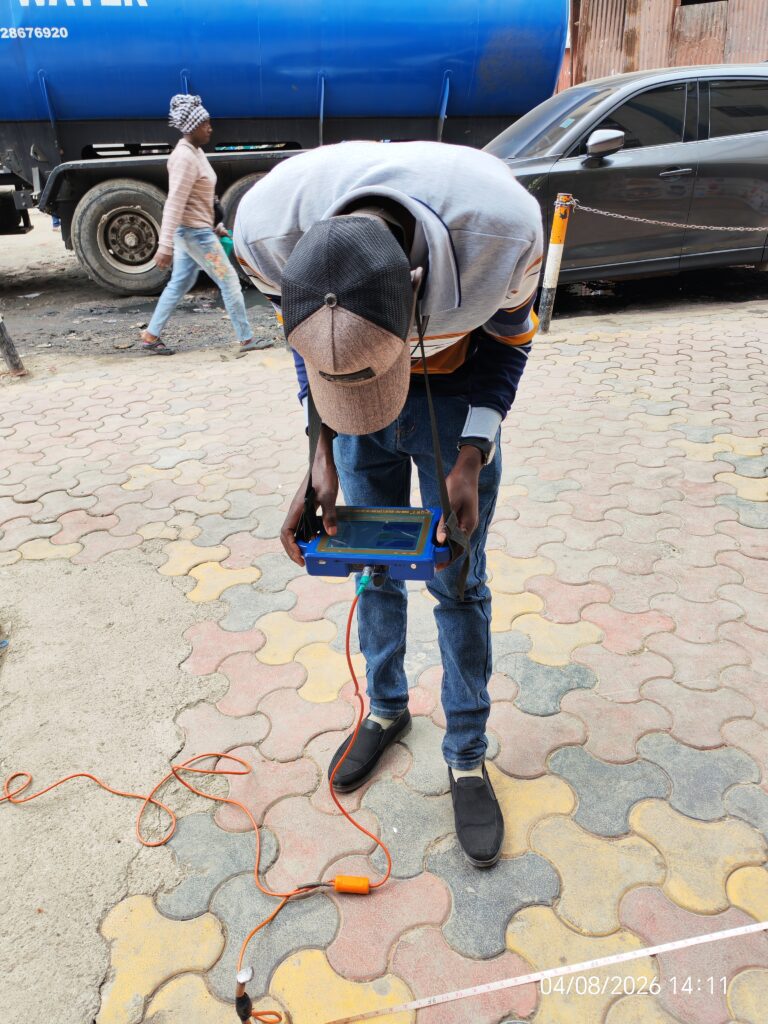
A hydrogeological assessment can use available information to help identify an appropriate drilling target.
The assessment can consider:
- Regional geology
- Existing borehole information
- Topography
- Surface drainage
- Geological structures
- Groundwater indicators
- Geophysical results
The purpose is to improve the likelihood of selecting a productive site.
It is important to understand that a survey is not a guarantee of a specific borehole yield.
Actual conditions are confirmed during drilling.
Geophysical Investigation
Geophysical techniques can be used to investigate subsurface electrical properties.
Electrical resistivity methods are commonly used in groundwater exploration.
Measurements collected in the field can be interpreted to identify subsurface zones that may be associated with different geological materials or groundwater conditions.
The interpretation should be carried out carefully.
A geophysical anomaly is not the same thing as a guaranteed aquifer.
It is one piece of evidence used in selecting a drilling target.
Selecting the Drilling Point
Once the investigation is complete, a recommended drilling point can be identified.
The selected point should balance groundwater prospects with practical considerations.
For example:
- It should be accessible.
- It should allow safe rig positioning.
- It should be appropriately separated from contamination sources.
- It should allow future maintenance.
- It should have a practical route for the rising main.
- It should work with the planned storage system.
The drilling point should therefore be considered as part of the entire water project.
Borehole Drilling Equipment
Drilling requires specialized equipment capable of penetrating the geological formations encountered at the site.
The appropriate drilling technique depends on ground conditions.
Factors that can influence drilling equipment and methodology include:
- Expected geology
- Borehole diameter
- Planned depth
- Ground stability
- Site accessibility
- Construction requirements
The drilling contractor should assess these factors before mobilization.
Mobilizing a Drilling Rig to Barding
Mobilization involves transporting the necessary equipment to the property.
Site access should be confirmed before the rig arrives.
The team may need to consider:
- Road conditions
- Gate width
- Turning space
- Overhead cables
- Slopes
- Soft ground
- Nearby structures
Good preparation reduces delays.
The Actual Borehole Drilling Process
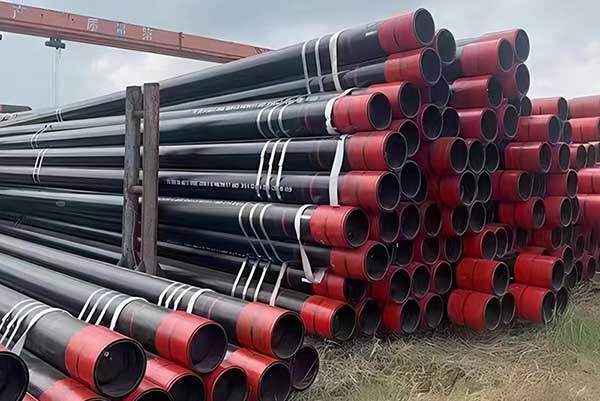
Once the drilling rig is positioned safely, drilling begins.
The drilling team advances through the subsurface while observing the formations encountered.
Different materials can affect drilling speed and behaviour.
Soft material may drill differently from consolidated rock.
Fractured zones can also behave differently from massive rock.
The drilling record should therefore be updated as the operation progresses.
Geological Logging During Drilling
Geological logging records information about the formations encountered.
The record may include observations relating to:
- Soil
- Clay
- Sand
- Gravel
- Weathered rock
- Fractured rock
- Hard rock
- Water-bearing zones
This information contributes to decisions about borehole construction.
Water Strikes During Drilling
A water strike refers to encountering a water-bearing zone during drilling.
Not every water strike produces the same amount of water.
One zone may produce substantial flow while another may produce limited quantities.
This is why the presence of water alone is not enough to establish the final borehole yield.
Pumping tests provide better information about performance.
Borehole Depth
Customers frequently ask:
“How deep will the borehole be in Barding?”
There is no responsible single answer that applies to every property.
The final depth depends on the actual subsurface conditions encountered during drilling.
A nearby borehole may provide useful background information, but it should not be used as a guarantee.
The technical objective is to reach a suitable groundwater-bearing formation and construct the borehole appropriately.
Borehole Diameter
Borehole diameter is part of the construction design.
It should be compatible with:
- Casing
- Screens
- Pump dimensions
- Gravel pack
- Geological conditions
- Future maintenance requirements
The drilling diameter is therefore selected as part of the technical design.
Borehole Casing
Casing supports the borehole walls and helps protect the completed structure.
It can be especially important in unstable formations.
Casing materials and dimensions should be selected according to the borehole design.
Incorrect casing can cause long-term problems.
Borehole Screens
Screens allow groundwater to enter the borehole while helping retain formation material.
Screen placement is not arbitrary.
It should correspond with the zones identified during drilling and geological interpretation.
Poor screen placement can affect borehole performance.
Gravel Pack
Where applicable, a gravel pack can be installed around the screened section.
The gravel pack can assist with controlling the movement of formation material into the borehole.
The design should correspond to the geological formation and screen characteristics.
Borehole Sealing
Appropriate sealing helps protect the borehole from unwanted surface water entry.
This is particularly important around the upper section of the borehole.
The construction should reduce the possibility of contamination entering from the surface.
Borehole Development
After construction, the borehole normally needs development.
Development helps remove drilling residues and fine particles and can improve hydraulic connection between the borehole and surrounding formation.
Methods vary according to the borehole construction and geological conditions.
The objective is to leave the borehole in a condition suitable for testing.
Why Borehole Development Matters
A newly drilled borehole may contain:
- Fine sediment
- Drilling fluid
- Loose particles
- Formation debris
If these materials are not adequately removed, they can affect:
- Water clarity
- Pump performance
- Screen efficiency
- Water quality
- Long-term operation
Development is therefore an important stage rather than an optional cosmetic procedure.
Borehole Pump Testing in Barding
Once the borehole has been constructed and developed, pumping tests can be carried out.
The purpose is to determine how the borehole responds to pumping.
Information can include:
- Pumping rate
- Static water level
- Dynamic water level
- Drawdown
- Recovery
- Pumping duration
This information is important when selecting the permanent pump.
Static Water Level
The static water level is the groundwater level when the borehole is not being pumped and has had sufficient time to recover.
It is an important reference measurement.
Dynamic Water Level
The dynamic water level is measured while the borehole is being pumped.
It changes according to:
- Pumping rate
- Aquifer response
- Pumping duration
The difference between static and pumping levels contributes to understanding drawdown.
Drawdown
Drawdown is the reduction in water level caused by pumping.
Understanding drawdown helps determine how aggressively the borehole can be operated.
The pump should not simply be selected according to the maximum amount of water that appears during drilling.
Sustainable operation matters.
Borehole Recovery
When pumping stops, groundwater levels can recover.
The recovery behaviour provides useful information about the borehole and surrounding aquifer.
Recording recovery is therefore part of understanding borehole performance.
Sustainable Borehole Yield
A borehole's sustainable yield is not necessarily the same as its highest observed flow.
The long-term operating rate should consider the pumping-test results and groundwater conditions.
Over-pumping can create unnecessary stress on the water source.
Water Quality Testing in Barding
A borehole producing water does not automatically mean the water is suitable for every purpose.
Water should be tested.
The required analysis depends on intended use.
Possible parameters can include:
- Physical characteristics
- Chemical characteristics
- Microbiological characteristics
Where drinking water is intended, appropriate testing is especially important.
Why Clear Water Is Not Enough
Water can appear clear and still contain dissolved substances or microorganisms that cannot be identified visually.
For this reason, laboratory analysis should be relied upon rather than appearance alone.
Borehole Water Treatment
Treatment should follow the laboratory results.
Possible treatment requirements may include:
- Sediment filtration
- Activated carbon
- Iron removal
- Water softening
- Disinfection
- Specialized filtration
- Reverse osmosis
The customer should not install an expensive treatment system simply because it is commonly advertised.
The treatment should solve an identified water-quality problem.
Borehole Pump Installation
After the borehole performance is understood, the pump can be selected.
The pump must match the system.
Important factors include:
- Borehole depth
- Water level
- Required flow
- Total head
- Pipe distance
- Storage height
- Electrical supply
- Solar availability
Submersible Borehole Pumps
Submersible pumps are designed to operate below the water level.
They push water upward through the rising main.
A properly selected pump should deliver the required flow without unnecessarily overloading the borehole or consuming excessive energy.
Selecting the Right Pump
The biggest pump is not automatically the best pump.
Oversizing can cause:
- Excessive drawdown
- Higher energy consumption
- Unnecessary wear
- Poor operating efficiency
Undersizing can result in:
- Insufficient flow
- Long pumping periods
- Failure to fill storage adequately
Pump selection should therefore be based on calculations and test data.
Borehole Rising Main
The rising main is the pipe that carries water from the submersible pump to the surface.
Its diameter and pressure rating should be appropriate for the system.
The pipe must also withstand the operating conditions at the installation depth.
Borehole Pump Cable
Electrical cable connects the surface control system to the submersible pump.
Cable selection should consider:
- Pump current
- Voltage
- Cable length
- Installation conditions
- Voltage drop
The cable must be installed and protected appropriately.
Borehole Pump Control Panel
The control panel provides a controlled interface between the power source and the pump.
It can incorporate appropriate protection and control equipment.
Depending on the installation, the system may include:
- Circuit protection
- Overload protection
- Level controls
- Pump protection
- Manual/automatic controls
- Fault indicators
Borehole Solar Pumping in Barding
Solar pumping can be an attractive option where grid electricity is unavailable, unreliable or expensive to operate.
A solar pumping installation can include:
- Solar panels
- Pump
- Solar pump controller
- Electrical protection
- Mounting structures
- Cables
- Storage tank
The system is normally designed around the borehole's pumping requirements.
Why Solar Borehole Systems Need Proper Design
Installing solar panels is not enough.
The system must be matched to:
- Pump power
- Required daily water volume
- Pumping head
- Available sunlight
- Storage requirements
- Seasonal conditions
A properly designed system uses the available solar energy effectively.
Solar Pumping With Water Storage
Storage is particularly valuable for solar pumping.
Instead of requiring the pump to operate exactly when water is needed, the system can pump during available solar hours and store the water.
The stored water can then be used later.
This can simplify operation and reduce dependence on batteries in suitable installations.
Solar Pump Controller
The controller manages the relationship between the solar array and the pump.
Depending on the system, it can provide:
- Motor control
- Dry-run protection
- Fault monitoring
- Pump speed control
- System status information
The correct controller must be compatible with the pump and solar configuration.
Solar Panel Sizing
Solar panels should be sized according to the pump and daily water requirements.
A system that is too small may struggle to operate the pump adequately.
A system that is unnecessarily oversized can increase capital cost.
The design should therefore be calculated.
Borehole Water Storage Tanks
Water storage provides a buffer between pumping and consumption.
Tank size depends on:
- Daily demand
- Borehole yield
- Pumping hours
- Irrigation requirements
- Number of users
- Desired reserve
The tank should not be selected simply because it is commonly used on other projects.
Elevated Water Tanks
An elevated tank can provide gravity pressure.
The effectiveness of gravity distribution depends on the height difference between the tank and outlets.
If the elevation is insufficient, a booster pump may be required.
Underground and Ground-Level Tanks
Ground-level tanks can also be used.
The choice depends on:
- Property layout
- Structural considerations
- Pumping arrangement
- Pressure requirements
- Available space
Borehole Plumbing in Barding
Plumbing is the stage that connects the water source to the actual points of use.
A complete installation may follow this sequence:
Borehole → Submersible Pump → Rising Main → Storage Tank → Treatment → Pressure System → Distribution Pipes → Water Outlets
Each component needs to be considered as part of one system.
Plumbing From Borehole to Storage Tank
The pipeline between the borehole and storage tank should be designed around:
- Pump flow
- Distance
- Elevation
- Pipe diameter
- Pressure
- Valve arrangement
Long pipe runs can create significant friction losses.
Plumbing From Tank to House
Water can flow from the tank to the house by gravity where sufficient elevation exists.
Alternatively, a pressure pump can be installed.
The correct approach depends on the property.
Domestic Water Distribution
Domestic plumbing may supply:
- Kitchen
- Bathroom
- Shower
- Toilet
- Laundry
- Outdoor taps
- Garden
The distribution system should be designed to maintain adequate flow at the required points.
Plumbing for Multiple Houses
Where several houses share one borehole, the distribution system can be designed as a network.
Possible features include:
- Main distribution line
- Branch lines
- Isolation valves
- Individual meters
- Pressure management
This allows easier maintenance and monitoring.
Borehole Plumbing for Irrigation
Irrigation plumbing can be designed around different irrigation technologies.
These include:
- Drip irrigation
- Sprinklers
- Hose systems
- Open distribution
- Automated irrigation
Each has different flow and pressure requirements.
Drip Irrigation From a Borehole
Drip irrigation delivers water directly to the crop root zone.
It can be connected to a borehole system through appropriate filtration and pressure control.
The system should be designed to protect emitters from clogging.
Sprinkler Irrigation
Sprinklers distribute water over an area.
The required pump pressure and flow should be established before selecting the equipment.
Pipe diameter and zone design also affect performance.
Plumbing for Livestock Troughs
Livestock troughs can be supplied from elevated tanks.
A float valve can regulate filling.
This can reduce continuous overflow.
Borehole Plumbing for Schools
A school distribution system can supply:
- Toilets
- Washrooms
- Kitchens
- Drinking points
- Handwashing stations
- Cleaning areas
Storage should be sufficient for the expected school population.
Borehole Plumbing for Hotels
Hotels can require high peak demand.
The system may require:
- Large storage
- Booster pumps
- Pressure management
- Treatment
- Hot-water integration
The design should consider occupancy patterns.
Borehole Plumbing for Farms
Farm plumbing can be separated into zones.
For example:
Zone 1 – Domestic
Zone 2 – Livestock
Zone 3 – Vegetable irrigation
Zone 4 – Fruit trees
Zone 5 – Greenhouse
This arrangement allows better control of water consumption.
Water Pressure Management
Pressure is affected by:
- Tank height
- Pump pressure
- Elevation
- Pipe diameter
- Pipe length
- Fittings
- Flow rate
A properly designed system balances these factors.
Booster Pumps
Booster pumps can increase pressure where gravity supply is inadequate.
They may be useful in:
- Multi-storey buildings
- Large compounds
- Long-distance pipe networks
- Commercial properties
Pressure Tanks
Pressure tanks can be used with booster systems.
They help manage pressure fluctuations and reduce unnecessary pump cycling in suitable systems.
Valves in Borehole Plumbing
Valves are essential for controlling the water network.
They allow sections to be isolated for maintenance.
A properly planned plumbing system should have accessible isolation points.
Non-Return Valves
A non-return valve helps prevent unwanted reverse flow.
Its location depends on the system design.
Overflow and Drainage
Storage tanks should have appropriate overflow arrangements.
Overflow water should be directed safely.
Drainage should also be considered during tank installation.
Water Meters
Water meters can be installed where consumption needs to be monitored.
This is useful for:
- Rental properties
- Shared boreholes
- Commercial buildings
- Irrigation
- Institutional systems
Leak Detection
Leaks can cause a borehole pump to operate longer than necessary.
Signs can include:
- Unexpected tank-level changes
- Reduced pressure
- Wet ground
- Higher electricity consumption
- Increased pump runtime
Routine inspection can help identify these problems.
Borehole Maintenance in Barding
A borehole should not be forgotten after installation.
Routine maintenance can include:
- Pump checks
- Electrical inspection
- Water-level measurements
- Flow monitoring
- Tank inspection
- Plumbing checks
- Filter replacement
- Water-quality testing
The maintenance interval depends on the system.
Maintaining the Submersible Pump
Pump maintenance can involve checking operating performance rather than unnecessarily removing the pump.
Indicators of a developing problem can include:
- Reduced flow
- Increased power consumption
- Abnormal sounds
- Frequent tripping
- Longer pumping times
Early investigation can prevent major failures.
Borehole Rehabilitation
A borehole can sometimes experience reduced performance after years of operation.
Possible causes include:
- Mineral deposits
- Biofouling
- Screen blockage
- Sediment
- Pump deterioration
- Changes in groundwater conditions
Rehabilitation begins with diagnosis.
Borehole Pump Replacement
When a pump fails, replacing it with an identical model is not always the correct solution.
The new pump should be checked against the current borehole performance and water requirements.
The original system may have changed.
Borehole Water-Level Monitoring
Regular measurements can reveal changes in groundwater behaviour.
Monitoring can help identify:
- Seasonal variation
- Excessive pumping
- Reduced recharge
- Pumping problems
Long-term records are particularly useful.
Borehole Flow Monitoring
A flow meter can record production.
If flow gradually declines, investigation can determine whether the problem is caused by:
- Pump wear
- Blockage
- Aquifer response
- Plumbing restrictions
Common Borehole Problems
Customers may encounter:
No water
Possible causes include pump failure, electrical faults or low water level.
Low water pressure
Possible causes include pump performance, pipe restrictions or booster problems.
Dirty water
Possible causes include insufficient development, sediment or changes in groundwater conditions.
Frequent pump trips
Possible causes include electrical faults, overload or pump problems.
Tank not filling
Possible causes include pump, control, pipe or water-level problems.
Each problem requires diagnosis rather than guesswork.
What Happens if the Borehole Has Low Yield?
A low-yield borehole should first be investigated.
The borehole may need:
- Further development
- Pump adjustment
- Rehabilitation
- Flow testing
- Water-level monitoring
In some situations, the geological conditions may simply limit the available yield.
The customer should receive an honest technical assessment rather than an unrealistic promise.
What Happens if the Water Has an Unusual Taste?
The water should be tested.
Taste alone cannot establish the cause.
Laboratory analysis can identify relevant chemical or microbiological parameters.
Treatment can then be designed around the results.
What Happens if Borehole Water Is Muddy?
Possible causes include:
- Fine formation material
- Inadequate development
- Pumping too aggressively
- Borehole construction issues
- Disturbance within the borehole
The correct response depends on diagnosis.
What Happens if the Borehole Pump Stops?
The electrical supply should be checked first.
Then the control system, cable, pump and water level can be investigated.
The pump should not automatically be pulled out before simpler causes are eliminated.
Borehole Safety
Borehole sites contain mechanical, electrical and physical hazards.
During drilling:
- Keep unauthorized people away.
- Do not approach moving machinery.
- Keep children away from the site.
- Follow drilling-team instructions.
- Maintain safe access around equipment.
After completion, the borehole head should be protected.
Protecting the Borehole From Contamination
The surrounding area should be kept clean.
Potential contamination sources should be appropriately managed.
These can include:
- Waste
- Fuel
- Chemicals
- Sewage
- Animal waste
Good site management protects the water source.
Borehole Location and Septic Systems
The borehole and wastewater systems should be planned with contamination risks in mind.
The appropriate separation distance should follow applicable technical and regulatory requirements.
Borehole Documentation
At completion, customers should keep records of the project.
Important information may include:
- Borehole coordinates
- Drilling depth
- Geological log
- Casing details
- Screen details
- Development information
- Pumping-test results
- Water-quality report
- Pump specifications
- Electrical details
- Plumbing layout
These documents become extremely valuable years later.
Borehole Installation for New Construction
If a customer is constructing a house, borehole planning should happen early.
The borehole position can then be coordinated with:
- Building foundation
- Tank
- Pump room
- Plumbing routes
- Electrical infrastructure
- Drainage
- Future landscaping
Early planning avoids expensive modifications.
Borehole Planning for Property Developers
Developers should consider future occupancy.
If several units are planned, water demand should be estimated for the entire development.
Storage and distribution should be designed accordingly.
Borehole for a Rental Property
Rental properties can benefit from centralized water storage and metering.
The landlord can monitor consumption and maintenance requirements.
Individual units may have separate water meters where appropriate.
Borehole for a Guesthouse
Guesthouses need reliable water for:
- Bathrooms
- Kitchens
- Laundry
- Cleaning
- Landscaping
Storage should account for periods of high occupancy.
Borehole for a Restaurant
A restaurant can use groundwater for:
- Cooking
- Cleaning
- Washrooms
- Food preparation
- General operations
Where water is used for consumption or food preparation, appropriate water-quality requirements should be addressed.
Borehole for a Car Wash
A car-washing operation can consume significant volumes of water.
The system should be designed around:
- Daily vehicles
- Washing method
- Recycling possibilities
- Storage
- Pumping capacity
Borehole for Construction Sites
Construction projects can require water for:
- Concrete work
- Masonry
- Dust suppression
- Cleaning
- Worker facilities
Temporary water systems can sometimes be installed during construction and later integrated into the permanent property system.
Borehole for Agricultural Processing
Processing facilities may have specialized water requirements.
The water-quality specification should be established before designing the system.
Borehole and Water Conservation
Developing groundwater should go together with responsible water use.
Conservation measures can include:
- Leak repair
- Efficient fixtures
- Controlled irrigation
- Storage
- Metering
- Automated controls
Reducing waste allows available water to serve more needs.
Borehole and Rainwater Harvesting
A borehole does not necessarily have to be the property's only water source.
Rainwater harvesting can supplement groundwater for appropriate non-potable uses.
The two systems can be integrated carefully.
Borehole and Municipal Water
Where municipal water is available, a borehole can potentially serve as an additional source.
The plumbing should prevent inappropriate cross-connection between different water supplies.
Designing a Complete Water System
The most effective approach is to treat the project as a single system.
Instead of asking only:
“How deep should the borehole be?”
the customer should consider:
Where should it be drilled?
How much water is required?
What is the borehole yield?
What is the water quality?
What pump is suitable?
How will the pump be powered?
Where will the water be stored?
How will pressure be maintained?
How will the water reach each outlet?
This approach produces a much more practical result.
Borehole Project Enquiry Process in Barding
Customers can begin by providing the following information:
1. Location
Share the general location of the property in Barding.
2. Purpose
Explain whether the water will be used for:
- Home
- Farm
- School
- Business
- Irrigation
- Livestock
- Estate
- Institution
3. Water Requirement
Provide an approximate number of users or intended irrigation area.
4. Existing Information
If there are nearby boreholes, previous surveys or geological reports, provide the available information.
5. Energy Source
Indicate whether the property has:
- Electricity
- Solar
- Generator
- No existing power
6. Storage
Mention whether a tank already exists.
7. Plumbing
Explain whether you need only drilling or a complete water system.
8. Site Access
Describe the road and property access conditions.
This information allows the project to be assessed more efficiently.
Complete Borehole Package
Customers who require a full solution can consider combining:
- Groundwater investigation
- Borehole drilling
- Borehole construction
- Development
- Pump testing
- Water analysis
- Pump supply
- Pump installation
- Electrical controls
- Solar pumping
- Storage tanks
- Filtration
- Water treatment
- Pressure boosting
- Plumbing
- Irrigation
- Maintenance
The exact package should be based on the customer's requirements.
Why Professional Planning Matters
A borehole is a long-term infrastructure investment.
Mistakes made during the early stages can become expensive later.
For example, selecting the drilling point without considering the plumbing route may increase installation costs.
Selecting a pump without considering the pumping-test results can lead to poor performance.
Installing treatment without water analysis can result in unnecessary expenditure.
A complete design avoids these problems.
Borehole Drilling and Plumbing Company Serving Barding
Pro-Logic Technologies Limited can be contacted by customers seeking borehole and related technical water-system solutions.
The company can discuss requirements covering groundwater development, pumping systems, solar solutions, water storage and plumbing.
For project enquiries:
Pro-Logic Technologies Limited
Phone: 0723 763 173
When contacting the company, provide the property location, intended water use and the type of system required.
Frequently Asked Questions About Borehole Drilling in Barding
How much does borehole drilling cost in Barding?
There is no single price that applies to every property.
The final cost depends on the investigation, drilling conditions, borehole construction, depth, casing, testing, pump, power system, storage, treatment and plumbing requirements.
A quotation should therefore be prepared around the actual project scope.
How deep is a borehole in Barding?
Depth varies from site to site.
It should not be guaranteed before investigation and drilling.
The geological conditions encountered determine the eventual construction depth.
Can you guarantee water?
A responsible contractor should not guarantee a specific groundwater yield without appropriate site investigation and testing.
Groundwater is a subsurface resource and conditions can vary.
Do I need a groundwater survey?
A professional investigation can improve the selection of the drilling point and reduce unnecessary drilling risk.
Can the borehole run on solar?
Yes, solar pumping can be designed where the borehole and water demand are suitable for a solar-powered system.
How large should the water tank be?
Tank capacity depends on daily demand, borehole yield, pumping schedule and desired reserve.
Can borehole water be used for drinking?
Potentially, but the water should be tested and treated as necessary before being used as drinking water.
Can one borehole serve several houses?
Yes, provided the borehole yield, storage and distribution network are adequate for the combined demand.
Can a borehole supply irrigation?
Yes, where the borehole provides an adequate sustainable yield for the irrigation requirement.
Can the same borehole supply the house and farm?
It can be possible, but the combined demand should be calculated and the system designed accordingly.
What if the borehole produces less water than expected?
The borehole should be tested and diagnosed. Development, pump adjustment or rehabilitation may sometimes improve performance, while some low-yield conditions may reflect the natural characteristics of the aquifer.
Does a borehole need a pump?
Most boreholes require a suitable pumping system to lift groundwater to the surface and distribute it.
Can the pump fill a tank automatically?
Yes. Level sensors or float controls can be incorporated into an appropriately designed system.
Can I use both solar and electricity?
A hybrid arrangement can be designed where appropriate.
How often should borehole water be tested?
The appropriate testing frequency depends on the use, water-quality history and applicable requirements.
What maintenance does a borehole require?
Maintenance can include pump monitoring, electrical checks, water-level measurements, flow monitoring, tank inspection, plumbing checks and water-quality testing.
Can an old borehole be repaired?
Some boreholes can be rehabilitated or repaired depending on the cause of deterioration.
The borehole should be assessed before deciding on the repair method.
Can you install plumbing after drilling?
Yes. Plumbing can be designed and installed as part of the complete water system.
Can you install irrigation?
Irrigation can be integrated with the borehole system where the available water supply is appropriate for the required irrigation demand.
What information should I provide when requesting a quotation?
Provide:
- Location
- Intended use
- Approximate number of users
- Irrigation requirements
- Existing water source
- Electricity availability
- Solar preference
- Storage requirements
- Plumbing requirements
This makes the initial assessment more useful.
Borehole Drilling in Barding for Reliable Water Infrastructure
A properly planned borehole can become an important part of a property's water infrastructure.
The process begins before drilling.
It starts with understanding the water requirement and investigating the proposed location.
Drilling then reveals the actual subsurface conditions.
Borehole construction creates the physical water source.
Development prepares the borehole for testing.
Pumping tests establish its performance.
Water analysis determines the quality.
Pump selection converts the borehole into a functioning water source.
Storage provides a reserve.
Solar or electrical equipment provides the energy.
Plumbing distributes the water.
Maintenance keeps the system functioning.
That is the difference between simply drilling a hole and developing a complete groundwater supply system.
Get a Borehole Project Assessment in Barding
If you are planning a borehole in Barding, Siaya County, the best starting point is a discussion about the property and intended water use.
Whether you are planning a family home, agricultural project, school, rental development, commercial property, livestock project or irrigation installation, the water system should be designed around your actual requirements.
You may require only a borehole.
Or you may need a complete installation incorporating:
Groundwater survey + drilling + casing + development + pumping test + water analysis + pump + solar power + storage + treatment + plumbing + irrigation.
The scope can be adjusted to the project.
For borehole drilling and water-system enquiries in Barding and surrounding Siaya areas, contact:
PRO-LOGIC TECHNOLOGIES LIMITED
Phone: 0723 763 173
Ask about your borehole drilling, pumping, solar water system, storage, treatment and plumbing requirements.
Borehole Drilling in Barding – Complete Water Solutions
From the first site assessment to the final plumbing connection, every stage should contribute toward one objective: creating a practical, safe and maintainable water supply.
The right borehole is not defined only by depth.
It is defined by appropriate site selection, sound construction, tested performance, suitable pumping equipment, responsible water management and a distribution system that delivers water where it is actually needed.
For Barding property owners planning groundwater development, professional assessment provides the foundation for making informed decisions before major drilling and installation expenses are committed.
Pro-Logic Technologies Limited – Borehole Drilling, Pumping, Solar Water Systems and Plumbing Solutions.
0723 763 173