
Quick Borehole Drilling in Kano, Kisumu County
Looking for(call 0723763173) quick borehole drilling in Kano, Kisumu County? Pro-Logic Technologies Limited provides borehole and groundwater development solutions for homeowners, farmers, businesses, institutions, schools, property developers and organizations that need a dependable water source.
When customers say they need a borehole drilled quickly, the objective should not be to rush the technical work or skip important stages. A fast project should mean efficient planning, prompt site assessment, organized mobilization and professional execution while maintaining proper drilling and testing procedures.
Kano is part of the wider Kisumu groundwater environment, where groundwater conditions can vary according to geology, location and depth. Published groundwater information specifically identifies the Kano Plain as an area with groundwater potential, while other studies show that local geological conditions can differ considerably.
For this reason, a quick borehole project should still begin with proper assessment.
Pro-Logic Technologies Limited
Phone: 0723 763 173
Quick Borehole Drilling in Kano
A borehole project can become unnecessarily slow when planning is poorly coordinated.
Delays can occur because of:
- Incomplete site information
- Difficult access
- Delayed approvals
- Poor drilling-point planning
- Equipment scheduling
- Lack of construction materials
- Unclear water requirements
- Delayed pump selection
- Poor coordination between drilling and plumbing
A well-organized project addresses these issues before the rig arrives.
The aim is to move efficiently from:
Enquiry → Site Assessment → Groundwater Investigation → Drilling → Construction → Development → Test Pumping → Water Testing → Pump Installation → Storage → Plumbing
Each stage has a purpose.
Why Choose Quick Borehole Drilling?
A borehole can provide an independent or supplementary water source for a property.
Customers may be looking for a quick borehole because:
- Their existing water supply is unreliable.
- They are developing a new property.
- They need irrigation water.
- They are starting a farming project.
- A business requires additional water.
- A school needs improved water access.
- A rental property needs its own supply.
- Construction work requires water.
- A livestock project needs dependable water.
- A commercial development requires a dedicated water system.
The reason for drilling should be established before the technical design is prepared.
Borehole Drilling in Kano for Homes
A household borehole can potentially supply water for:
- Drinking after appropriate treatment and testing
- Cooking
- Bathing
- Laundry
- Cleaning
- Toilet flushing
- Gardening
- Outdoor use
The system should be sized according to the household's actual demand.
A small residential property does not necessarily require the same pump and storage capacity as a large compound.
Borehole Drilling for Farms in Kano
Agricultural projects can have considerably higher water requirements.
A farm may require water for:
- Vegetables
- Fruit trees
- Greenhouses
- Nurseries
- Livestock
- Domestic use
- Irrigation
- Cleaning
Before investing in irrigation infrastructure, the available borehole yield should be established through appropriate testing.
A borehole producing water does not automatically mean that it can support unlimited irrigation.
Quick Borehole Drilling for Irrigation
Irrigation systems need careful water planning.
The design should consider:
- Area under cultivation
- Crop requirements
- Irrigation method
- Daily water demand
- Borehole yield
- Storage capacity
- Pumping hours
- Pressure requirements
Drip irrigation, sprinklers and other systems have different requirements.
Borehole Drilling for Livestock
Livestock projects need reliable water points.
A borehole can be connected to storage tanks and livestock troughs.
A typical arrangement may be:
Borehole → Pump → Storage Tank → Distribution Pipe → Livestock Troughs
Float valves can help regulate filling.
Borehole Drilling for Schools in Kano
Schools need water for more than drinking.
Water is required for:
- Toilets
- Handwashing
- Kitchens
- Cleaning
- Staff facilities
- Student facilities
- Landscaping
- General sanitation
A borehole project for a school should therefore be based on the population and facilities rather than a generic domestic-water estimate.
Borehole Drilling for Businesses
Commercial premises may require water for:
- Offices
- Restaurants
- Hotels
- Workshops
- Cleaning
- Landscaping
- Staff facilities
- Production activities
The water-quality requirement should be established according to the intended use.
Borehole Drilling for Rental Properties
Landlords can consider a centralized borehole system for multiple rental units.
The installation may include:
- Borehole
- Submersible pump
- Storage tank
- Distribution network
- Individual meters
- Pressure management
A properly planned system makes it easier to monitor consumption.
Fast Borehole Site Assessment in Kano
Before drilling, the proposed property should be assessed.
The assessment can consider:
- Property location
- Access
- Existing water sources
- Nearby boreholes
- Drainage
- Buildings
- Wastewater systems
- Potential contamination sources
- Intended water demand
- Space for drilling equipment
This information helps determine the next step.
Hydrogeological Survey
A hydrogeological survey helps investigate groundwater conditions before drilling.
It can consider:
- Local geology
- Groundwater occurrence
- Topography
- Existing borehole information
- Geological structures
- Drainage
- Recharge characteristics
- Potential contamination risks
Where appropriate, geophysical investigation can provide additional information about subsurface conditions.
A survey improves the basis for selecting a drilling point, but it should not be presented as a guarantee of a specific yield.
Geophysical Borehole Siting in Kano
Geophysical methods can help investigate subsurface formations.
Electrical resistivity surveys are commonly used for groundwater exploration.
The information can help identify areas that may have favourable subsurface characteristics.
However, geophysical interpretation should be treated as an exploration tool rather than proof that a particular aquifer will produce a predetermined amount of water.
Actual conditions are confirmed through drilling and testing.
Selecting the Borehole Drilling Point
The drilling point should balance groundwater prospects and practical site requirements.
It should also be positioned with the completed water system in mind.
For example, the borehole location should ideally allow:
- Rig access
- Pump maintenance
- Safe headworks
- Pipe installation
- Electrical connection
- Solar installation if required
- Future servicing
A good drilling location is therefore more than a point where groundwater may occur.
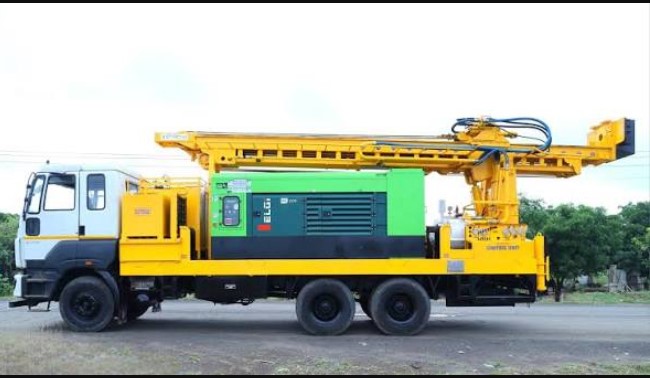
Borehole Drilling Rig Mobilization
Once the drilling plan is ready, equipment can be mobilized.
Quick mobilization requires good preparation.
The site should be ready for the drilling team.
Important considerations include:
- Road access
- Gate width
- Turning space
- Overhead cables
- Ground stability
- Nearby structures
- Water requirements during drilling
- Equipment positioning
Poor site access can create unnecessary delays.
Borehole Drilling in Kano
The actual drilling method depends on the geological formations encountered.
The drilling team observes the material brought to the surface and records important information throughout the operation.
This can include:
- Geological formations
- Water strikes
- Drilling depth
- Changes in formation
- Water-bearing zones
- Borehole behaviour
The drilling record helps guide later construction decisions.
Borehole Depth in Kano
One of the most common customer questions is:
“How deep will my borehole be?”
There is no responsible universal depth for every property in Kano.
Even properties in the same general locality can encounter different subsurface conditions.
Some published information describes groundwater development in the Kano Plain, but site-specific conditions remain important.
The final drilling depth should therefore be determined by the actual geological and hydrogeological conditions encountered.
Borehole Yield in Kano
Yield refers to the quantity of water that a borehole can produce under specified pumping conditions.
It should be established through testing.
A nearby borehole producing a particular flow does not guarantee that another property will produce the same amount.
This is why responsible borehole development avoids promising a fixed yield before investigation and testing.
Borehole Casing
Once the required borehole structure has been established, casing can be installed according to the design and formations encountered.
Casing helps support the borehole and protect the constructed water source.
The casing specification should correspond with:
- Borehole diameter
- Geological formation
- Pump requirements
- Screen design
- Construction depth
Borehole Screens
Screens allow groundwater to enter the borehole from selected water-bearing formations.
Their placement should be based on the geological information obtained during drilling.
Correct screen positioning is important for borehole performance.
Gravel Packing
Where required by the borehole design, gravel packing can be used around screened sections.
It can help manage the movement of formation material into the borehole.
The appropriate material and installation method depend on the formation and screen design.
Borehole Development
After construction, the borehole should be developed.
Development helps remove drilling residues and fine particles.
It can improve the connection between the borehole and surrounding formation.
A borehole should not simply be drilled and immediately connected to a permanent pump without appropriate preparation.
Test Pumping
Test pumping determines how the borehole responds to pumping.
Measurements can include:
- Static water level
- Pumping rate
- Dynamic water level
- Drawdown
- Recovery
The information helps establish appropriate operating conditions.
Why Test Pumping Matters
A pump should not be selected solely because it appears powerful.
If the pump extracts water too aggressively, it can cause excessive drawdown or inefficient operation.
The pumping system should be matched to the borehole's characteristics.
Water Quality Testing
Water quantity is only one part of a successful borehole.
Water quality also matters.
Laboratory testing can determine whether treatment is necessary for the intended use.
Depending on the intended application, testing can consider physical, chemical and microbiological parameters.
Borehole Water Treatment
Treatment should be based on laboratory findings.
Potential treatment systems include:
- Sediment filters
- Activated carbon
- Iron-removal systems
- Water softeners
- Disinfection systems
- Specialized filtration
- Reverse osmosis
There is no need to install every treatment system.
The correct equipment depends on the actual water-quality results.
Quick Borehole Pump Installation
Once the borehole has been tested, a suitable pump can be selected.
Important factors include:
- Borehole depth
- Static water level
- Dynamic water level
- Required flow
- Total head
- Pipe distance
- Storage height
- Power source
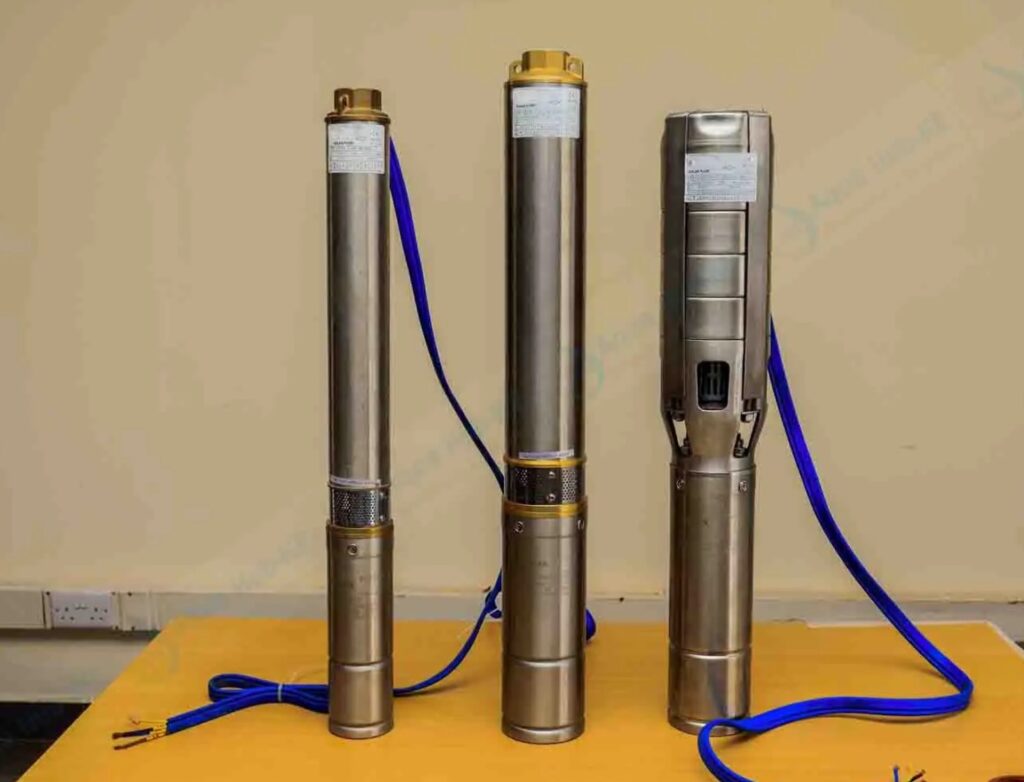
Submersible Borehole Pump
A submersible pump is installed below the water level and pushes water toward the surface.
The pump should be selected according to the borehole's operating characteristics.
An oversized pump can be just as problematic as an undersized pump.
Solar Borehole Pumping in Kano
Solar pumping can be used where appropriate.
A solar borehole system can include:
- Solar panels
- Solar pump
- Controller
- Pump cable
- Protection equipment
- Storage tank
- Distribution pipework
Solar pumping is particularly useful where electricity availability or operating costs are a concern.
Solar Pump and Storage Tank
Solar pumping works well with water storage because the pump can fill a tank during available solar hours.
The stored water can then be used when required.
This arrangement can reduce the need for continuous pumping.
Electric Borehole Pumping
Where grid electricity is available, an electric pump can be used.
The system should include suitable electrical protection.
The installation should also account for voltage conditions and cable sizing.
Borehole Control Panel
A control panel can manage pump operation.
Depending on the installation, it can include:
- Circuit protection
- Overload protection
- Pump controls
- Level controls
- Manual/automatic operation
- Fault indication
Borehole Storage Tanks
Storage capacity depends on water demand.
Factors include:
- Number of users
- Daily consumption
- Borehole yield
- Pumping schedule
- Irrigation requirements
- Desired reserve
A storage tank provides a buffer between water production and water consumption.
Borehole Plumbing in Kano
A complete water project can continue from drilling into plumbing.
The basic arrangement may be:
Borehole → Pump → Rising Main → Storage Tank → Treatment → Distribution → Water Points
The plumbing should be designed according to flow and pressure requirements.
Plumbing From Borehole to Tank
The rising main transports water from the pump to the tank.
Pipe diameter should be selected based on:
- Flow
- Distance
- Pressure
- Pump characteristics
- Elevation
Plumbing From Tank to House
Water can be distributed from an elevated tank by gravity.
Where gravity pressure is insufficient, a booster pump can be considered.
Borehole Plumbing for Irrigation
Irrigation systems can be connected directly or through storage.
The appropriate arrangement depends on the borehole yield and irrigation requirements.
Borehole Plumbing for Farms
Farm distribution can be divided into zones.
For example:
- Domestic zone
- Livestock zone
- Vegetable zone
- Greenhouse zone
- Orchard zone
Valves can control individual sections.
Borehole Plumbing for Multiple Buildings
A central borehole can supply several structures.
The distribution system may require:
- Main pipeline
- Branch lines
- Isolation valves
- Pressure management
- Water meters
Borehole Plumbing for Hotels
Hotels require careful consideration of peak demand.
The system may include:
- Large storage
- Booster pumps
- Pressure tanks
- Treatment
- Hot-water integration
Borehole Plumbing for Schools
School plumbing can supply:
- Washrooms
- Toilets
- Kitchens
- Drinking points
- Handwashing stations
- Cleaning facilities
Water Pressure
Water pressure depends on:
- Tank elevation
- Pump pressure
- Pipe size
- Pipe length
- Elevation changes
- Fittings
Proper design prevents weak outlets and excessive pressure.
Booster Pump Systems
Booster pumps can improve pressure where gravity alone is insufficient.
They can be useful for:
- Multi-storey buildings
- Long-distance distribution
- Commercial buildings
- Large compounds
Borehole Maintenance
A completed borehole should be monitored.
Maintenance can include:
- Pump inspection
- Electrical checks
- Water-level monitoring
- Flow measurement
- Tank inspection
- Pipe inspection
- Filter replacement
- Water-quality testing
Borehole Rehabilitation
An older borehole may experience declining performance.
Possible causes include:
- Sediment
- Mineral deposits
- Screen blockage
- Pump deterioration
- Biofouling
- Changes in groundwater conditions
Diagnosis should come before rehabilitation.
Quick Borehole Drilling Does Not Mean Cutting Corners
Speed should come from organization.
It should not mean:
- Skipping investigation
- Ignoring construction requirements
- Avoiding testing
- Using unsuitable pumps
- Neglecting water quality
- Rushing plumbing
The fastest successful project is one that is properly planned from the beginning.
Why Choose Pro-Logic Technologies Limited?
Pro-Logic Technologies Limited provides technical solutions for customers seeking borehole and water infrastructure services.
For a Kano project, the scope can be discussed according to the customer's requirements.
Possible services include:
- Borehole site assessment
- Hydrogeological investigation
- Borehole drilling
- Casing
- Borehole development
- Test pumping
- Water testing
- Pump installation
- Solar pumping
- Storage
- Water treatment
- Plumbing
- Irrigation systems
- Borehole maintenance
The exact scope depends on the project.
Borehole Drilling in Kano for Domestic Water
A domestic project should begin with an estimate of household demand.
The system can then be designed around:
Water source → Pump → Storage → Treatment → Household plumbing
This provides a structured approach rather than selecting equipment randomly.
Borehole Drilling in Kano for Agriculture
Agricultural projects should establish the relationship between:
Available water → Pumping capacity → Storage → Irrigation demand
This is particularly important where large irrigation areas are planned.
The borehole should be tested before committing to extensive irrigation infrastructure.
Borehole Drilling in Kano for Commercial Development
Commercial developments should account for future demand.
If a property will eventually contain additional buildings or tenants, the water infrastructure can be planned with expansion in mind.
Borehole Drilling for Construction
Construction sites may require temporary water.
A borehole can potentially become part of the property's permanent water infrastructure after construction.
Early planning can prevent the installation from conflicting with future buildings.
Borehole Drilling and Water Independence
A private groundwater source can reduce dependence on external water supply where groundwater is suitable and legally developed.
However, groundwater should be managed responsibly.
The objective is not simply to extract as much water as possible.
The objective is to operate the borehole according to its tested capacity.
Borehole Project Cost in Kano
The cost of drilling varies according to the project.
Factors include:
- Survey requirements
- Drilling depth
- Geological conditions
- Borehole diameter
- Casing
- Screens
- Gravel pack
- Development
- Test pumping
- Water testing
- Pump
- Solar equipment
- Electrical installation
- Storage
- Plumbing
- Site access
A proper quotation should therefore be based on the actual project scope.
How to Request a Borehole Quotation
When contacting Pro-Logic Technologies, provide:
Property location: Kano, Kisumu County
Purpose: Home / Farm / Irrigation / Business / School / Institution
Estimated users: Number of people
Irrigation: Yes / No
Electricity: Available / Not available
Solar: Required / Not required
Storage: Existing tank / New tank
Plumbing: Required / Not required
This information helps establish the project's requirements.
Quick Borehole Drilling Enquiry Process
Step 1 – Contact
Call 0723 763 173.
Step 2 – Share Your Location
Provide the location of the property in Kano.
Step 3 – Explain Your Water Requirement
Tell the team whether the project is domestic, agricultural, institutional or commercial.
Step 4 – Site Assessment
The proposed site can be assessed before drilling.
Step 5 – Groundwater Investigation
The drilling point can be selected using appropriate technical information.
Step 6 – Planning
The drilling and construction requirements are established.
Step 7 – Mobilization
Equipment is organized for the project.
Step 8 – Drilling
The borehole is drilled while geological information is recorded.
Step 9 – Construction
Casing, screens and other required components are installed.
Step 10 – Development
The borehole is developed.
Step 11 – Test Pumping
The borehole's performance is assessed.
Step 12 – Water Testing
Water quality is analysed.
Step 13 – Pump Installation
A suitable pump is selected and installed.
Step 14 – Storage and Plumbing
Water is delivered to tanks and distribution points.
Step 15 – Commissioning
The complete system is tested before handover.
Frequently Asked Questions About Quick Borehole Drilling in Kano
How quickly can a borehole be drilled?
The timeframe depends on site preparation, approvals, equipment availability, geological conditions and drilling depth. A project can be organized efficiently, but the actual drilling duration cannot responsibly be guaranteed before the site and scope are known.
Can you drill anywhere in Kano?
Groundwater conditions vary by location. A site assessment and appropriate groundwater investigation should be used to select the drilling point.
How deep will my borehole be?
The depth depends on the geological conditions encountered. There is no single depth applicable to every property.
Can you guarantee a specific amount of water?
A responsible contractor should not guarantee a specific yield before drilling and testing.
Can the borehole supply irrigation?
Yes, if the tested sustainable yield is suitable for the irrigation requirement.
Can the borehole run on solar?
Yes. Solar pumping can be designed according to the pump, water demand, head and available solar energy.
Do you install water tanks?
Storage can be incorporated into the complete water-system design.
Do you provide plumbing?
Borehole plumbing can be included where a complete water supply system is required.
Can borehole water be used for drinking?
Potentially, but appropriate laboratory testing and treatment should be completed before drinking.
What if the borehole produces little water?
The borehole should be evaluated through testing and diagnosis. Rehabilitation or pumping adjustments may sometimes help, while some formations naturally have limited productivity.
Can an existing borehole be repaired?
Yes, depending on the condition and cause of the problem. Rehabilitation begins with assessment.
Do I need a pump test?
Pump testing is important for understanding borehole performance and selecting appropriate pumping conditions.
Can one borehole serve several buildings?
Yes, provided the borehole yield, storage and distribution system can support the combined demand.
Start Your Borehole Project in Kano
If you need quick borehole drilling in Kano, Kisumu County, the best approach is to start with the property location and intended water use.
A properly planned project can move efficiently from investigation to drilling and eventually to a complete water system.
The service can include:
Hydrogeological assessment
Borehole siting
Borehole drilling
Casing and screens
Development
Test pumping
Water-quality analysis
Submersible pump installation
Solar pumping
Water storage
Water treatment
Plumbing
Irrigation
Maintenance
The important point is that speed should come from efficient project management—not from eliminating essential technical stages.
For borehole drilling enquiries in Kano, Kisumu County, contact:
PRO-LOGIC TECHNOLOGIES LIMITED
Quick Borehole Drilling | Borehole Survey | Pump Installation | Solar Water Systems | Water Storage | Plumbing | Irrigation
Phone: 0723 763 173
Give us your Kano location and explain the type of water project you are planning.